Call Us
+86 136 6007 9809
Call Us
+86 136 6007 9809

Jun. 11, 2024
Types of Weld Nuts: Engineering Selection Guide for OEM Manufacturing
Weld nuts are internally threaded fastening components designed to be attached to suitable metal workpieces through a welding process.
They create fixed threaded attachment points that allow mating bolts or screws to be installed during subsequent assembly operations.
Common applications include automotive body structures, sheet metal fabrication, industrial machinery, electrical equipment, appliance manufacturing and selected equipment housings.
However, weld nuts are not a single interchangeable product category.
Different weld nut designs use different body geometries, welding features, materials and installation methods.
A hexagonal weld nut may be appropriate for one production process, while a square weld nut, round projection weld nut or drawing-based component may better suit another.
For OEM engineers, selecting the correct weld nut requires evaluating the complete welded joint.
For manufacturing engineers and production managers, the priority is achieving consistent installation quality and efficient assembly.
For procurement teams, the objective is obtaining the correct nut specification from a qualified supplier while controlling cost, lead time and production variation.
JUXIN FASTENERS supplies industrial weld nuts, standard fastening components and drawing-based OEM fasteners for international manufacturing applications.
This guide explains the major types of weld nuts and provides a practical selection framework for engineering and industrial purchasing decisions.
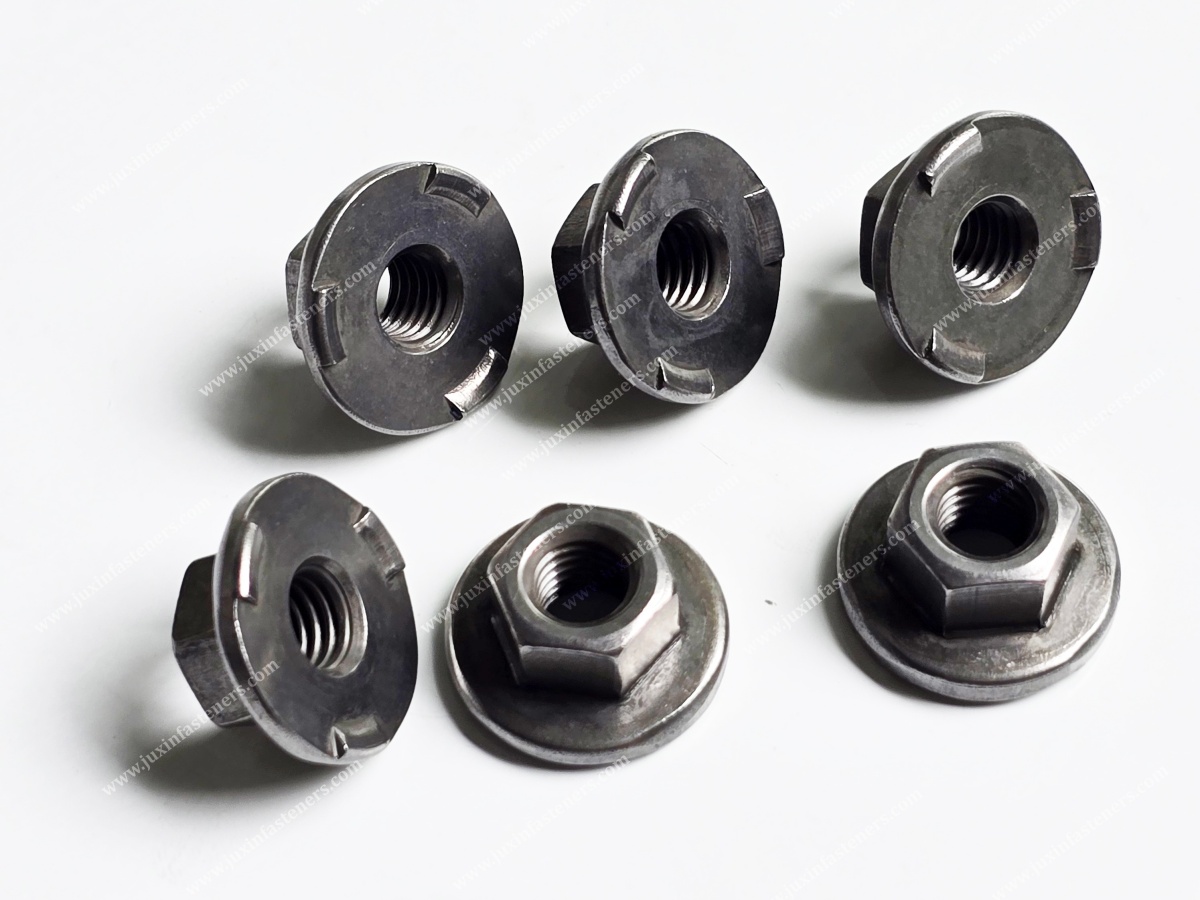
What Is a Weld Nut?
A weld nut is an internally threaded component designed to be welded onto a suitable metal workpiece.
Once installed, the nut provides a threaded connection for a mating bolt or screw.
Depending on the design, the weld nut may be attached to:
Sheet metal panels
Fabricated brackets
Metal frames
Equipment housings
Suitable tubular or structural components
The welding process is typically completed before final mechanical assembly.
How Weld Nuts Differ from Loose Nuts
A conventional loose nut generally requires access for positioning or holding during assembly.
A weld nut is fixed to the workpiece in advance.
This may reduce the need for rear-side access during subsequent assembly.
Important Engineering Distinction
A welded nut does not automatically provide greater joint strength than every alternative fastening method.
Its performance depends on the nut, weld, base material and loading conditions.
How Weld Nuts Are Classified
Weld nuts can be classified in several different ways.
By Body Geometry
Hexagonal weld nuts
Square weld nuts
Round weld nuts
Drawing-based special designs
By Welding Configuration
Projection weld nuts
Other application-specific welded nut configurations
By Material
Carbon steel
Stainless steel
Selected alloy materials
By Application Requirement
Corrosion-resistant applications
High-temperature applications
Precision-positioning applications
High-volume automated assembly
Important Classification Principle
Terms such as "high-temperature weld nut" or "precision weld nut" describe an application requirement or performance objective.
They do not necessarily identify a separate internationally standardized weld nut geometry.
Hexagonal Weld Nuts
Hexagonal weld nuts are commonly used in industrial sheet metal and fabricated assemblies.
Their suitability depends on the body geometry, welding features and required joint performance.
DIN 929 Hexagonal Weld Nuts
DIN 929 identifies a standardized hexagonal weld nut family.
Potential applications include:
Industrial machinery
Sheet metal structures
Equipment brackets
Metal enclosures
Selected automotive assemblies
Engineering Selection Factors
Thread size
Nut dimensions
Welding projections
Base-material thickness
Hole geometry
Installation equipment
Important Limitation
The hexagonal body shape does not independently guarantee the required torque resistance after welding.
The installed welded joint must be evaluated.
Square Weld Nuts
Square weld nuts provide a different body geometry from hexagonal designs.
They may be specified where the product geometry and welding configuration suit the workpiece.
DIN 928 Square Weld Nuts
DIN 928 identifies a standardized square weld nut family.
Potential applications include:
Fabricated machinery components
Sheet metal brackets
Equipment frames
Industrial housings
Selected appliance structures
Engineering Selection Factors
Available installation space
Welding projection arrangement
Workpiece geometry
Thread requirements
Required joint strength
DIN 928 vs. DIN 929
| Selection factor | DIN 928 square weld nut | DIN 929 hexagonal weld nut |
|---|---|---|
| Body geometry | Square | Hexagonal |
| Standard designation | DIN 928 | DIN 929 |
| Welding features | Defined by applicable design | Defined by applicable design |
| Typical selection basis | Geometry and process compatibility | Geometry and process compatibility |
| Joint performance | Must be validated | Must be validated |
| Direct interchangeability | Not assumed | Not assumed |
Engineering Recommendation
Do not replace one type with the other based only on nominal thread size.
The welding features, dimensions and process requirements must be reviewed.
Round Weld Nuts
Round weld nuts are another design family used in selected welded threaded connections.
Their geometry may provide advantages in particular assembly layouts.
Potential considerations include:
Available space
Part positioning
Welding projection design
Feeding and orientation
Workpiece geometry
Important Engineering Distinction
Round weld nuts are not a single universal specification.
Different manufacturers and OEM drawings may define different body dimensions and welding features.
Selection Recommendation
Request the actual product drawing before assuming compatibility with an existing welding process.
Projection Weld Nuts
Projection weld nuts are designed with features that concentrate welding current and force at selected locations.
They are commonly used in suitable resistance projection welding applications.
How Projection Welding Works
The nut is positioned against the workpiece.
Electrode force and electrical current are applied.
The projections concentrate resistance heating at the intended joining locations.
The joint forms under controlled welding conditions.
Important Process Variables
Welding current
Welding time
Electrode force
Projection geometry
Base-material thickness
Surface condition
Electrode condition
Part alignment
Engineering Recommendation
Projection welding parameters must be established for the actual nut and workpiece combination.
Projection Welding vs. Spot Welding
Resistance projection welding and resistance spot welding are related but distinct joining methods.
Projection welding uses designed features to concentrate current and force.
Spot welding generally creates localized welds using electrode contact and workpiece geometry.
Important Distinction
The terms should not be treated as interchangeable in a weld nut manufacturing specification.
Robotic Welding
Robotic welding describes the use of automated equipment rather than a specific weld nut geometry.
Robotic systems may be integrated with suitable welding processes.
Automation can improve repeatability when the process is properly controlled.
However, automation does not independently guarantee weld quality.
Carbon Steel Weld Nuts
Carbon steel weld nuts are widely used in industrial manufacturing.
They may be appropriate for applications requiring:
Defined mechanical properties
Suitable welding behavior
Economical production
Compatibility with specified workpiece materials
Potential Applications
Automotive body structures
Industrial equipment
Sheet metal fabrication
Appliance manufacturing
Engineering Considerations
Material specification
Surface condition
Welding process
Mechanical loading
Corrosion protection
Important Limitation
Carbon steel weld nuts are not universally interchangeable with stainless steel weld nuts.
Their welding behavior and material properties may differ.
Stainless Steel Weld Nuts
Stainless steel weld nuts may be selected where corrosion resistance is important.
Common material options include:
Type 304 stainless steel
Type 316 stainless steel
The required grade should be defined in the drawing or purchase specification.
304 Stainless Steel
May be suitable for selected industrial environments.
316 Stainless Steel
May offer improved resistance to certain chloride-related corrosion conditions.
Important Limitation
Neither grade is universally resistant to all corrosive environments.
Welding Considerations
Stainless steel weld nuts may require different welding parameters from carbon steel designs.
The process should be qualified using the actual nut and base material.
High-Temperature Weld Nut Applications
Some industrial equipment operates at elevated temperatures.
Potential applications include:
Exhaust-related equipment
Thermal processing machinery
Industrial furnaces
Heat-treatment equipment
Selected energy systems
Engineering Requirements
Temperature exposure
Mechanical loading
Thermal expansion
Oxidation resistance
Material strength at operating temperature
Welded joint performance
Material Selection
Suitable materials may include selected heat-resistant stainless steels or other engineering alloys, depending on the project.
Important Engineering Distinction
A high-temperature application does not automatically require a special standardized "high-temperature weld nut."
The component must be specified according to the actual temperature and loading requirements.
Procurement Recommendation
Include the operating temperature range and required material specification in the RFQ.
Precision Weld Nut Applications
Some assemblies require tight control of nut position and thread alignment.
Potential applications include:
Precision machinery
Industrial automation
Electrical equipment
Instrumentation housings
Important Requirements
Nut location
Hole alignment
Thread tolerance
Welding distortion
Installation repeatability
Engineering Recommendation
Precision requirements should be defined through measurable drawing tolerances and inspection criteria.
The term "precision weld nut" alone is insufficient for supplier qualification.
Copper and Copper-Alloy Weld Nut Considerations
Copper has high electrical and thermal conductivity.
However, this does not mean a copper nut is automatically suitable for conventional resistance projection welding.
Copper's electrical and thermal characteristics can make welding more challenging in certain material combinations.
Potential Engineering Issues
Rapid heat dissipation
Insufficient localized resistance heating
Electrode interaction
Joint formation difficulty
Material compatibility
Important Limitation
Copper and copper-alloy welded threaded components should be evaluated as application-specific designs.
They should not be promoted as universal substitutes for conventional steel projection weld nuts.
Electrical Equipment Applications
Where electrical conductivity is important, the entire electrical connection must be evaluated.
This includes:
Contact resistance
Current path
Joint pressure
Temperature rise
Corrosion
Material compatibility
Engineering Recommendation
Do not assume that a welded copper nut alone establishes a reliable current-carrying connection.
Weld Nut Selection by Base Material
The workpiece material is one of the first selection factors.
Carbon Steel Sheet
May be compatible with suitable carbon steel weld nut designs and welding processes.
Stainless Steel Sheet
May require particular attention to material grade and welding behavior.
Dissimilar-Metal Assemblies
May introduce welding and corrosion challenges.
Engineering Recommendation
Select the nut material together with the actual workpiece material.
Sheet Thickness and Joint Design
Sheet thickness affects welding behavior and mechanical performance.
Potential concerns include:
Burn-through
Sheet deformation
Insufficient weld formation
Localized stress
Joint failure
Thin Sheet Metal
May require carefully controlled welding energy and positioning.
Thicker Workpieces
May change heat flow and installation requirements.
Engineering Recommendation
Specify the workpiece thickness and material condition in the engineering drawing or RFQ.
Thread Size and Engagement
Weld nuts may use metric or inch threads depending on the product design.
Metric Threads
ISO metric threads may be specified according to relevant ISO thread standards.
Unified Inch Threads
UNC and UNF threads may be specified according to ASME B1.1.
Important Compatibility Rule
Metric, UNC, UNF, BSW and BSF thread systems are different.
They must not be treated as directly interchangeable.
Engineering Recommendation
Define the exact thread designation and tolerance.
Weld Nut Joint Strength
Weld nut performance depends on the completed welded assembly.
Important properties may include:
Torque resistance
Push-out resistance
Pull-out resistance
Thread strength
Fatigue performance where relevant
Torque Resistance
The installed nut must resist the torque applied during mating screw installation or removal.
Pull-Out Resistance
The welded joint must resist separation forces in the relevant loading direction.
Push-Out Resistance
The installed nut may be evaluated for loading that pushes it through or away from the workpiece.
Important Engineering Principle
The nut body geometry alone does not determine the installed joint strength.
Welding Process Qualification
Before approving a weld nut for production, the manufacturer should establish an appropriate welding process.
This may include:
Welding parameter development
Trial installation
Weld inspection
Mechanical joint testing
Process monitoring
Production acceptance criteria
Engineering Recommendation
Use the actual production material and equipment during qualification.
Common Weld Nut Installation Failures
| Failure mode | Potential cause | Engineering response |
|---|---|---|
| Nut separates from workpiece | Inadequate weld formation | Review process and joint design |
| Nut rotates | Insufficient weld torque resistance | Validate welded joint |
| Thread becomes distorted | Excessive heat or deformation | Review welding parameters |
| Nut position varies | Fixture or feeding problems | Improve positioning controls |
| Sheet burns through | Excessive heat input | Review material thickness and settings |
| Weld quality varies | Electrode or process variation | Establish process monitoring |
| Corrosion develops | Material or surface mismatch | Review environment and protection |
| Assembly screw jams | Thread damage or misalignment | Inspect thread and nut location |
Production-Line Considerations
For high-volume OEM manufacturing, the selected weld nut must be compatible with the actual production process.
Important factors include:
Automated feeding
Nut orientation
Fixture design
Electrode access
Welding cycle time
Inspection method
Rework procedures
Production Manager Considerations
A low-cost weld nut may create higher total production costs if it causes:
Feeding problems
Welding defects
Assembly stoppages
Rework
Scrap
Inconsistent threaded connections
Engineering Recommendation
Evaluate total installed cost rather than unit price alone.
Automotive and EV Manufacturing
Potential weld nut applications include:
Vehicle body panels
Fabricated brackets
Selected chassis-related assemblies
Battery enclosure support structures
Equipment mounting components
Important Application Distinction
The selected nut material, welding process and joint performance must meet the actual automotive or EV assembly requirements.
Industrial Machinery
Weld nuts may be used in:
Machine frames
Equipment covers
Metal brackets
Automation equipment
Fabricated structures
Electrical Cabinets and Enclosures
Potential applications include:
Industrial control cabinets
Distribution enclosures
Equipment housings
Internal mounting structures
Engineering Consideration
The selected weld nut must be compatible with the enclosure material, sheet thickness and installation method.
HVAC and Refrigeration
Weld nuts may be used in:
Equipment housings
Support brackets
Fabricated sheet metal components
Selection considerations include vibration, corrosion and assembly efficiency.
Food Processing Equipment
Stainless steel weld nuts may be suitable for selected machinery structures.
Important Limitation
A stainless steel weld nut is not automatically appropriate for every hygienic or food-contact surface.
The completed assembly must meet applicable hygiene and cleanability requirements.
Marine and Coastal Equipment
Stainless steel weld nuts may be evaluated for suitable coastal and marine-related equipment.
Engineering Considerations
Chloride exposure
Crevice corrosion
Material grade
Weld condition
Joint design
Important Limitation
316 stainless steel is not immune to corrosion.
Custom Weld Nut Design
Standard weld nuts may not meet every OEM requirement.
Custom designs may involve:
Modified body geometry
Special welding projections
Nonstandard thread sizes
Selected materials
Tight positional tolerances
Application-specific dimensions
Engineering Recommendation
Evaluate custom geometry together with the welding process.
Changes in projection shape can influence weld formation and installed joint strength.
OEM Supplier Qualification
Procurement and supplier-development teams should review the complete fastener specification.
Technical Requirements
Approved drawing
Nut type
Material
Thread specification
Projection geometry
Dimensional tolerances
Surface condition
Production Requirements
Welding method
Base-material thickness
Assembly process
Inspection requirements
Packaging
Commercial Requirements
MOQ
Annual volume
Sample requirements
Lead time
Delivery schedule
Second-Source Qualification
A replacement weld nut should not be approved solely because its nominal thread and external dimensions appear similar.
Projection geometry, material condition and welding behavior may differ.
Engineering Recommendation
Validate the replacement nut in the actual welding process.
Frequently Asked Questions
What are the main types of weld nuts?
Common types include hexagonal, square, round and drawing-based custom weld nuts. They may also be classified by material and welding configuration.
What is the difference between DIN 928 and DIN 929 weld nuts?
DIN 928 specifies square weld nuts, while DIN 929 specifies hexagonal weld nuts.
Are projection weld nuts and spot weld nuts the same?
No. Projection welding and spot welding are related but different resistance welding processes.
Can stainless steel weld nuts replace carbon steel weld nuts?
Not automatically. Material, welding behavior, corrosion requirements and joint performance must be evaluated.
Are copper weld nuts suitable for electrical equipment?
Only where the material and joining process have been specifically evaluated. Copper conductivity alone does not establish weldability or electrical joint reliability.
How is weld nut torque resistance determined?
Through testing of the installed nut and welded assembly under defined conditions.
What causes weld nut thread distortion?
Potential causes include welding heat, deformation, contamination and misalignment.
Can round weld nuts replace square weld nuts?
Not without reviewing the drawing, welding features and process compatibility.
Are weld nuts suitable for automated production?
They may be suitable when the nut design, feeding system, welding process and quality controls are compatible.
What should an OEM customer include in a weld nut RFQ?
The drawing, material, thread, welding method, workpiece material and thickness, quality requirements and annual purchasing volume.
JUXIN FASTENERS: Industrial Weld Nuts and OEM Fastening Solutions
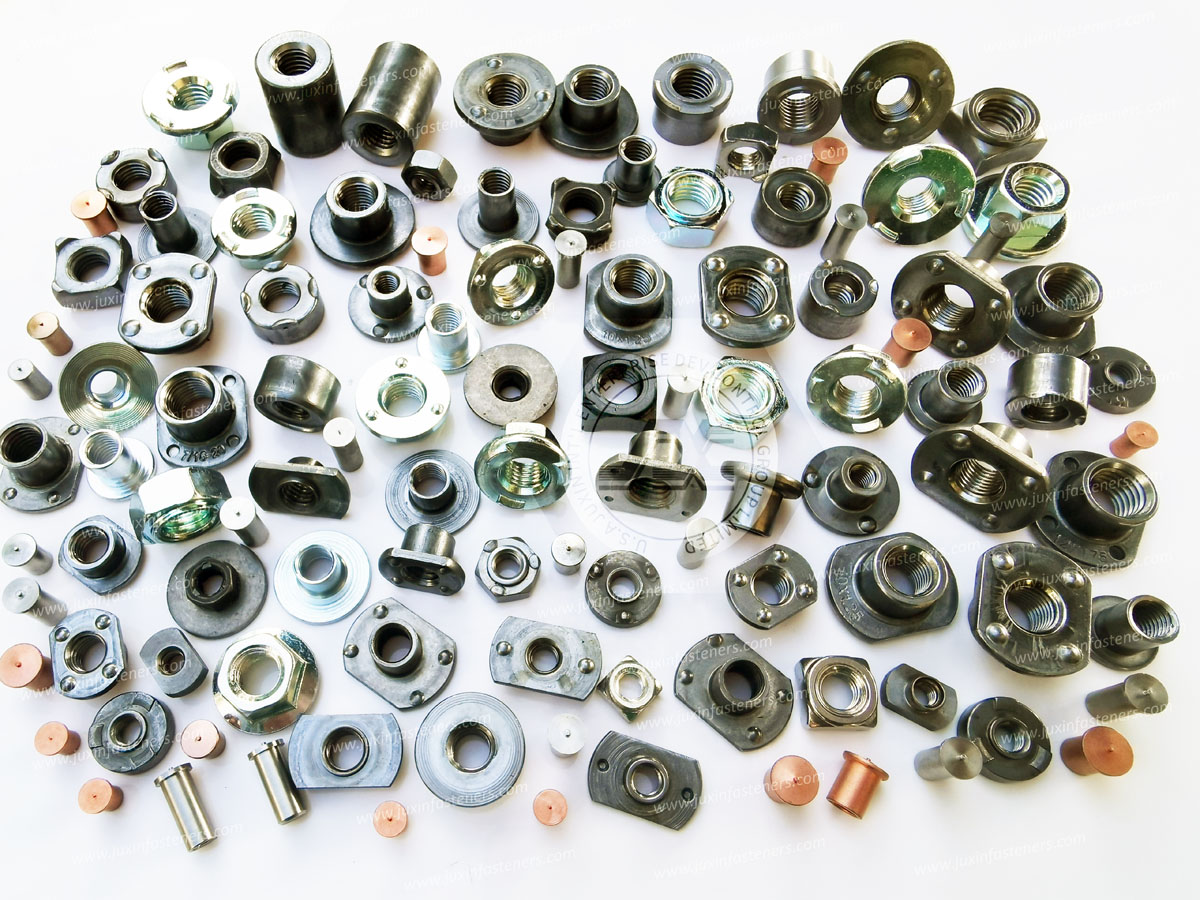
JUXIN FASTENERS supplies industrial weld nuts and drawing-based fastening components for international OEM applications.
Relevant product families include:
DIN 928 square weld nuts
DIN 929 hexagonal weld nuts
Hexagonal weld nuts
Round weld nuts
Stainless steel weld nuts
Carbon steel weld nuts
Projection weld nuts
Custom weld nuts
Drawing-based industrial fastening components
Product availability, material options and manufacturing feasibility should be confirmed against the customer specification.
Request a Weld Nut Selection Review and OEM RFQ
Are you evaluating hexagonal weld nuts, square weld nuts, round weld nuts or customized projection welding nuts for an industrial manufacturing project?
JUXIN FASTENERS welcomes inquiries from OEM engineers, manufacturing teams, production managers, procurement specialists and supplier-development departments.
For efficient technical and commercial review, provide:
Weld nut drawing + thread specification + nut material + workpiece material and thickness + welding method + required joint performance + annual purchasing volume
Where relevant, include welding projection requirements, nut positional tolerances and inspection criteria.
These details support a more accurate product review and quotation.
Company: JUXIN FASTENERS
Website: https://www.juxinfasteners.com/
Email: info@juxinfasteners.com
Send your weld nut drawings and OEM RFQ requirements to JUXIN FASTENERS for technical evaluation and quotation.
Contact Us
Tel.:
+86 020 8621 0320
+86 020 3121 6067
E-mail:
Technical Support:
Navigation
SEND INQUIREY