
Call Us
+86 136 6007 9809
Call Us
+86 136 6007 9809

Sep. 06, 2023
In industrial fastening systems, a bolt rarely works as an isolated component. The bolt, washer, nut, mating material, surface condition, tightening method, and joint geometry function together as one mechanical system.
A correctly selected washer can increase the effective bearing area, reduce localized surface pressure, protect softer materials, support consistent joint geometry, and influence the friction conditions of the assembly.
The bolt determines much of the tensile capability of the fastening system, but the complete joint depends on far more than bolt strength alone.
This is particularly important in automotive manufacturing, electric vehicles, industrial equipment, electrical enclosures, machinery, transportation equipment, HVAC systems, metal structures, and OEM sheet-metal assemblies.
For engineers, the key question is not simply:
“Which bolt should we use?”
It is:
“Which complete bolt, washer, nut, material, surface, and installation combination is appropriate for this joint?”
For procurement teams, the corresponding question is:
“How should the complete fastening system be specified so that different production lots and suppliers deliver the required configuration consistently?”
This guide explains the engineering principles behind washers and bolts, common washer configurations, material and surface considerations,
locking strategies, high-strength bolt combinations, stainless steel options, OEM sourcing requirements, and the information that should be included in a commercial RFQ.
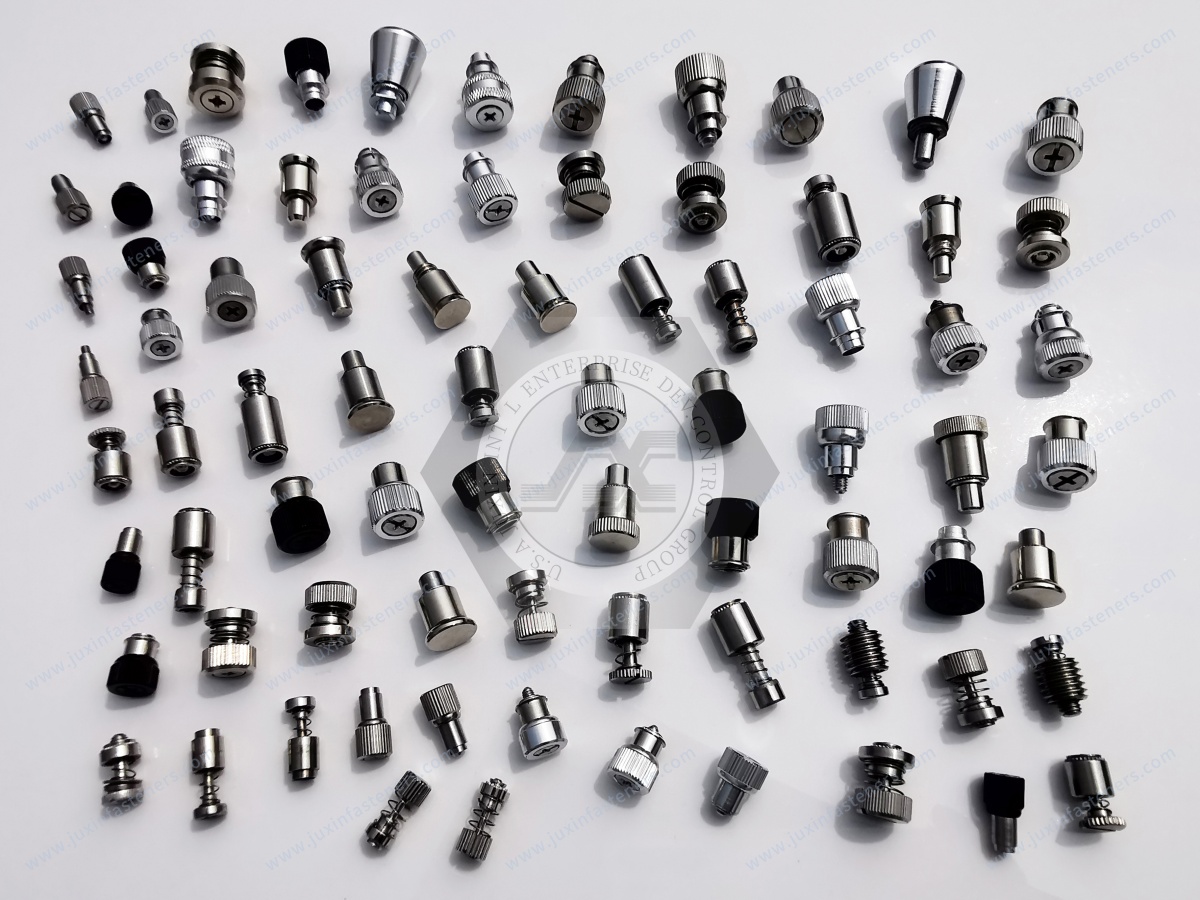
A bolted joint is a mechanical system rather than a collection of independent catalog components.
A typical assembly may contain:
Bolt or screw
Plain washer
Connected component
Second washer where required
Nut
Coating or surface treatment
Lubrication or assembly condition
Joint interface
Installation equipment
During tightening, the bolt is tensioned and the connected components are compressed.
The washer sits at the bearing interface between the fastener and the connected material.
Its geometry and material can therefore affect the way the tightening load enters the joint.
For this reason, washer selection should be made together with bolt selection whenever the joint is sensitive to load distribution, surface deformation, friction, vibration, or environmental exposure.
A simplified bolted connection can be represented as:
Bolt head → Washer → Connected component → Washer → Nut
Not every joint uses two washers.
Depending on the joint design, a washer may be installed:
Under the bolt head
Under the nut
Under both the bolt head and nut
At only one bearing interface
As part of a specialized locking or sealing assembly
The correct configuration depends on the joint geometry and the function of the washer.
When a bolt is tightened, the fastener develops tensile load and the connected components are compressed.
This creates the basic clamping action required by a bolted joint.
The tightening process is influenced by:
Thread friction
Bearing friction
Surface condition
Coating
Lubrication
Washer material
Washer geometry
Nut condition
Bolt geometry
Assembly method
Installation equipment
Joint stiffness
Therefore, tightening torque should not be treated as a universal substitute for understanding preload.
The same nominal bolt can produce different preload behavior when the friction conditions change.
A bolt head or nut has a defined bearing area.
When the fastener is tightened directly against a thin or relatively soft component, the contact pressure can become concentrated around the fastener interface.
A flat washer increases the effective bearing area.
This can help:
Distribute the applied load
Reduce localized indentation
Protect painted or finished surfaces
Reduce the risk of the fastener embedding into softer material
Provide a more controlled bearing interface
Improve joint repeatability when the washer specification is controlled
The washer does not automatically increase the structural strength of the entire joint.
Its value comes from controlling the interface between the fastener and the connected component.
One of the most important engineering considerations is often the material being clamped.
A bolt may be significantly stronger than the component being fastened.
Examples include:
Steel bolt into aluminum
Steel bolt through thin sheet metal
Stainless steel fastener through a formed enclosure
High-strength bolt through a structural bracket
Bolt through painted or coated sheet metal
Fastener through polymer-supported assemblies
The washer should therefore be selected according to the complete joint rather than the bolt alone.
Flat washers are among the most common washer types used with bolts and screws.
Typical functions include:
Load distribution
Surface protection
Bearing-area control
Separation between fastener and component
Support for thin sheet materials
Metric plain washers are covered by standards including ISO 7089, ISO 7090 and ISO 7091 for the respective washer configurations and product grades.
For inch-series applications, ASME B18.21.1 covers dimensional requirements and related requirements for plain, helical spring-lock and tooth-lock washers within its defined scope.
A standard washer is not always the best choice.
Engineers may select a larger outside diameter when the joint requires greater bearing coverage.
This can be useful when:
The mating material is thin
The hole is relatively large
The material has lower bearing resistance
Surface indentation must be minimized
A larger bearing interface is required
However, a larger outside diameter should not be selected simply because “more area is always better.”
The washer must remain compatible with:
Available space
Adjacent components
Edge distances
Hole geometry
Bolt head or nut dimensions
Assembly tooling
Joint movement
The washer hole must accommodate the selected fastener.
Important considerations include:
Nominal bolt diameter
Actual fastener geometry
Clearance requirement
Hole tolerance
Assembly method
Washer standard
Potential lateral movement
A washer with an excessively large hole may provide less effective support around the fastener.
A washer with insufficient clearance may create assembly problems.
For OEM production, the washer specification should therefore be linked to the bolt diameter and the mating-hole design.
The outside diameter determines how broadly the bearing load is distributed.
A larger outside diameter can be useful for sheet metal and other applications where local bearing pressure is a concern.
However, the washer must not interfere with:
Formed features
Adjacent holes
Welds
Flanges
Countersinks
Brackets
Moving components
Assembly tools
Dimensional selection should therefore be based on the complete mechanical envelope.
Washer thickness affects:
Bearing geometry
Local stiffness
Resistance to deformation
Stack height
Thread engagement relationship
Joint dimensions
A thicker washer is not automatically better.
For production assemblies, the washer thickness should be compatible with the available installation space and the intended joint design.
Common washer materials include:
Carbon steel
Alloy steel
Stainless steel
Spring steel
Aluminum and other application-specific materials
The correct material depends on:
Bolt material
Connected component
Corrosion environment
Mechanical loading
Temperature exposure
Surface treatment
Electrical requirements
Appearance requirements
Assembly conditions
Material selection should be specified together with the applicable standard and grade rather than using only a generic term such as “steel washer.”
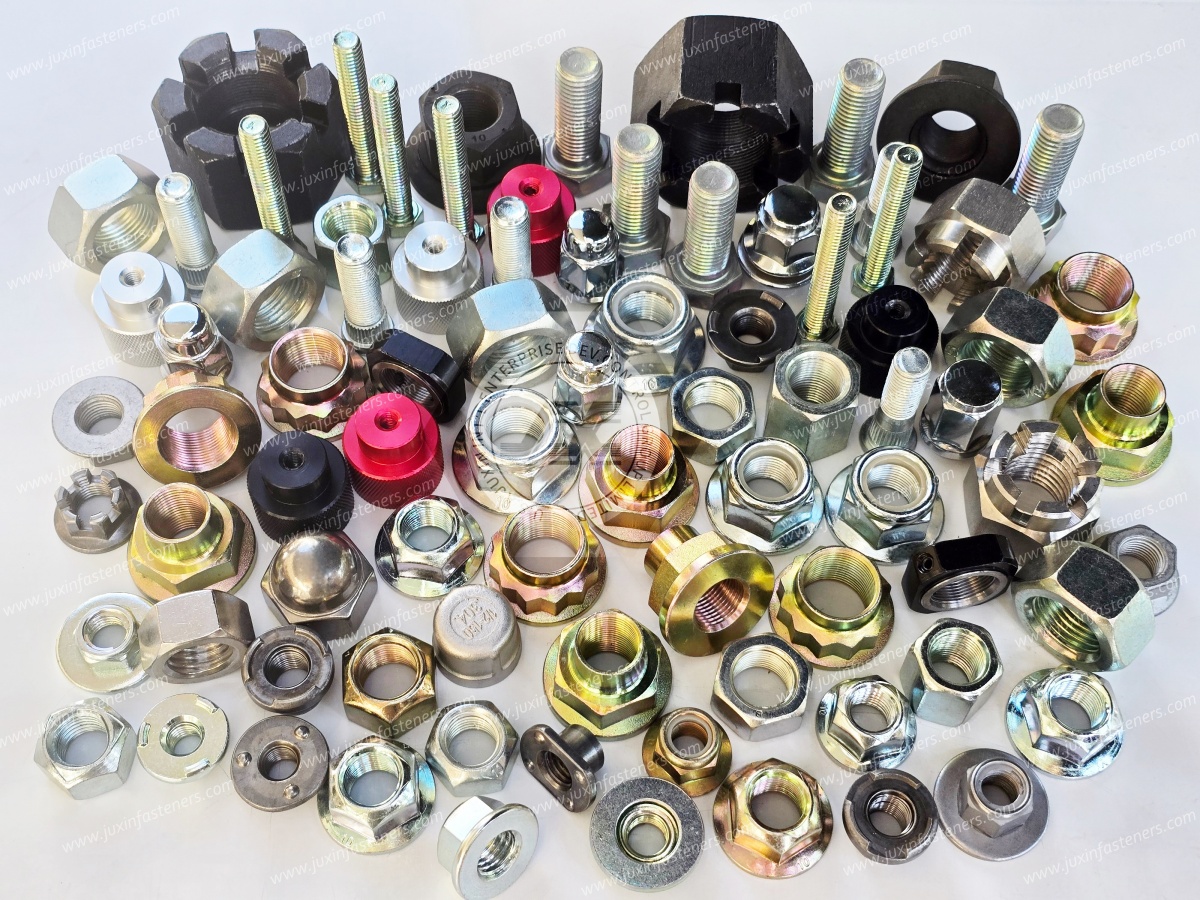
Carbon and alloy steel fasteners are widely used in industrial applications.
For metric carbon and alloy steel bolts, screws and studs within its scope, ISO 898-1:2013 specifies mechanical and physical properties and remains the current published edition while a replacement is under development.
This standard concerns the mechanical and physical properties of the specified fasteners.
It does not by itself define every property of the complete bolted joint.
Engineers should therefore avoid treating the bolt property class as a complete description of joint performance.
Stainless steel fastening systems are commonly selected where corrosion resistance, appearance, cleaning requirements, or material compatibility are important.
ISO 3506-1:2020 covers mechanical and physical properties for corrosion-resistant stainless steel bolts,
screws and studs with specified grades and property classes within its scope. It does not itself specify functional properties such as torque/clamp-force behavior, shear strength, fatigue resistance, or weldability.
A stainless steel bolt and stainless steel washer combination should therefore be specified according to:
Stainless steel grade
Property class where applicable
Washer standard
Dimensional requirements
Surface condition
Environmental exposure
Assembly requirements
“Stainless steel” is a broad material description.
Different stainless grades can have different:
Mechanical properties
Corrosion behavior
Magnetic characteristics
Work-hardening behavior
Temperature response
Chemical compatibility
For OEM sourcing, the required stainless steel grade should be stated explicitly whenever material selection affects product performance.
High-strength bolt applications require more attention to the bearing interface.
Common metric bolt property classes include:
8.8
10.9
12.9
These designations relate to the mechanical properties of fasteners within the applicable standard.
They do not automatically define the required washer specification.
A high-strength bolt can still be installed into a joint where the mating material or bearing interface is the limiting factor.
This is a critical engineering distinction.
Joint performance can be limited by:
Parent material
Hole geometry
Bearing stress
Thread engagement
Joint stiffness
Fastener preload
Friction
Surface condition
Washer deformation
Edge distance
Local component deformation
Therefore:
Fastener strength ≠ complete joint strength.
This distinction is particularly important for automotive, EV, machinery and structural assemblies.
For related applications, JUXIN FASTENERS also develops high-strength bolt and nut solutions for industrial applications.
Internal solution: /solutions/high-strength-bolts-and-nuts
Washer hardness becomes more important when the assembly uses high-strength fasteners and high tightening loads.
If the washer is not appropriate for the joint, local deformation can occur at the bearing interface.
Possible consequences include:
Washer embedding
Local surface indentation
Changes in bearing geometry
Changes in preload behavior
Joint relaxation
However, washer hardness should not be selected using a universal rule based only on the bolt property class.
The complete system must be evaluated.
An engineering specification should consider:
Bolt property class
Washer material
Washer thickness
Connected-material hardness
Bearing surface
Joint geometry
Installation method
Required preload
Surface treatment
This is more useful than simply writing “hardened washer” on a purchasing specification.
Torque is the installation input.
Preload is the resulting clamping force.
The relationship between them depends heavily on friction.
A simplified engineering concept is:
T ≈ K × F × d
where:
T = tightening torque
F = bolt preload
d = nominal bolt diameter
K = an empirical factor representing friction and assembly conditions
The relationship is only a simplified engineering model.
Actual torque-preload behavior depends on the complete assembly.
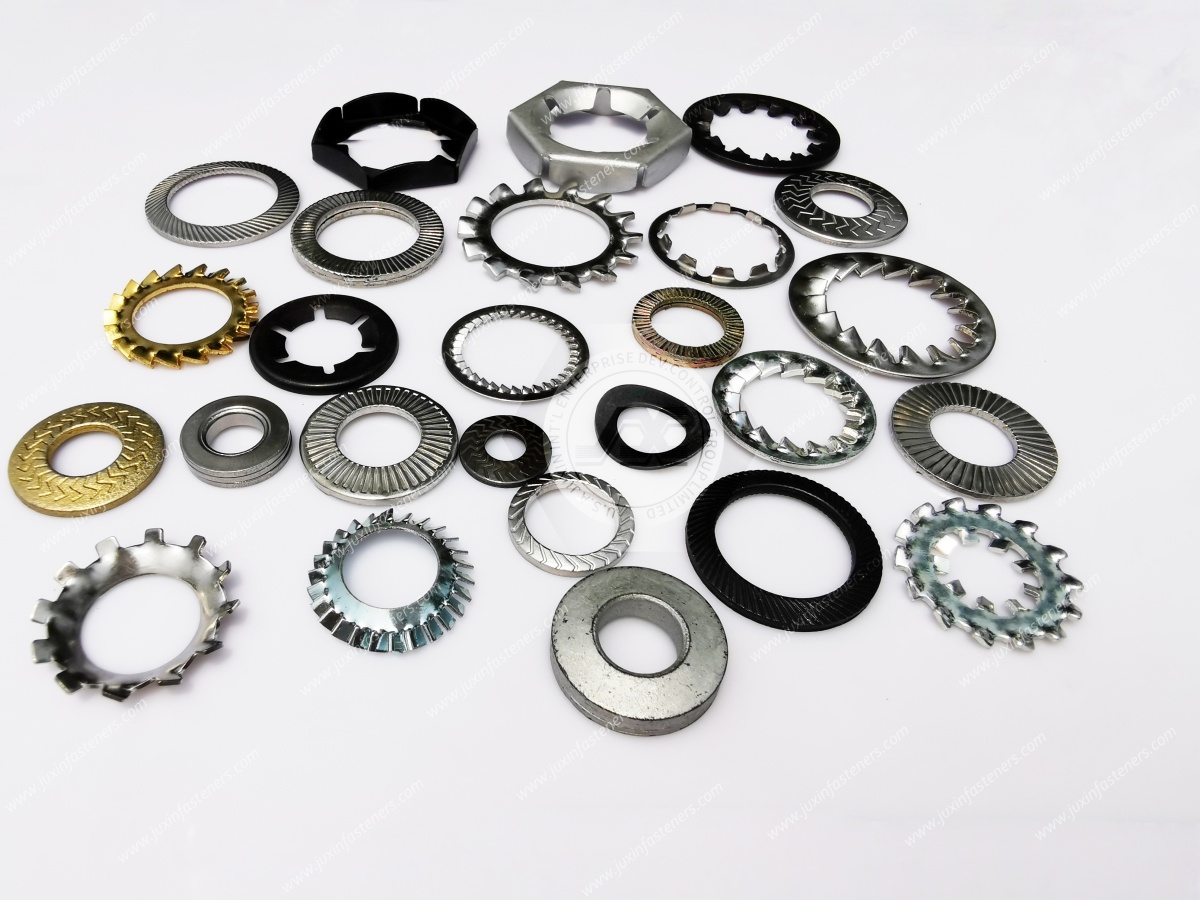
The bearing surface beneath the bolt head or nut contributes to friction.
Changing the washer can therefore change:
Bearing friction
Surface contact
Coating interaction
Lubrication condition
Torque-preload relationship
This is one reason why an OEM should not casually replace one washer with another visually similar washer after a fastening process has already been validated.
Two washers may have identical dimensions but different surface treatments.
Examples include:
Zinc-based coatings
Passivated stainless steel surfaces
Organic coatings
Dry-film treatments
Lubricated surfaces
Changing the surface condition can change friction and corrosion behavior.
Therefore, a coating specification should be treated as part of the fastening system rather than simply as an appearance requirement.
Production consistency depends on controlling the variables that influence friction.
These can include:
Bolt coating
Washer coating
Nut coating
Lubrication
Surface roughness
Manufacturing batch
Assembly equipment
Storage conditions
When a torque-controlled assembly has a narrow acceptable process window, the complete fastener configuration should be controlled.
Joint relaxation can occur when materials within the joint deform or settle after tightening.
Potential contributors include:
Surface roughness
Local embedding
Soft mating materials
Coating deformation
Thermal effects
Material creep
Fastener elongation
Component deformation
A washer may help manage local bearing conditions, but it cannot eliminate every source of preload loss.
Dynamic loading introduces another level of complexity.
Vibration-related loosening can involve:
Relative movement between components
Loss of preload
Transverse joint movement
Thread friction conditions
Bearing friction
Joint stiffness
Installation variation
A plain washer should not automatically be described as an anti-loosening component.
Where vibration resistance is required, the locking strategy should be selected specifically for the joint.
These are different functional categories.
Primary functions include:
Load distribution
Surface protection
Bearing interface control
May be designed to contribute to resistance against loosening through specific mechanical or friction-related mechanisms.
Examples include:
Tooth lock washers
Serrated washers
Spring-type washers
Other specialized locking elements
The word “locking” should not be interpreted as a universal guarantee against loosening.
ASME B18.21.1 itself notes that the historical use of the word “lock” in washer names does not imply indefinite permanency of fixation.
Serrated washers use teeth or serrations to interact with the mating surface.
They may be used where the joint design requires a mechanical interaction at the bearing interface.
Typical applications may include:
Electrical equipment
Control panels
Sheet-metal assemblies
Grounding-related interfaces where the complete electrical design permits
Industrial equipment
Electrical bonding requirements should be evaluated at the system level rather than assumed solely from washer geometry.
Tooth configuration affects how the washer interfaces with the fastener and mating surface.
Selection should consider:
Available clearance
Surface type
Coating
Appearance requirements
Electrical requirements
Assembly process
The washer should be specified by its actual standard and geometry rather than simply as a “lock washer.”
Spring-type and conical washer designs use formed geometry rather than functioning simply as flat bearing plates.
Depending on the specific design, they may be considered where:
Axial movement needs to be accommodated
Joint geometry benefits from spring action
Assembly space is limited
A specific load-deflection characteristic is required
They should not be selected simply because a joint is exposed to vibration.
The complete joint mechanics must still be evaluated.
Sealing washers combine a metallic component with an elastomeric sealing element or use a specialized sealing geometry.
They can be considered for:
Fluid systems
Hydraulic equipment
HVAC equipment
Enclosures
Industrial equipment
Applications requiring a controlled sealing interface
The sealing performance depends on the complete assembly.
A sealing washer does not automatically make an enclosure waterproof or give the assembly a particular IP rating.
A metal-rubber bonded washer may combine:
Metal structural support
Elastomeric sealing interface
Possible material combinations include:
Carbon steel + NBR
Stainless steel + elastomer
Other application-specific material combinations
The elastomer should be selected according to:
Fluid compatibility
Temperature
Compression behavior
Aging
Environmental exposure
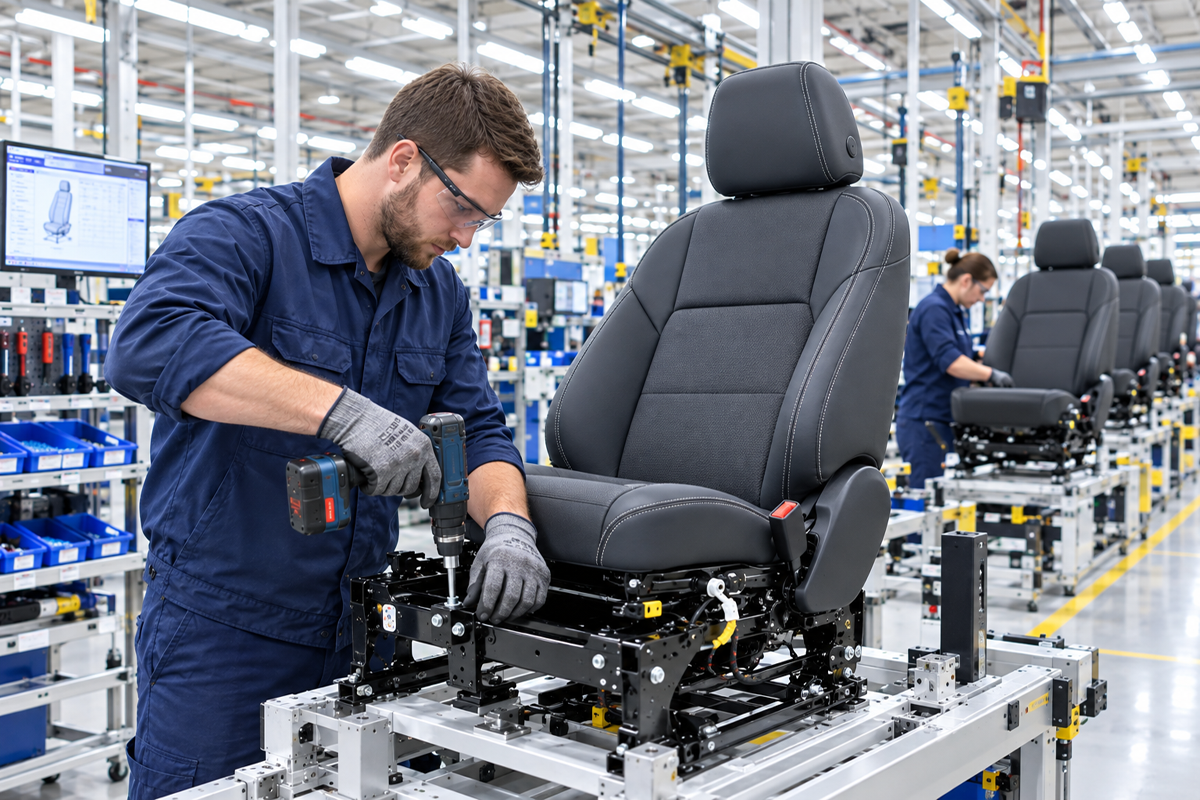
Automotive applications can involve:
Chassis brackets
Body structures
Interior components
Exterior panels
Seat structures
Engine-related assemblies
Exhaust-related components
Suspension-related components
Electrical systems
Battery enclosures
EV structural components
Each application has different requirements.
For example, a cosmetic body-panel fastening system should not automatically use the same washer strategy as a structural bracket.
EV battery systems introduce additional concerns such as:
Thin sheet structures
Aluminum components
Sealing interfaces
Corrosion compatibility
Electrical considerations
Vibration
Thermal cycling
Assembly repeatability
A washer may be used to distribute bearing load or protect a surface, but sealing and electrical requirements must be addressed separately.
For sealed EV fastening applications, JUXIN FASTENERS also supplies specialized blind-rivet-nut solutions.
Related internal solutions:
/solutions/sealing-blind-rivet-nuts-ev-battery-enclosures
/solutions/closed-end-sealing-blind-rivet-nuts-ev-battery
/solutions/ev-automotive-blind-rivet-nuts-sealed-battery-boxes
Aluminum is widely used in:
EV structures
Automotive components
Electrical enclosures
Industrial equipment
Lightweight frames
Compared with steel, aluminum can have different bearing and deformation characteristics.
A washer can help distribute the fastener load over a larger area.
However, the correct washer geometry should be selected according to the actual joint.
Fastener selection should consider the materials that are in direct contact.
Potential concerns include:
Galvanic interaction
Environmental exposure
Surface coatings
Moisture
Salt exposure
Chemical exposure
Temperature
A corrosion-resistant bolt does not automatically make the complete joint corrosion-resistant.
The bolt, washer, nut, coating and mating component should be considered together.
Washers can be useful when fastening coated or painted sheet metal.
The engineering objective may include:
Reducing local pressure
Protecting the coating
Controlling bearing contact
Reducing surface damage during tightening
However, the washer surface should be compatible with the coating and assembly process.
Industrial electrical enclosures frequently use combinations of:
Bolts
Screws
Washers
Nuts
Self-clinching fasteners
Sealing components
Washers can help control mechanical bearing conditions.
Where electrical grounding or bonding is required, the electrical path should be engineered separately from the mechanical fastening function.
For sheet-metal electrical equipment, JUXIN FASTENERS also supplies self-clinching fastening solutions.
Related internal solution:
/solutions/telecommunications-equipment-fasteners-self-clinching-nuts
Machinery applications may require fastening systems for:
Frames
Brackets
Guards
Covers
Mounting plates
Actuators
Motors
Pumps
Mechanical housings
The selection process should account for:
Static loads
Dynamic loads
Vibration
Maintenance requirements
Access
Assembly sequence
Corrosion environment
Some industrial products require repeated removal and installation.
In these cases, engineers should consider:
Thread condition
Washer reuse requirements
Surface damage
Locking strategy
Torque procedure
Component accessibility
A washer intended for one installation condition should not automatically be assumed suitable for unlimited reuse.
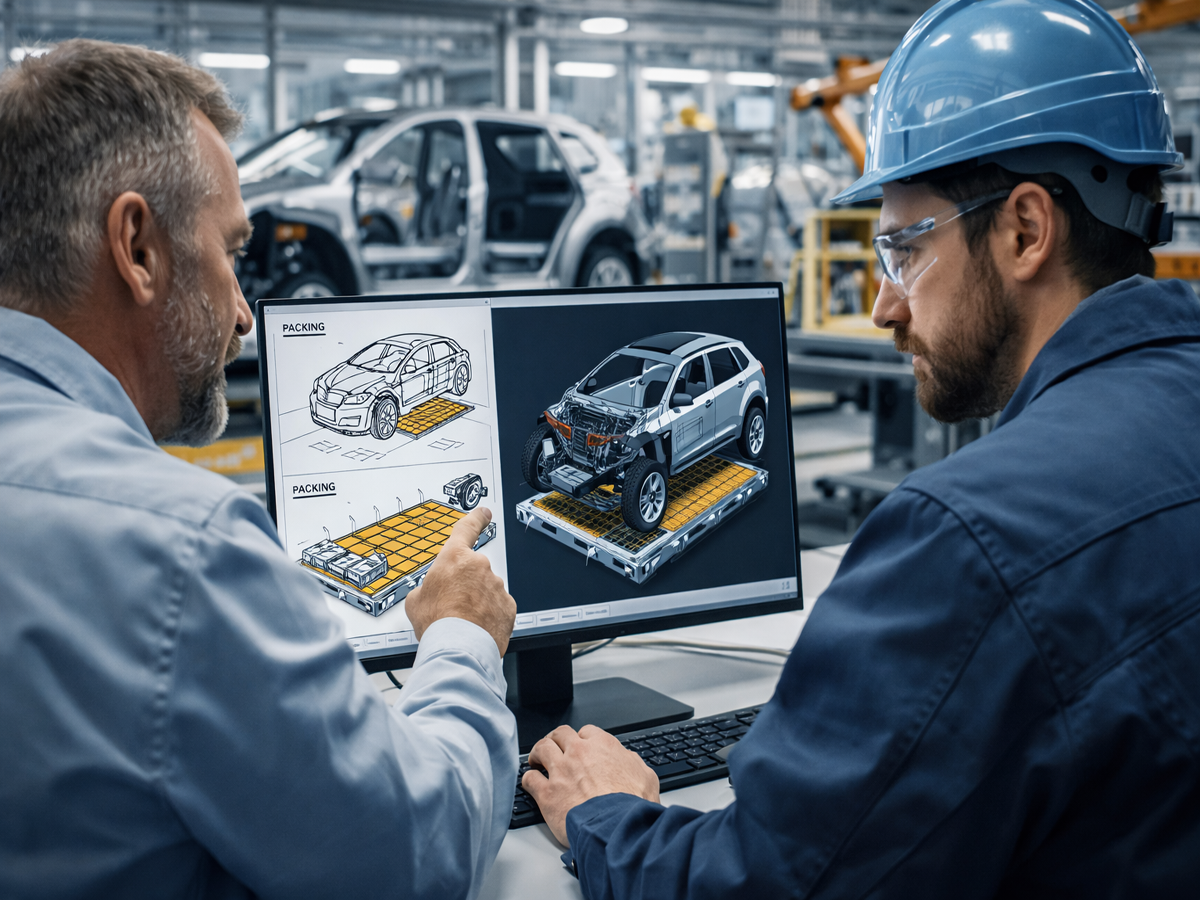
Thin sheet metal is one of the applications where washer geometry can become particularly important.
Potential engineering objectives include:
Increasing bearing area
Reducing local deformation
Protecting the sheet
Supporting a larger clamping region
Large-OD washers can therefore be considered where the standard washer geometry does not provide sufficient bearing coverage.
Structural brackets may experience:
Tensile loads
Shear loads
Bending
Vibration
Repeated loading
The washer is only one part of the joint.
Engineers should also evaluate:
Bolt diameter
Bolt property class
Hole diameter
Edge distance
Bracket thickness
Parent-material strength
Joint stiffness
Installation preload
HVAC systems can combine:
Sheet-metal panels
Frames
Ducting
Equipment housings
Fluid lines
Mounting brackets
Fastening systems may need to address:
Corrosion
Vibration
Thermal cycling
Maintenance access
Sealing
Sheet-metal deformation
The correct washer depends on the specific interface.
Enclosures often require a balance between:
Mechanical retention
Surface protection
Corrosion resistance
Appearance
Assembly efficiency
A standard flat washer may be sufficient for one application, while a sealing washer or specialized locking washer may be required for another.
Weight-sensitive equipment may require careful consideration of:
Fastener material
Washer material
Joint strength
Corrosion environment
Electrical requirements
Mass reduction
Where lightweight materials are used, washer selection should account for the bearing capability of the parent material.
Transportation applications can expose fasteners to:
Vibration
Cyclic loading
Environmental exposure
Temperature changes
Maintenance requirements
The washer should therefore be selected as part of the complete fastening system rather than simply matched by nominal diameter.
Washers and bolts are also widely used in:
Commercial machinery
Furniture mechanisms
Appliances
Equipment housings
Displays
Mounting systems
For high-volume OEM products, dimensional consistency and controlled specifications become especially important.
A practical selection process can follow this sequence:
Define:
Diameter
Thread pitch
Length
Head style
Material
Property class
Surface treatment
Define:
Steel
Stainless steel
Aluminum
Painted sheet metal
Coated material
Polymer-supported structure
Other engineering material
Determine whether the application requires:
Standard bearing area
Increased bearing area
Surface protection
Special geometry
Sealing
Locking
Consider:
Inside diameter
Outside diameter
Thickness
Washer series
Chamfer
Tooth configuration
Spring geometry
Review:
Torque-controlled installation
Angle-controlled tightening
Manual installation
Automated assembly
Tool access
Repeated maintenance
Specify:
Material
Grade
Coating
Passivation where applicable
Surface requirements
Corrosion requirements
For the bolt itself, an RFQ or engineering specification should normally define:
Standard
Head type
Thread diameter
Thread pitch
Length
Thread length
Material
Property class or grade
Surface treatment
Drive type
Special geometry
Application environment
For the washer, define:
Washer standard
Inside diameter
Outside diameter
Thickness
Material
Product grade where applicable
Surface treatment
Special geometry
Locking or sealing function if required
Packaging requirements
A bolt and washer are often only part of a larger assembly.
The nut can affect:
Thread compatibility
Assembly friction
Locking behavior
Corrosion compatibility
Installation tooling
Joint dimensions
For OEM projects, the bolt, washer and nut should therefore be specified as one fastening package when their interaction affects production performance.
The material combination should be evaluated for:
Mechanical strength
Corrosion environment
Galvanic compatibility
Temperature
Surface treatment
Assembly behavior
This is particularly important where stainless steel, aluminum and carbon steel are combined.
Standard washers and bolts can simplify:
Purchasing
Inventory
Replacement
Production
Quality inspection
Custom components may be justified when the application requires:
Special dimensions
Special materials
Non-standard geometry
Integrated functions
Specific surface treatment
Application-specific packaging
The objective should be to use a standard component where it genuinely fits and a custom component where the joint requires it.
A drawing eliminates ambiguity.
A professional RFQ drawing can define:
Dimensions
Tolerances
Thread specification
Material
Surface treatment
Washer geometry
Special requirements
Inspection requirements
Packaging requirements
This reduces the risk of receiving visually similar but functionally different components.
A useful 2D drawing should identify:
Nominal dimensions
Critical tolerances
Thread specification
Material
Property class or grade
Surface treatment
Special features
Inspection requirements
If an international standard is referenced, the relevant standard designation should be stated clearly.
Where a project requires special geometry, three-dimensional data can help engineers evaluate:
Clearance
Interference
Assembly direction
Adjacent components
Tool access
Washer seating
The availability and format of engineering data should be confirmed for the specific project rather than assumed for every standard component.
For supplier qualification and RFQ evaluation, procurement teams may request:
Product drawing
Applicable standard
Material specification
Property class or grade
Surface treatment
Dimensional inspection information
Material documentation where required
Packaging specification
Lot identification
Sample approval information
Annual usage estimate
Delivery requirements
Documentation should match the actual purchase specification and customer requirements.
A common procurement problem is a description such as:
“M10 high-strength bolt with washer.”
This is not necessarily enough information for controlled OEM sourcing.
A better specification may identify:
Bolt standard
Bolt diameter
Thread pitch
Length
Head type
Property class
Material
Surface treatment
Washer standard
Washer dimensions
Washer material
Packaging
Inspection/documentation requirements
The more application-critical the joint, the more important this detail becomes.
For an OEM program, purchasing teams may source bolts and washers separately or as a coordinated fastening package.
A coordinated supply approach can simplify:
Specification control
Packaging
Part-number management
Supplier communication
Incoming inspection
Assembly compatibility
However, the appropriate sourcing model depends on the customer's purchasing strategy.
A complete OEM fastening program can include:
Engineering requirement review
Drawing review
Material confirmation
Standard selection
Washer and bolt matching
Surface-treatment review
Sample development
Dimensional inspection
Assembly validation by the customer
Production quotation
Packaging confirmation
Repeat production supply
This process is more robust than selecting a washer and bolt independently from a general catalog.
Two washers with the same nominal bolt diameter can have different outside diameters, thicknesses and functions.
The parent material and bearing interface may still be limiting factors.
Surface condition can influence friction.
Locking behavior depends on the complete joint.
Enclosure performance must be evaluated at the assembly level.
A steel washer specification may not be suitable for every aluminum, coated or polymer-related application.
A drawing and technical specification are much more useful for controlled sourcing.
For design and structural engineers, the most useful starting point is the joint itself.
Define:
What is being clamped?
What material is being clamped?
What type of load is applied?
Is the load static or dynamic?
Is vibration present?
Is corrosion exposure important?
Is sealing required?
Is repeated assembly required?
Is electrical bonding involved?
How will the joint be tightened?
Once these questions are answered, the bolt and washer specification becomes much more straightforward.
Procurement teams need a specification that can be quoted consistently by qualified suppliers.
The purchasing package should define:
Part number
Drawing
Standard
Material
Dimensions
Surface treatment
Property class
Quantity
Annual demand
Packaging
Inspection documentation
Delivery requirements
This makes supplier comparison more meaningful and reduces the risk of price comparisons between technically different products.
For supplier development teams, the focus extends beyond the individual component.
Important questions include:
Can the supplier manufacture the specified geometry?
Can the supplier maintain the required dimensions?
Can the supplier provide the specified material?
Can the surface treatment match the drawing?
Can production quantities be supported?
Can packaging requirements be followed?
Can required documentation be provided?
Can engineering changes be controlled?
These questions are especially important for long-term OEM programs.
Not every fastening application requires the same level of documentation.
Depending on the project, customers may require:
Certificate of Conformance
Material documentation
Dimensional inspection reports
Surface-treatment documentation
Sample inspection records
Lot traceability
The required documentation should be defined in the RFQ or purchase specification.
For electrical, electronic and many industrial supply chains, customers may request compliance information related to RoHS and REACH.
Surface-treatment selection can also affect compliance requirements.
JUXIN FASTENERS focuses on customer-specified surface-treatment and material requirements and can review the applicable requirements as part of an OEM RFQ.
Common industrial fastener surface treatments can include:
Zinc-based coatings
Zinc-nickel systems
Passivated stainless steel
Other application-specific finishes
The correct treatment depends on:
Corrosion environment
Material compatibility
Appearance
Friction requirements
Customer specification
Environmental requirements
A coating should therefore be specified by the required technical system rather than simply by color.
When a bolt, nut or washer receives a different coating, the friction characteristics of the assembly can change.
For torque-controlled assembly, this can influence the relationship between:
Applied torque → friction → preload
Therefore, coating changes should be reviewed whenever the assembly process has already been validated.
Stainless steel washers and bolts may be supplied in different surface conditions depending on the application.
Potential considerations include:
Appearance
Corrosion environment
Cleaning requirements
Assembly friction
Passivation requirements
Customer specification
Surface treatment should be defined clearly in the engineering drawing or purchasing specification.
Custom washers may be considered when standard products cannot provide the required combination of:
Outside diameter
Inside diameter
Thickness
Material
Shape
Special profile
Surface treatment
Custom washer programs can be particularly useful for:
Automotive assemblies
Electrical enclosures
Industrial equipment
Sheet-metal structures
Specialized brackets
Custom machinery
JUXIN FASTENERS also supports custom screws and bolts for application-specific requirements.
Custom fastening components may involve:
Special head geometry
Special length
Special thread
Special tip
Special shoulder
Custom drive
Material requirements
Surface-treatment requirements
For custom components, a 2D drawing is the preferred starting point for technical review.
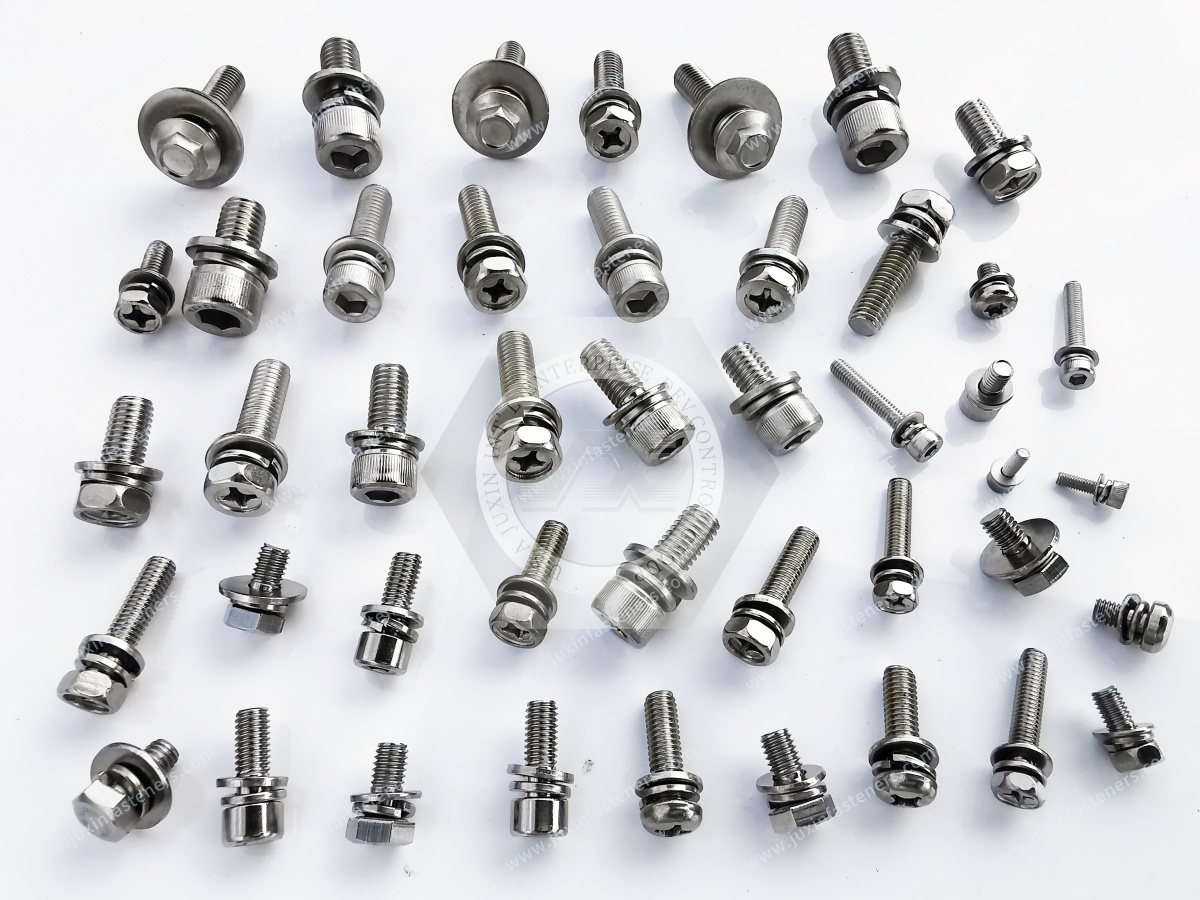
Some assemblies require a fastening architecture that cannot be solved by a conventional bolt-and-washer combination.
Depending on the application, alternatives may include:
Self-clinching nuts
Self-clinching studs
Self-clinching standoffs
Blind rivet nuts
Sealed blind rivet nuts
Weld nuts
Weld studs
Threaded inserts
CNC-machined fastening components
This is particularly relevant for sheet-metal and enclosure applications where backside access is limited.
If the assembly has only one-sided access, a conventional bolt-and-nut arrangement may not be practical.
A blind rivet nut can create an internal thread from one accessible side.
JUXIN FASTENERS supplies blind rivet nut solutions for automotive, EV, industrial and sheet-metal applications.
Related engineering solutions include:
/solutions/blind-rivet-nuts-engineering-principles-applications
/solutions/blind-rivet-nuts-comprehensive-engineering-guide
/solutions/automotive-blind-rivet-nuts-large-cap-anti-rotation
For permanent installation into sheet metal, self-clinching technology may provide an alternative to loose nuts and bolts.
Typical components include:
Self-clinching nuts
Self-clinching studs
Self-clinching standoffs
Selection depends on:
Sheet thickness
Material
Hole geometry
Installation method
Load requirements
Assembly sequence
Weld nuts and weld studs can be considered where the fastening element is intended to become a permanent part of the metal structure.
Applications may include:
Automotive components
Sheet-metal assemblies
Frames
Brackets
Enclosures
Industrial equipment
The welding process and parent material must be considered when specifying the complete system.
JUXIN FASTENERS supports a broader industrial fastening portfolio that can include:
High-strength bolts
Custom bolts and screws
Stainless steel fasteners
Blind rivet nuts
Sealing blind rivet nuts
Self-clinching fasteners
Weld fasteners
CNC-machined components
Specialized fastening components
This allows engineering teams to evaluate different fastening architectures when a standard bolt-and-washer arrangement does not meet the application requirements.
The most important practical lesson is:
Do not select a washer from the bolt diameter alone.
Instead, evaluate:
Fastener + washer + nut + joint material + hole + coating + installation method + environment
This system-level approach can prevent many specification errors before production begins.
A washer is sometimes treated as a low-value accessory.
Engineering-wise, it is better understood as an interface component.
It controls part of the mechanical transition between:
Fastener load → bearing surface → connected material
This is why washer geometry, thickness, material and surface condition can matter significantly in production assemblies.
A high-strength bolt can be used with a relatively soft mating component.
The complete assembly can still be limited by:
Bearing deformation
Thread engagement
Hole deformation
Component thickness
Joint stiffness
Preload loss
Therefore, engineering decisions should be based on the weakest relevant part of the complete joint rather than the nominal strength of the bolt alone.
Torque is not simply a number printed on a drawing.
It is affected by:
Fastener friction
Washer friction
Nut friction
Coating
Lubrication
Surface condition
Installation equipment
When the production process depends on torque-controlled tightening, changes to the complete fastener package should be reviewed.
Two washers may appear almost identical while differing in:
Material
Thickness
Outside diameter
Inside diameter
Hardness
Surface treatment
Standard
Functional geometry
Visual similarity is therefore not enough for OEM interchangeability.
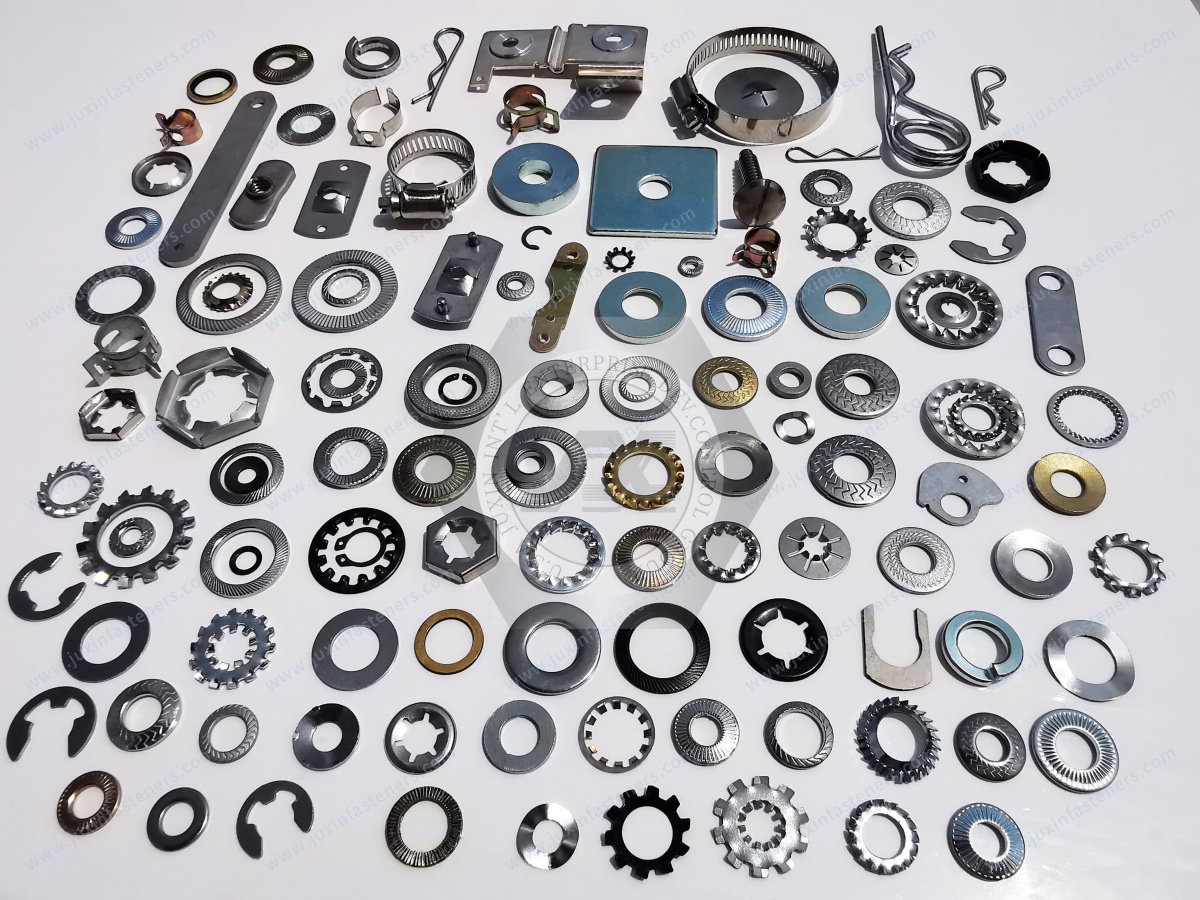
A well-prepared RFQ allows a supplier to evaluate the actual requirement instead of guessing.
For a washer and bolt assembly, the most useful information is:
2D drawing
3D model where relevant
Bolt standard
Washer standard
Material
Property class or grade
Surface treatment
Critical dimensions
Application
Annual usage
Prototype quantity
Production quantity
Packaging requirements
Required inspection documents
Special customer requirements
Before contacting a supplier, purchasing teams should prepare:
Bolt
Diameter
Thread pitch
Length
Head style
Material
Property class or grade
Surface treatment
Washer
Standard
Inside diameter
Outside diameter
Thickness
Material
Grade or product class where applicable
Surface treatment
Joint
Mating material
Sheet thickness
Hole diameter
Static or dynamic loading
Vibration
Corrosion environment
Temperature exposure
Sealing requirement
Electrical requirement
Commercial
Prototype quantity
Estimated annual volume
Target production timing
Packaging
Inspection requirements
Documentation requirements
Delivery destination
JUXIN FASTENERS works with industrial customers on specified fastening components including:
Industrial bolts
High-strength bolts
Custom screws
Stainless steel fasteners
Washers and washer-related fastening components
Locking nuts
Self-clinching fasteners
Blind rivet nuts
Sealing blind rivet nuts
Weld fasteners
CNC-machined fastening components
Plastic fastening components
The appropriate product depends on the actual engineering requirement.
Instead of selecting a product only by a keyword such as “M8 washer” or “high-strength bolt,” customers can provide the drawing, standard and application information for a more precise technical review.
A practical OEM sourcing process can follow:
Application requirement
↓
Drawing and specification review
↓
Fastener and washer selection
↓
Material and surface confirmation
↓
Sample or prototype evaluation
↓
Customer approval
↓
Production quotation
↓
Production supply
↓
Repeat OEM orders
This approach creates a clearer connection between engineering requirements and purchasing execution.
Price is only one part of a fastening sourcing decision.
A technical comparison should also consider:
Exact material
Standard
Dimensional conformity
Surface treatment
Property class
Packaging
Documentation
Sample approval
Production capacity
Lead-time requirements
Engineering communication
Change-control requirements
A lower unit price does not provide a meaningful comparison if the two suppliers are quoting different technical specifications.
For critical washer-and-bolt assemblies, the drawing should clearly define:
Applicable standard
Dimensions
Material
Grade or property class
Surface treatment
Critical tolerances
Special characteristics
Assembly requirements
Documentation requirements where applicable
This gives procurement and suppliers a common technical reference.
For multi-product OEM programs, standardization can reduce unnecessary part-number proliferation.
Where technically appropriate, purchasing teams can standardize:
Bolt families
Washer families
Materials
Surface treatments
Packaging
Documentation levels
However, standardization should not override application-specific engineering requirements.
Customization can be justified when a standard washer or bolt causes:
Excessive part count
Difficult assembly
Clearance problems
Poor bearing distribution
Incompatible material combinations
Special sealing requirements
Special packaging requirements
A custom fastening component should therefore solve a clearly defined engineering or supply-chain problem.
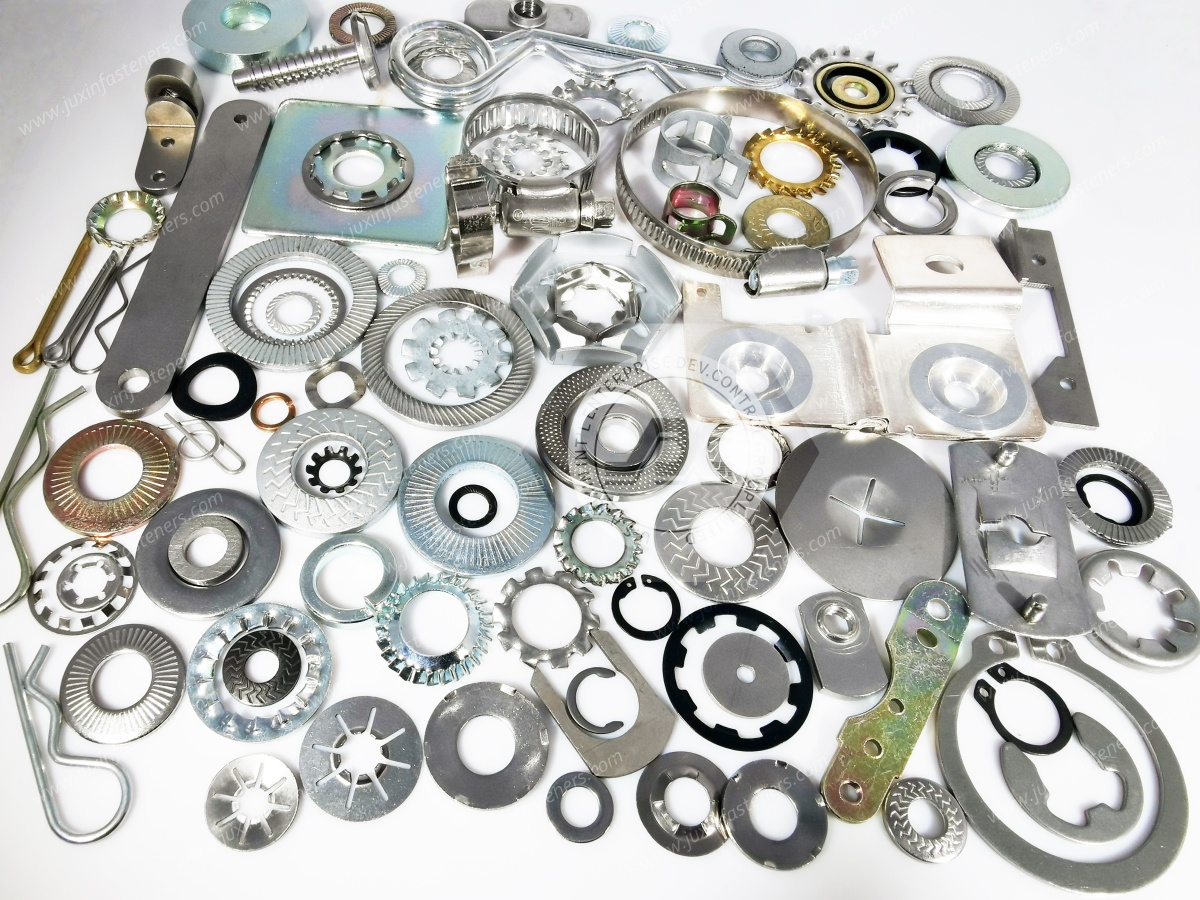
For a custom OEM requirement, JUXIN FASTENERS can review the available information and determine the appropriate manufacturing and sourcing route.
The review can focus on:
Geometry
Material
Standard
Surface treatment
Application
Quantity
Special requirements
The more complete the RFQ package, the more accurately the supplier can evaluate the requirement.
| Application Requirement | Typical Fastening Consideration |
|---|---|
| General load distribution | Plain washer + compatible bolt |
| Thin sheet metal | Larger bearing washer or alternative fastening architecture |
| High-strength bolted joint | Washer material, geometry and bearing interface require review |
| High vibration | Dedicated locking strategy and joint design review |
| Corrosive environment | Material and surface-treatment selection |
| Stainless assembly | Stainless grade and property class selection |
| Sealing requirement | Sealing washer or dedicated sealing architecture |
| One-sided installation | Blind rivet nut or other blind fastening solution |
| Permanent sheet-metal thread | Self-clinching or weld fastener |
| Custom geometry | Custom washer, bolt or machined component |
The most reliable fastening specification is not:
“Bolt + washer.”
It is:
“A defined fastening system matched to the joint.”
That system includes the fastener, washer, nut, connected material, hole geometry, surface treatment, installation process and environmental conditions.
For engineers, this approach improves technical clarity.
For procurement teams, it improves supplier comparability.
For supplier-development teams, it reduces specification ambiguity.
For manufacturing teams, it helps connect the engineering drawing with the production process.
If you are developing an automotive, EV, industrial, electrical, machinery, HVAC, transportation or OEM product and need a specific washer-and-bolt combination, send JUXIN FASTENERS your current drawing or specification.
For the fastest technical review, include:
2D drawing
3D model where applicable
Bolt dimensions
Washer dimensions
Material
Property class or grade
Surface treatment
Application
Mating material
Annual usage
Prototype quantity
Packaging requirements
Required inspection or compliance documents
JUXIN FASTENERS can review the requirement and identify the appropriate fastening solution based on the specified application.
Email: info@juxinfasteners.com
Website: www.juxinfasteners.com
For industrial OEM sourcing, the objective is not simply to purchase a bolt or washer.
The objective is to establish a fastening specification that engineers can approve, purchasing teams can source, suppliers can manufacture, and production teams can assemble consistently.
 MORE NEWS
Sep. 25, 2026
Sep. 25, 2026
Sep. 25, 2026
Contact Us
Tel.:
+86 020 8621 0320
+86 020 3121 6067
E-mail:
Technical Support:
Navigation
SEND INQUIREY