Call Us
+86 136 6007 9809
Call Us
+86 136 6007 9809

Automotive Fastening Solution: U-Groove Design in Hex Flange Bolts for OEM Applications
In modern automotive engineering, fastening reliability is not just a design detail—it is a structural safety requirement. As vehicle platforms evolve toward lightweight architectures, electrification, and high dynamic loading conditions, hex flange bolts with an integrated washer-face design have become a preferred solution in global OEM applications.
Among various structural optimizations, the U-groove (relief groove) design under the bolt head has emerged as a critical engineering feature for improving fatigue resistance and assembly reliability in high-performance fastening systems.
This article provides a systematic engineering analysis of the U-groove design in hex flange bolts and flange fasteners, based on ISO/DIN-standard fastening principles, focusing on stress optimization, interference prevention, and fatigue performance improvement in automotive manufacturing.
Product Specification
Automotive Fastening Solution: U-Groove Design in Hex Flange Bolts for OEM Applications
In modern automotive engineering, fastening reliability is not just a design detail—it is a structural safety requirement. As vehicle platforms evolve toward lightweight architectures, electrification, and high dynamic loading conditions, hex flange bolts with an integrated washer-face design have become a preferred solution in global OEM applications.
Among various structural optimizations, the U-groove (relief groove) design under the bolt head has emerged as a critical engineering feature for improving fatigue resistance and assembly reliability in high-performance fastening systems.
This article provides a systematic engineering analysis of the U-groove design in hex flange bolts and flange fasteners, based on ISO/DIN-standard fastening principles, focusing on stress optimization, interference prevention, and fatigue performance improvement in automotive manufacturing.
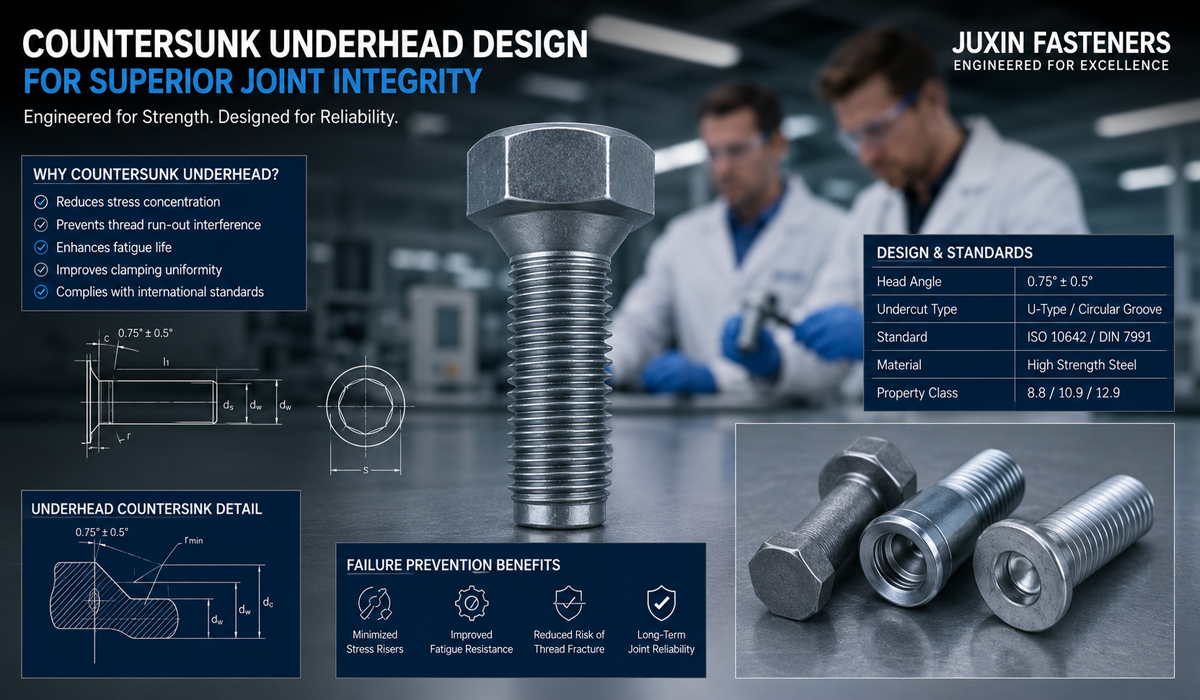
1. Hex Flange Bolts in Automotive Engineering
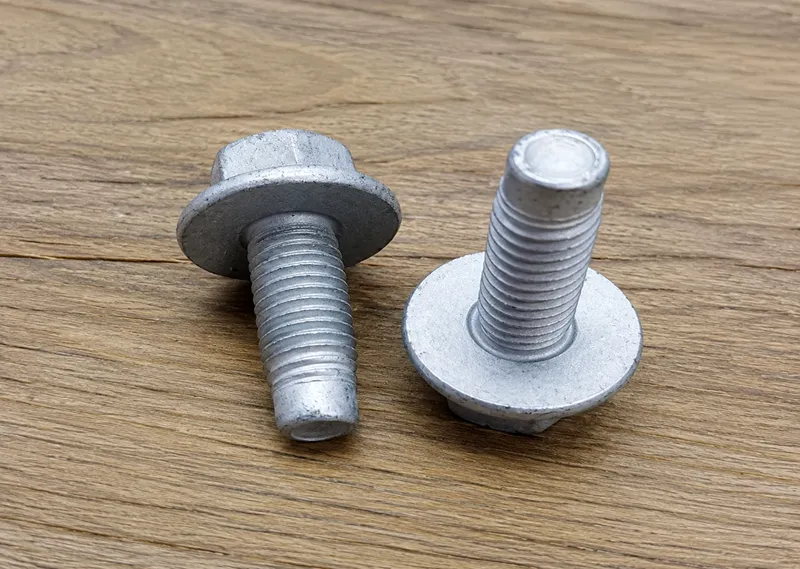
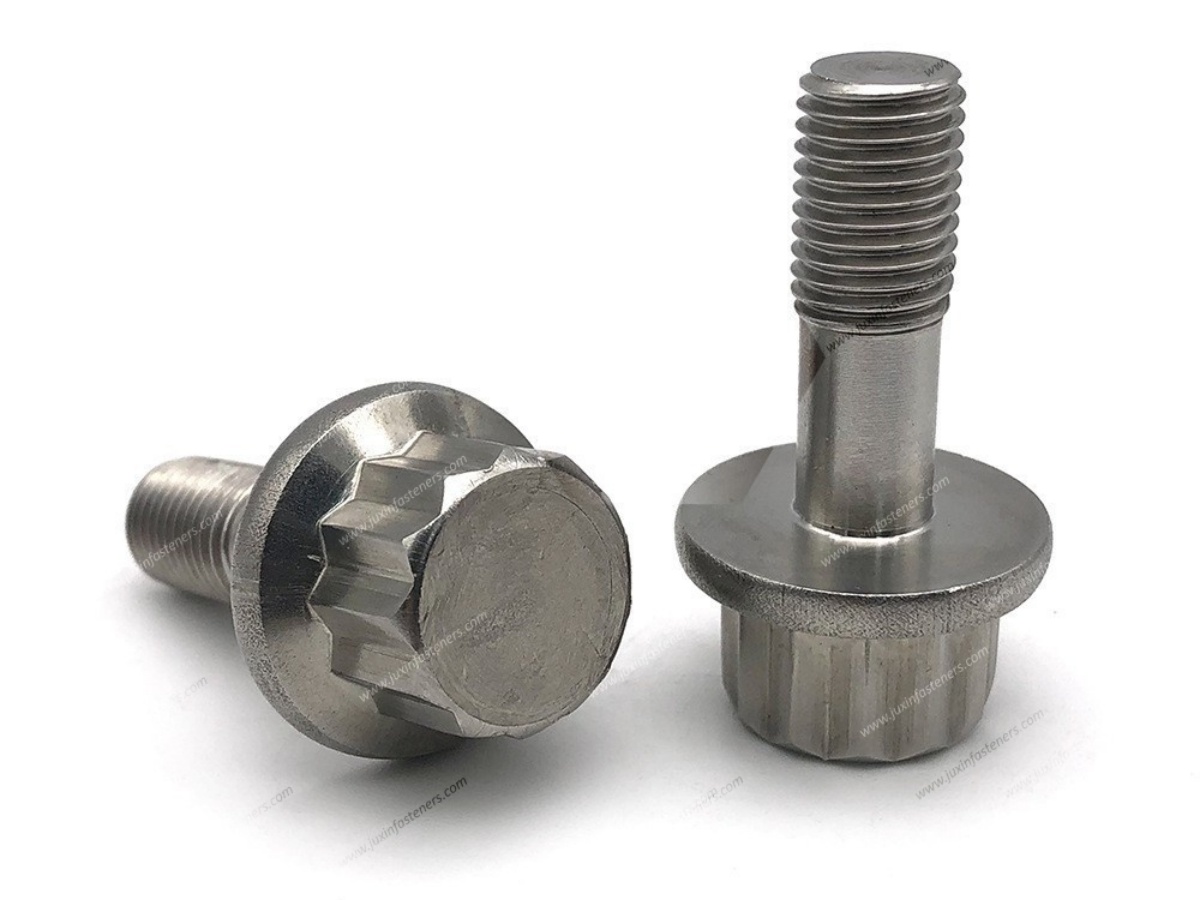
A hex flange bolt is a combined fastening element that integrates a hex head and a built-in bearing flange, eliminating the need for a separate washer.
Compared with conventional hex head bolts (ISO 4014 / ISO 4017), flange bolts provide:
Larger bearing surface for improved load distribution
Reduced embedding loss at joint interfaces
Improved anti-loosening performance under vibration
Simplified assembly process in automated production lines
In automotive applications, flange bolts are widely used in:
Powertrain and engine mounting systems
Subframe and chassis connections
Electric drivetrain and battery pack structures
High-vibration assembly zones
Two commonly referenced European-standard systems include:
DIN 6921 (Hexagon flange bolts, serrated or non-serrated)
ISO 1665 / ISO 4162 (Flange head bolt geometries in industrial applications)
Increasing flange diameter improves frictional resistance but also introduces a critical engineering challenge: stress concentration at the head-to-shank transition zone.
2. The Critical Weak Point: Head-to-Shank Transition
Regardless of whether bolts follow DIN or ISO dimensional systems, one structural limitation remains universal:
The head-to-shank transition is one of the highest stress concentration zones in a bolted joint.
This region experiences:
Axial tensile stress during preloading
Cyclic fatigue loads under vibration and torsion
Thermal expansion mismatch in engine environments
Traditionally, stress reduction is achieved by increasing the fillet radius (R). However, this approach has limitations:
Limited geometric control in cold forging
Manufacturing variability in mass production
Incomplete stress redistribution under fatigue loading
As a result, advanced OEM designs introduce a more effective structural optimization: the U-groove relief design under the bolt head.
3. U-Groove (Relief Groove) Design Principle
The U-groove is a circular relief feature located at the bolt head-shank transition zone. Unlike simple radius enlargement, it introduces a controlled “stress relief cavity” that modifies load transfer behavior.
Instead of forcing stress through a sharp transition, the groove allows:
Gradual stiffness transition
Redistribution of stress flow lines
Reduction of peak stress concentration at the fillet region
From a mechanical perspective, the design serves as a stress-diffusion buffer zone, ensuring smoother load transfer between the flange head and the bolt shank.
This principle is widely referenced in global OEM fastening standards, such as:
GM engineering specifications (e.g., GMW fastening design guidelines)
European automotive flange bolt design practices
High-fatigue engine fastening architectures
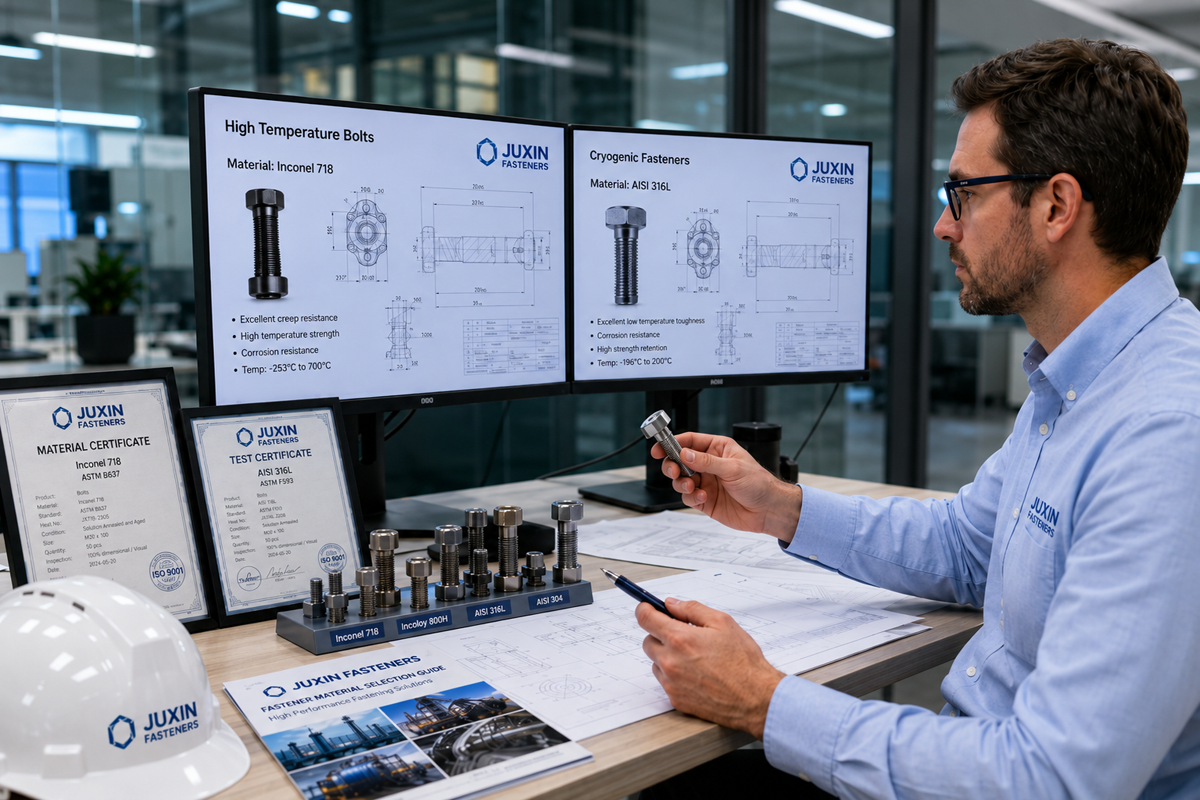
4. Engineering Advantages of U-Groove Flange Bolts
4.1 Reduced Stress Concentration
Finite element analysis and industrial validation show that optimized U-groove geometry can significantly reduce peak stress at the head-to-shank interface.
In fatigue-critical applications such as engine and drivetrain systems, this translates into:
Improved fatigue life
Lower risk of head separation failure
More stable preload retention under cyclic loading
4.2 Improved Metal Flow in Cold Forging
In cold heading manufacturing, metal flow continuity is essential for mechanical integrity.
The U-groove design:
Guides material flow during forging
Reduces fiber distortion at the transition zone
Improves structural consistency of grain flow
This directly enhances the long-term fatigue resistance of high-strength fasteners, such as:
ISO 898-1 property class 10.9 bolts
ISO 898-1 property class 12.9 bolts
4.3 Better Thermal and Residual Stress Distribution
During quenching and tempering, high-strength alloy steels develop internal thermal stresses.
The U-groove geometry helps:
Reduce localized stress accumulation
Improve heat-treatment stability
Lower risk of quench cracking in high-strength bolts
This is particularly critical for automotive engine and powertrain fasteners that undergo high thermal cycling.
4.4 Controlled Stiffness Transition
One of the primary causes of fatigue failure is an abrupt change in stiffness between the bolt head and shank.
The U-groove design enables:
Gradual stiffness transition zone
Lower peak strain concentration
Improved load-sharing behavior across joint interfaces
This is especially beneficial in dynamic assemblies such as:
Electric vehicle drivetrain systems
Suspension and chassis joints
Battery pack structural fasteners
4.5 Elimination of Washer Interference in Bolt Assemblies
In flange bolt + washer combinations, geometric interference can occur between:
Bolt head fillet radius
Washer inner diameter
This can lead to:
Reduced preload efficiency
Uneven contact pressure distribution
Premature joint relaxation
The U-groove design effectively eliminates this interference, ensuring:
Stable clamping force
Improved assembly consistency
Reduced preload loss in mass production environments
5. Comparison: U-Groove vs Standard Fillet Radius Design
Feature | Standard Radius Design | U-Groove Design |
Stress distribution | Localized | Distributed |
Fatigue resistance | Moderate | High |
Manufacturing control | Sensitive to tooling | More stable in mass production |
Washer compatibility | Possible interference | No interference |
Structural optimization | Geometry-based | Stress-flow-based |
The comparison clearly shows that the U-groove design is not merely a cosmetic modification but a functional stress-engineering solution.
6. Manufacturing Methods
6.1 Cold Heading (Primary Industrial Method)
Most ISO/DIN flange bolts are produced via multi-stage cold forging:
High material efficiency (up to 95%)
Excellent grain flow continuity
High-volume automated production capability
U-groove features can be integrated into forging dies for near-net-shape forming in high-volume production.
6.2 Secondary Forming and Rolling
For high-performance fasteners, additional processes may include:
Thread rolling
Fillet rolling for fatigue strengthening
Surface strengthening treatments
These processes further enhance fatigue life in critical automotive assemblies.
6.3 Machining (Prototype or Special Applications)
CNC machining may be used for:
Prototype validation
Low-volume custom fasteners
Oversized or non-standard geometries
However, machining is not preferred for mass production due to the costs and material losses involved.
7. Automotive Applications
U-groove optimized flange bolts are widely used in modern vehicle platforms, including:
Electric vehicle battery structural systems
Engine and transmission mounting systems
Subframe and chassis assemblies
High-vibration drivetrain interfaces
Leading OEM fastening systems, including global EV platforms, increasingly adopt optimized head-to-shank transition geometries to improve long-term durability.
Conclusion
The U-groove design in hex flange bolts represents a shift in fastening engineering philosophy:
From “increasing material strength” to “optimizing stress flow”.
Instead of relying solely on larger fillets or stronger materials, modern automotive fastening systems focus on controlling structural stress and optimizing fatigue engineering.
In high-performance vehicle platforms, where reliability and safety are non-negotiable, such design innovations are not optional—they are essential.
Ultimately, in automotive engineering, even the smallest geometric detail in a fastener can determine the long-term safety of the entire structure.
Product Packaging
Packaging Standard
At Juxin Fasteners, we apply standardized export packaging to ensure product protection, traceability, and compliance with international logistics requirements.
1. Standard Export Packaging
Unless otherwise specified, all products will be packed according to our factory standard export packaging, which includes:
Moisture-resistant inner protection
Poly bag or small box packing as required
Reinforced export cartons
Clear labeling with part number, specification, batch number, and quantity
Palletizing for sea or air shipment when necessary
Our standard packaging is designed to ensure safe transportation, efficient warehousing, and long-distance international shipping.
2. Customized Packaging Options
We also provide customized packaging solutions according to customer requirements, including but not limited to:
Private labeling
Customized barcodes
Specific carton dimensions
Retail packaging
Special pallet configuration
Customer-specific marking and identification
So that you know, customized packaging may involve additional costs and extended lead time depending on the complexity of the requirements.
3. Compliance & Quality Assurance
All packaging processes are controlled under our ISO 9001 quality management system to ensure consistency, traceability, and product integrity throughout the supply chain.
Product Pictures
Contact Us
Tel.:
+86 020 8621 0320
+86 020 3121 6067
E-mail:
Technical Support:
Navigation
SEND INQUIREY