Call Us
+86 136 6007 9809
Call Us
+86 136 6007 9809

Bolt Cleanliness Control: The Hidden Threat to Fastener Reliability in High-Performance Engineering Systems
In modern industrial fastener systems, surface cleanliness is often an underestimated quality parameter. In reality, it is one of the most critical factors affecting the long-term reliability of high-strength bolts, precision fasteners, and critical bolted joints.
Residual metal shavings, cutting fluid, ionic contaminants, or microscopic particles on bolt surfaces may appear insignificant. However, in real-world engineering applications, these invisible contaminants can lead to torque deviations, coating failures, galvanic corrosion, or even stress corrosion cracking.
This article provides a systematic engineering-level breakdown of fastener cleanliness control technology, aligned with ISO 16232 cleanliness standards, VDA 19.1 technical cleanliness requirements, and global OEM quality systems.
Product Specification
Bolt Cleanliness Control: The Hidden Threat to Fastener Reliability in High-Performance Engineering Systems
In modern industrial fastener systems, surface cleanliness is often an underestimated quality parameter. In reality, it is one of the most critical factors affecting the long-term reliability of high-strength bolts, precision fasteners, and critical bolted joints.
Residual metal shavings, cutting fluid, ionic contaminants, or microscopic particles on bolt surfaces may appear insignificant. However, in real-world engineering applications, these invisible contaminants can lead to torque deviations, coating failures, galvanic corrosion, or even stress corrosion cracking.
This article provides a systematic engineering-level breakdown of fastener cleanliness control technology, aligned with ISO 16232 cleanliness standards, VDA 19.1 technical cleanliness requirements, and global OEM quality systems.
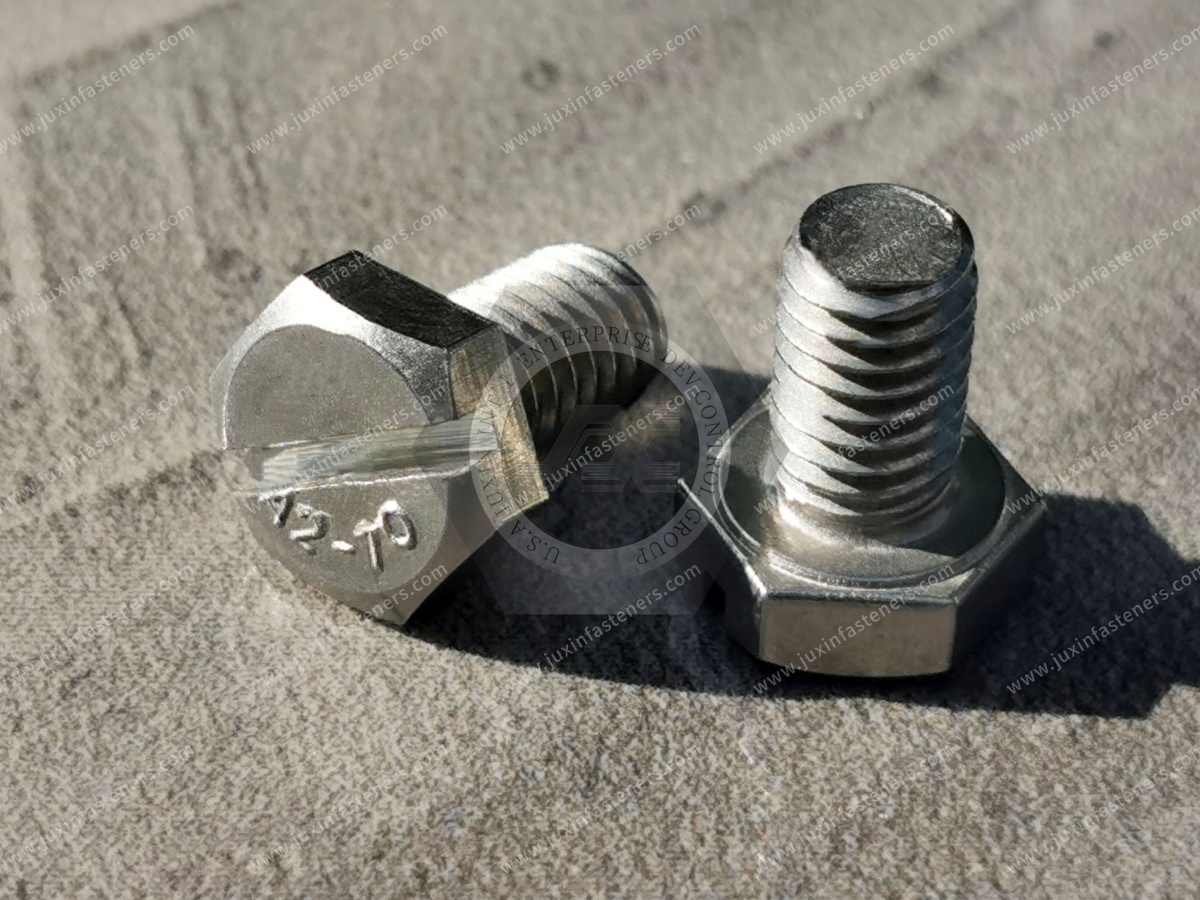
1. Why Cleanliness Is the “Life Line” of Industrial Fasteners
From cold forging and machining to heat treatment and electroplating, every stage in fastener manufacturing introduces potential contamination risks.
Typical contaminants include:
Metal chips and abrasive particles
Cutting oil and drawing lubricant residues
Phosphate and saponification by-products
Dust, moisture, and human-hand contamination
Hard metallic particles embedded in thread flanks significantly alter the friction coefficient of the bolt-nut interface, resulting in severe deviation from designed torque–clamp load relationships in high-strength bolted connections.
Oil contamination reduces the adhesion strength of coatings, a leading cause of blistering and peeling in zinc or zinc-nickel coatings used in automotive fasteners and wind power bolts.
Soluble ionic residues such as chlorides and sulfates can trigger electrochemical corrosion under humid or offshore conditions.
Real-world failure cases:
An automotive transmission manufacturer experienced oil leakage due to a 0.3 mm aluminum chip trapped in the internal threads of a bolt.
A wind power OEM reported widespread coating blistering on galvanized high-strength fasteners, traced back to insufficient rinsing after acid cleaning.
These cases demonstrate a simple truth:
Fastener cleanliness is not cosmetic—it is structural reliability.
2. Global Technical Cleanliness Standards (ISO / VDA / OEM Requirements)
Today, global automotive and industrial OEMs widely adopt:
ISO 16232 – Road vehicles: cleanliness of components and systems
VDA 19.1 – Technical cleanliness in automotive manufacturing
ISO 16232-based OEM cleanliness specifications
These standards define a systematic methodology for contamination evaluation, including sampling, filtration, and particle analysis.
ISO 16232 introduces particle size classification levels such as:
5 μm, 15 μm, 25 μm, 50 μm, 100 μm, 150 μm, and 200 μm.
However, it does NOT define universal limits. Instead, cleanliness requirements are determined by:
Function risk level
System criticality
OEM engineering design requirements
VDA 19.1 Cleanliness Classes:
Class 1: Ultra-clean precision systems (e.g., fuel injection systems)
Class 6: Non-critical structural components
For example:
Class 1 may allow fewer than 14,000 particles >25 μm per m²
Class 6 may allow up to 2.2 million particles
The 2025 revision of VDA 19.1 further strengthens requirements for:
Sub-50 μm particle detection
Conductive particle risks in EV systems
This directly affects electric-vehicle fasteners, battery-pack bolts, and conductive joint systems.
3. Core Cleanliness Inspection Methods for Fasteners
Fastener cleanliness evaluation follows a standardized three-step process:
1) Contaminant Extraction Methods
Pressure rinsing method (external surfaces of bolts and nuts)
Ultrasonic extraction (most effective for threaded fasteners and blind holes)
Vacuum extraction (large structural components)
Ultrasonic cleaning is the most widely used method for precision fasteners and aerospace-grade bolts, as cavitation effectively removes particles from thread roots and hidden geometries.
2) Filtration Process
After extraction, the contaminated solution is filtered through micro-porous membranes:
Typical pore size: 0.8 μm – 5 μm
Captures both metallic and non-metallic particles
3) Particle Analysis
Two primary methods are used:
Gravimetric method (mass measurement after drying)
Particle counting method (ISO 16232 preferred method)
Advanced analysis includes:
Optical microscopy
Automated particle counters
SEM/EDS (Scanning Electron Microscopy with Energy Dispersive Spectroscopy)
This allows identification of contamination sources in industrial fastener manufacturing processes.
4. Cleanliness Requirements Across Key Industries
Aerospace Engineering
Cleanliness level: VDA Class 1–2
Used in aircraft structural fasteners and engine assembly bolts
Zero tolerance for conductive or abrasive particles
Automotive Industry
Engine bolts: ≤100 particles >25 μm per unit
Internal threaded nuts: ≤200 particles >15 μm
These requirements apply to automotive high-strength bolts, engine fasteners, and transmission fasteners.
New Energy Vehicles (EV)
Battery pack fasteners must avoid conductive particles, which may cause:
Short circuits
Thermal runaway risks
EV cleanliness requirements are becoming increasingly strict under updated VDA 19.1 guidelines.
Hydraulic Systems
High-pressure valve fasteners require:
≤20 particles >200 μm per unit
Contamination may cause valve sticking or system failure.
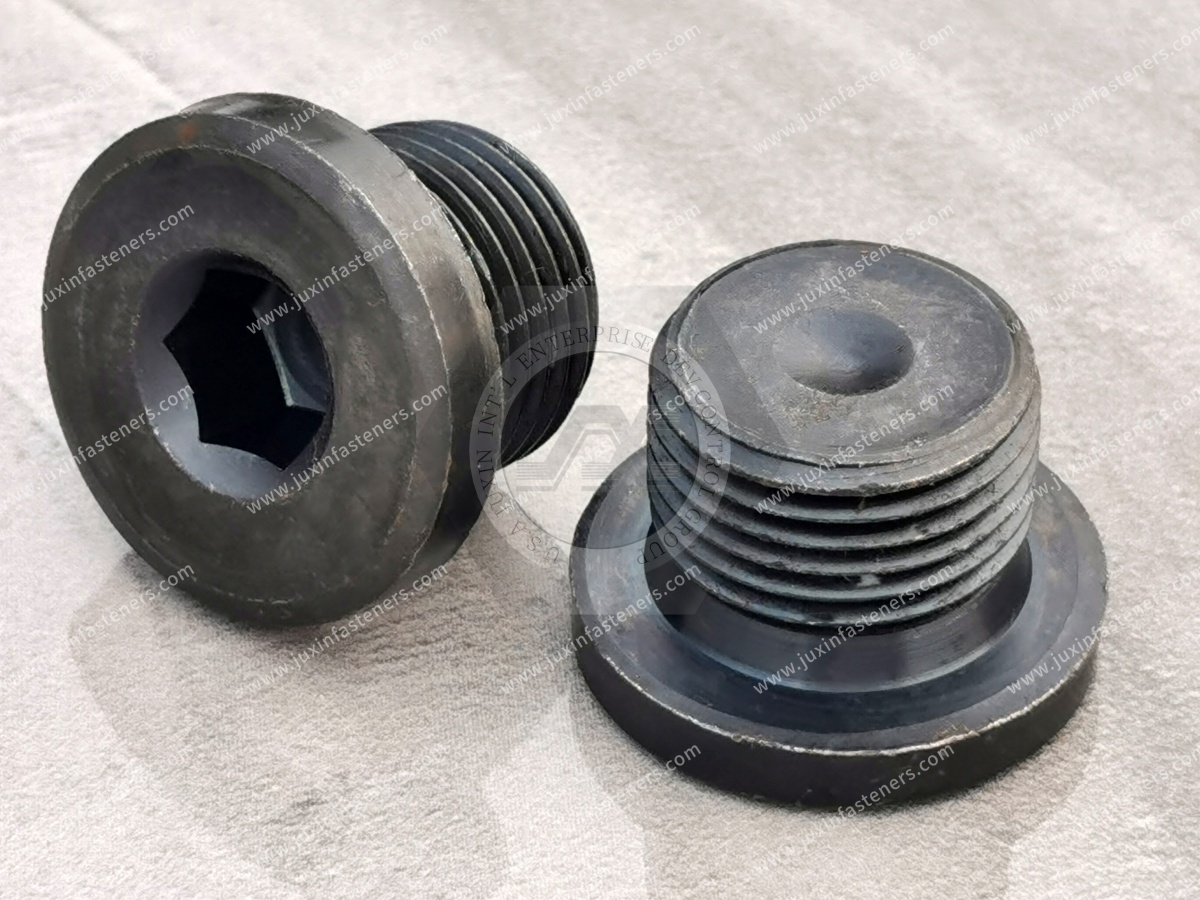
5. Quality Control Strategies for Fastener Cleanliness
Improving cleanliness in industrial fastener production requires both process optimization and strict quality control.
Main Cleaning Technologies:
Multi-stage ultrasonic cleaning (alkaline wash → rinse → passivation)
Vapor degreasing cleaning (ideal for stainless steel precision fasteners)
Supercritical CO₂ cleaning (advanced aerospace-grade technology)
Critical Process Control Points:
Regular monitoring of cleaning agent concentration and temperature
Full rinsing to eliminate chemical residues
Controlled drying to prevent re-contamination
Cleanroom packaging after cleaning
Quality Control Stages:
Incoming Inspection (IQC)
100% inspection for critical fasteners or AQL sampling
Process Control (IPQC)
Monitoring acid pickling and phosphating residues
Measuring rinse water conductivity and pH
Final Inspection (FQC)
Compliance verification based on customer-defined cleanliness class
Reference: ISO 16232 Annex H cleanliness limit methodology
Conclusion
In modern engineering systems, fastener cleanliness control is no longer a secondary quality factor—it is a core reliability requirement.
Whether in:
Automotive manufacturing
Wind power infrastructure
Aerospace assembly
Hydraulic systems
Electric vehicle battery systems
Contamination control directly determines the performance of high-strength bolts, precision industrial fasteners, and critical bolted joints.
At JUXIN FASTENERS, cleanliness control is integrated into every stage of production—from raw material handling to final packaging—ensuring stable torque performance, coating integrity, and long-term structural reliability.
Product Packaging
Packaging Standard
At Juxin Fasteners, we apply standardized export packaging to ensure product protection, traceability, and compliance with international logistics requirements.
1. Standard Export Packaging
Unless otherwise specified, all products will be packed according to our factory standard export packaging, which includes:
Moisture-resistant inner protection
Poly bag or small box packing as required
Reinforced export cartons
Clear labeling with part number, specification, batch number, and quantity
Palletizing for sea or air shipment when necessary
Our standard packaging is designed to ensure safe transportation, efficient warehousing, and long-distance international shipping.
2. Customized Packaging Options
We also provide customized packaging solutions according to customer requirements, including but not limited to:
Private labeling
Customized barcodes
Specific carton dimensions
Retail packaging
Special pallet configuration
Customer-specific marking and identification
So that you know, customized packaging may involve additional costs and extended lead time depending on the complexity of the requirements.
3. Compliance & Quality Assurance
All packaging processes are controlled under our ISO 9001 quality management system to ensure consistency, traceability, and product integrity throughout the supply chain.
Product Pictures
Contact Us
Tel.:
+86 020 8621 0320
+86 020 3121 6067
E-mail:
Technical Support:
Navigation
SEND INQUIREY