Call Us
+86 136 6007 9809
Call Us
+86 136 6007 9809

High-Strength Hex Head Bolts and Socket Head Cap Screws in Automotive Manufacturing Applications
Choosing the Right Automotive Fastener for Strength, Space, and Assembly Efficiency
Modern vehicle manufacturing relies heavily on high-strength fastening systems to ensure structural integrity, crash performance, durability, and serviceability. Among all mechanical fastening solutions, hex head bolts and socket head cap screws (internal hex bolts) remain the most widely used fasteners in automotive assembly.
Product Specification
High-Strength Hex Head Bolts and Socket Head Cap Screws in Automotive Manufacturing Applications
Choosing the Right Automotive Fastener for Strength, Space, and Assembly Efficiency
Modern vehicle manufacturing relies heavily on high-strength fastening systems to ensure structural integrity, crash performance, durability, and serviceability. Among all mechanical fastening solutions, hex head bolts and socket head cap screws (internal hex bolts) remain the most widely used fasteners in automotive assembly.
From chassis systems and suspension components to body structures and powertrain assemblies, selecting the correct bolt design directly impacts assembly efficiency, maintenance accessibility, weight reduction, and overall vehicle reliability.
This article explores the differences between high-strength external hex bolts and internal hex bolts, compares their advantages and limitations, and provides practical guidance for selecting them for automotive engineers and procurement professionals.

Why Bolts Remain the Preferred Automotive Fastening Solution
Compared with welding, adhesive bonding, or riveted joints, bolted connections offer several advantages:
Consistent and predictable clamp load
Easy inspection and maintenance
Compatibility with multiple materials
Excellent fatigue resistance
Suitable for steel, aluminum, magnesium, and composite structures
Compliance with international standards such as ISO, DIN, SAE, and VDA specifications
As automotive lightweighting continues to accelerate, high-strength automotive bolts play an increasingly important role in vehicle design.
Understanding External Hex Bolts and Internal Hex Bolts
Although both fasteners serve the same fundamental purpose, their head designs create significant differences in manufacturing cost, installation requirements, and application suitability.
External Hex Head Bolts
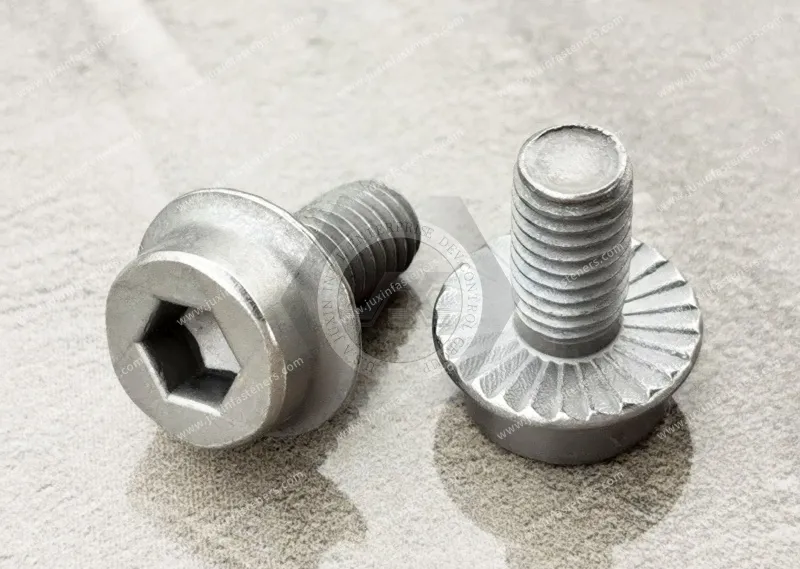
External hex bolts feature a six-sided head that allows tightening with standard sockets, box-end wrenches, or power tools.
Common variants include:
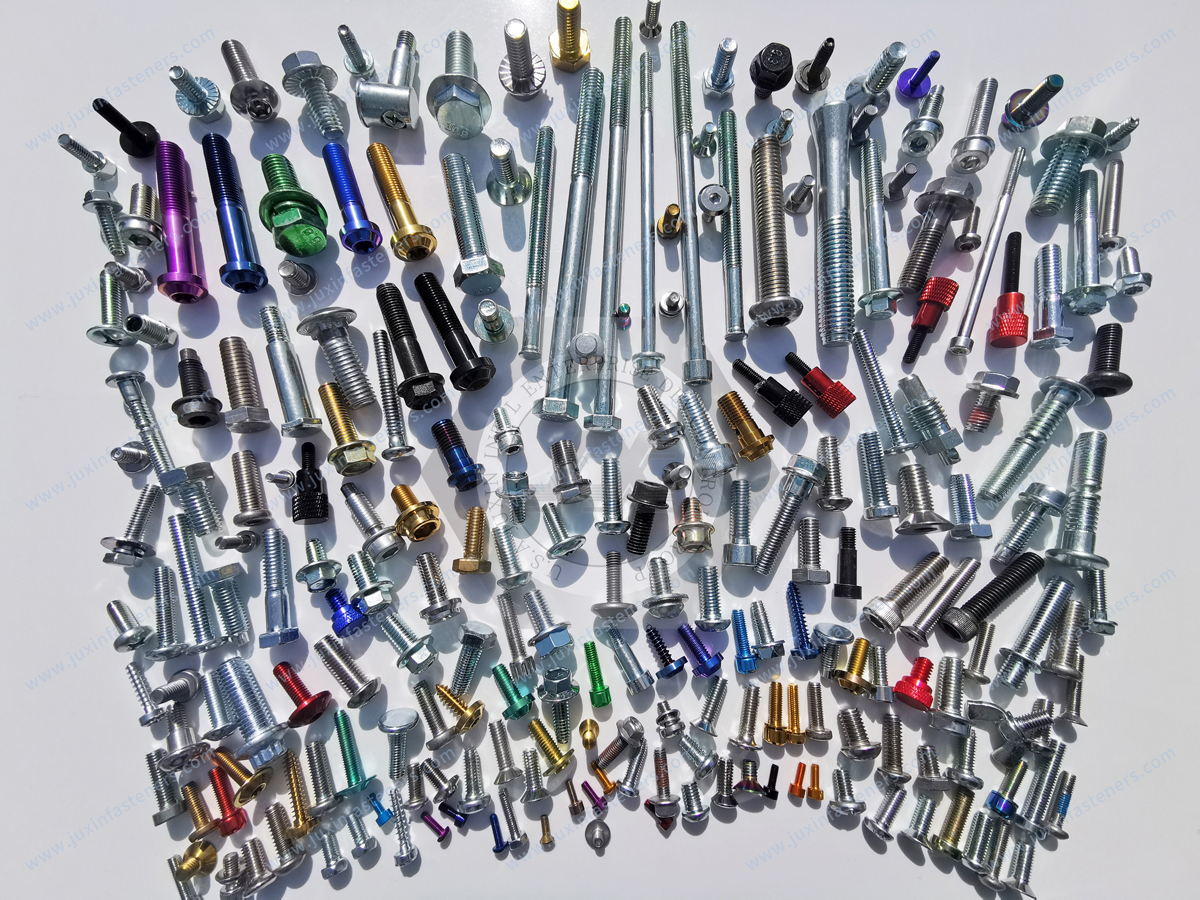
Hex Head Bolts
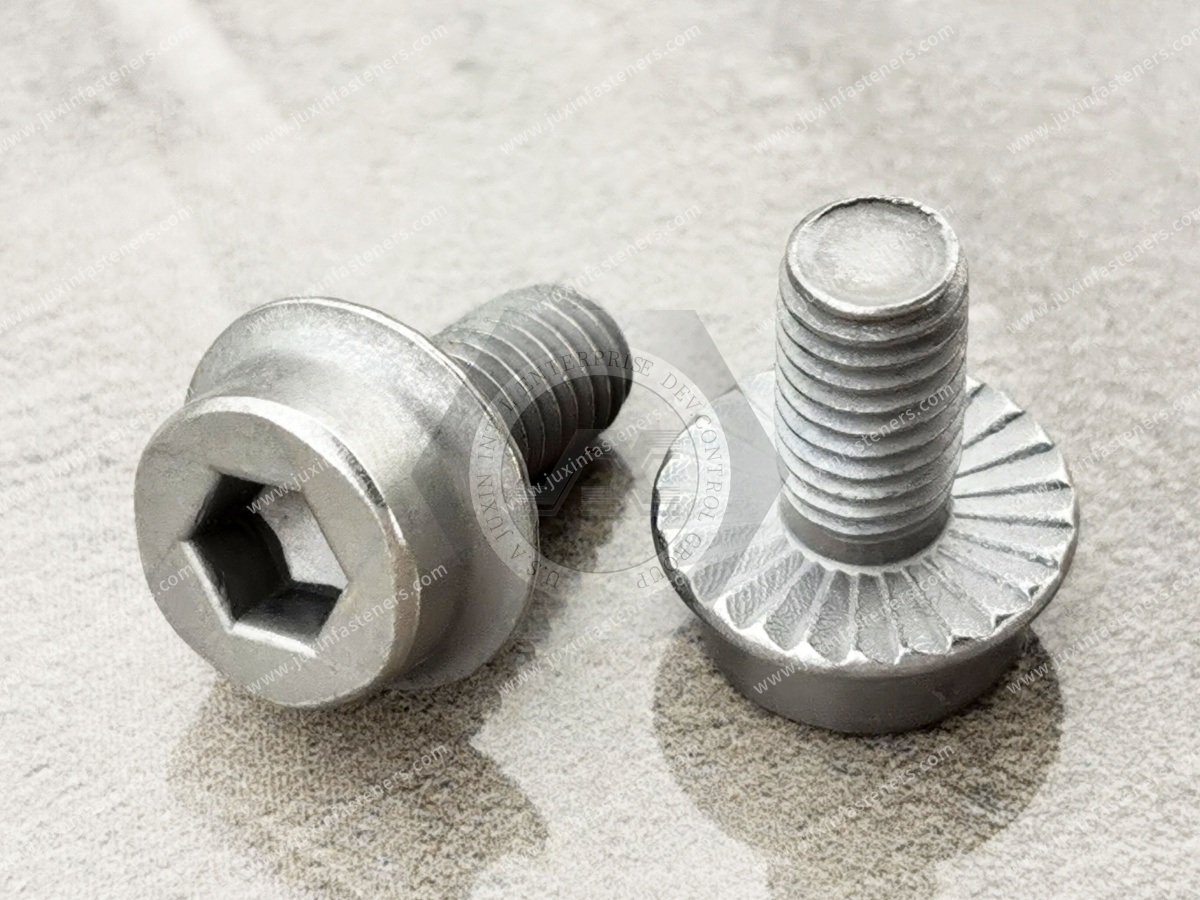
Hex Flange Bolts
Serrated Flange Bolts
Structural Hex Bolts
High Strength Flange Bolts
Advantages of Hex Flange Designs
Many automotive manufacturers prefer flange bolts because the integrated flange:
Increases bearing surface area
Improves load distribution
Reduces surface indentation
Eliminates separate washers in many applications
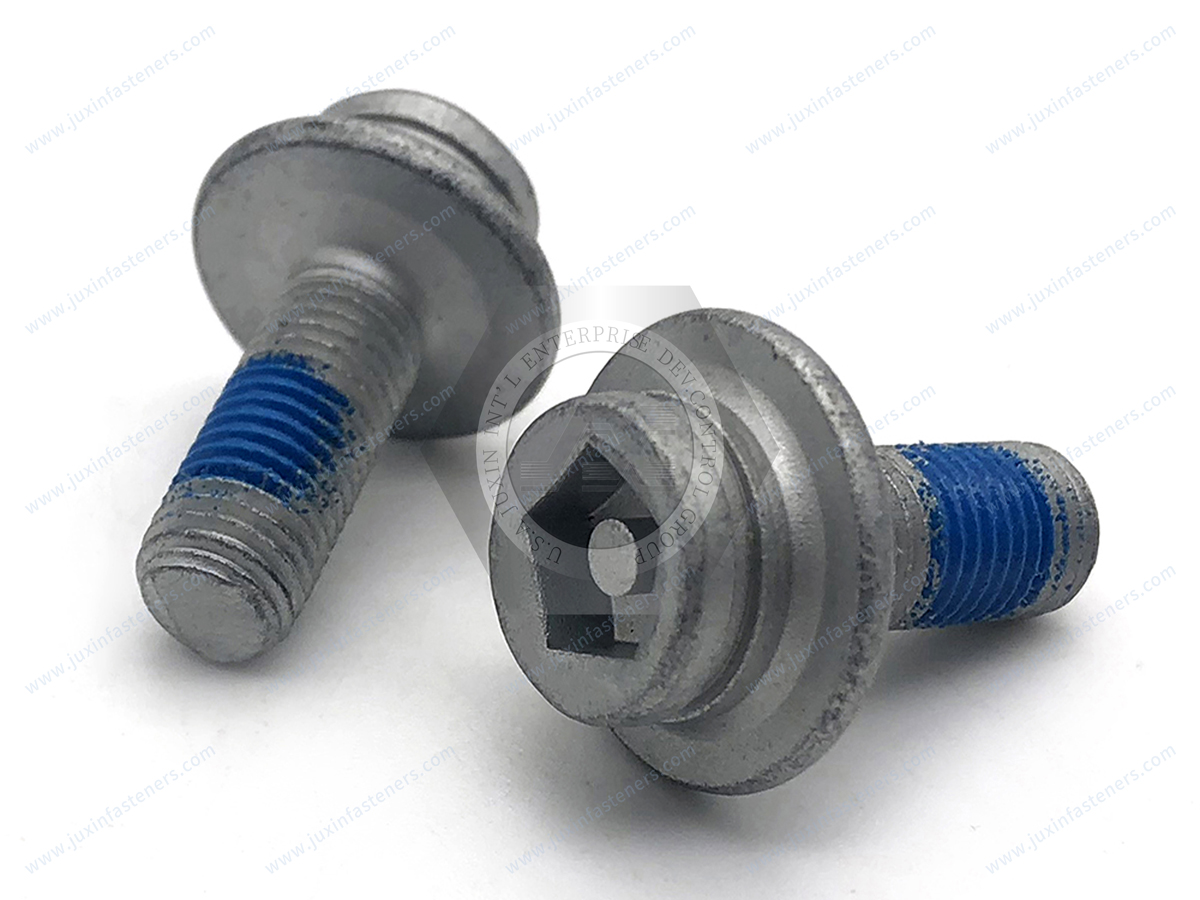
Internal Hex Bolts (Socket Head Cap Screws)
Socket head cap screws feature a cylindrical head with an internal hexagonal drive.
Common variants include:
Socket Head Cap Screws
Button Head Socket Screws
Flat Head Socket Screws
Countersunk Socket Screws
Set Screws
Grub Screws
Socket Flange Bolts
Their compact design makes them ideal for installations where access space is limited.
Manufacturing Cost Comparison
Cost remains an important factor when selecting automotive fasteners.
External Hex Bolts
Manufacturing is relatively straightforward:
Cold heading
Thread rolling
Heat treatment
Surface coating
The external hex shape is formed directly during heading, resulting in:
Higher production efficiency
Lower tooling costs
Reduced material waste
As a result, external hex bolts generally provide the most economical solution for high-volume automotive production.
Internal Hex Bolts
Socket head bolts require additional manufacturing operations:
Precision recess forming
Internal hex broaching or punching
Higher dimensional control
These additional processes increase:
Manufacturing complexity
Tool wear
Quality inspection requirements
Consequently, socket head cap screws typically cost 10–30% more than equivalent external hex bolts of the same size and strength class.
Advantages and Limitations of Internal Hex Bolts
Advantages
Space Saving Design
The cylindrical head occupies less radial space than a traditional hex head.
This is particularly valuable in:
Battery pack assemblies
Electric vehicle structures
Body-in-white joints
Interior mounting systems
Improved Appearance
The recessed drive provides a cleaner and more modern appearance.
This makes socket head screws popular in:
Interior trim
Visible assemblies
Premium vehicle components
High Torque Capability
The internal drive provides excellent torque transfer when properly engaged.
This allows reliable installation of:
Class 10.9 bolts
Class 12.9 bolts
High-strength structural fasteners
Better Anti-Tampering Characteristics
The recessed drive is less susceptible to accidental damage during vehicle operation.
Limitations
Specialized Tool Requirement
Assembly and service require:
Allen keys
Hex sockets
Precision internal-drive tooling
This increases maintenance complexity.
Recess Wear
Repeated installation cycles or improper tooling may damage the internal drive.
Stripped recesses can significantly complicate removal.
Higher Cost
Additional manufacturing processes result in higher unit costs compared with standard hex bolts.
Advantages and Limitations of External Hex Bolts
Advantages
Universal Tool Compatibility
External hex bolts can be installed using:
Standard sockets
Impact tools
Torque wrenches
Robotic assembly equipment
This greatly simplifies production and maintenance.
Superior Serviceability
Even if the bolt head becomes damaged, removal is usually still possible using extraction tools.
Lower Overall Cost
External hex bolts remain the most cost-effective fastening solution for high-volume automotive manufacturing.
Excellent Performance Under High Loads
The larger wrench engagement area enables reliable torque transmission for critical structural joints.
Applications include:
Suspension systems
Chassis assemblies
Subframes
Crash management structures
Limitations
Larger Installation Envelope
The external head requires greater tool clearance.
This can create challenges in compact assemblies.
Reduced Aesthetic Appeal
Visible hex heads may not meet styling requirements for exposed components.
Additional Anti-Loosening Measures
In high-vibration environments, designers often combine external hex bolts with:
Prevailing torque nuts
Thread locking patches
Pre-applied thread lockers
Serrated flange designs
Automotive Applications: Where Each Fastener Performs Best
Common Applications for External Hex Bolts
Due to their strength, cost efficiency, and assembly speed, external hex bolts dominate automotive structural applications.
Typical examples include:
Chassis Systems
Front and rear subframes
Crossmembers
Suspension brackets
Crash Structures
Front crash beams
Rear impact beams
Energy absorption systems
Body Components
Door hinges
Tailgate hinges
Fender assemblies
Seat mounting structures
Powertrain Systems
Engine mounting brackets
Transmission supports
Driveline assemblies
For these applications, high-strength Class 10.9 and Class 12.9 flange bolts are widely used.
Common Applications for Internal Hex Bolts
Internal hex fasteners are typically selected when packaging constraints become the primary design challenge.
Typical applications include:
Electric Vehicle Battery Systems
Battery housing assemblies
Cooling plate attachments
Electronic module mounting
Lightweight Body Structures
Aluminum castings
Structural cast nodes
Multi-material joining systems
Interior and Functional Components
Seat mechanisms
Instrument panel structures
Electronic enclosures
Restricted Access Locations
Areas where conventional sockets cannot easily operate.
Hybrid Drive Bolts: The Best of Both Worlds
To balance serviceability and packaging requirements, many automotive OEMs increasingly utilize hybrid-drive bolts featuring:
External hex drive
Internal hex drive
These designs offer:
Flexible assembly options
Reduced service challenges
Improved installation reliability
Enhanced accessibility in confined spaces
Hybrid-drive fasteners are becoming increasingly common in electric vehicle platforms and advanced lightweight vehicle architectures.
Fastener Selection Guidelines for Automotive Engineers
When selecting between external hex bolts and internal hex bolts, engineers should evaluate:
Installation Space
Limited access generally favors socket head designs.
Required Clamp Load
Critical structural joints typically favor flange hex bolts.
Service Frequency
Frequently serviced locations benefit from external hex bolts.
Assembly Automation
Robotic assembly systems generally achieve higher efficiency with flange hex fasteners.
Weight Reduction Targets
Compact socket head designs may support lightweighting objectives.
Total Cost of Ownership
Production cost, assembly efficiency, and maintenance requirements should all be considered.
Future Trends in Automotive Fasteners
As vehicle platforms continue evolving toward electrification and lightweight construction, fastener technology is advancing in several areas:
Lightweight high-strength bolts
Multi-material joining fasteners
Zinc-nickel coated fasteners
Structural aluminum fasteners
Hybrid-drive bolt designs
Smart fastening systems with torque monitoring
Advanced corrosion-resistant coatings
Future automotive fastening systems will increasingly focus on reducing weight while maintaining structural safety and assembly efficiency.
Conclusion
Both external hex bolts and socket head cap screws play essential roles in modern automotive manufacturing.
External hex bolts remain the preferred solution for most structural applications because of their lower cost, superior serviceability, and excellent load-carrying capability.
Internal hex bolts provide valuable advantages where installation space, appearance, or packaging constraints are critical.
For automotive engineers, the optimal solution is rarely determined by strength alone. Successful fastener selection requires balancing structural performance, manufacturing efficiency, service requirements, cost, and vehicle packaging constraints.
By selecting the appropriate high-strength automotive fasteners, manufacturers can improve assembly quality, reduce production costs, and enhance long-term vehicle reliability.
Product Packaging
Packaging Standard
At Juxin Fasteners, we apply standardized export packaging to ensure product protection, traceability, and compliance with international logistics requirements.
1. Standard Export Packaging
Unless otherwise specified, all products will be packed according to our factory standard export packaging, which includes:
Moisture-resistant inner protection
Poly bag or small box packing as required
Reinforced export cartons
Clear labeling with part number, specification, batch number, and quantity
Palletizing for sea or air shipment when necessary
Our standard packaging is designed to ensure safe transportation, efficient warehousing, and long-distance international shipping.
2. Customized Packaging Options
We also provide customized packaging solutions according to customer requirements, including but not limited to:
Private labeling
Customized barcodes
Specific carton dimensions
Retail packaging
Special pallet configuration
Customer-specific marking and identification
So that you know, customized packaging may involve additional costs and extended lead time depending on the complexity of the requirements.
3. Compliance & Quality Assurance
All packaging processes are controlled under our ISO 9001 quality management system to ensure consistency, traceability, and product integrity throughout the supply chain.
Product Pictures
Contact Us
Tel.:
+86 020 8621 0320
+86 020 3121 6067
E-mail:
Technical Support:
Navigation
SEND INQUIREY