Call Us
+86 136 6007 9809
Call Us
+86 136 6007 9809

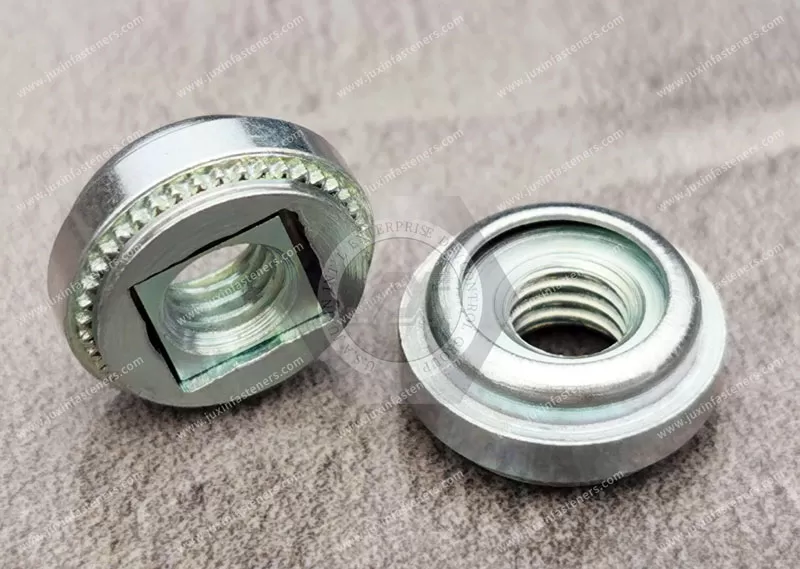
JUXIN FASTENERS supplies JX-AS non-locking floating self-clinching nuts for thin sheet metal assemblies requiring reliable internal threads and controlled compensation for mating-hole misalignment.
The floating nut is retained within an outer self-clinching body, allowing limited lateral adjustment during assembly.
The product family is designed to accommodate up to 0.76 mm (0.030 in) total floating movement, subject to the selected configuration and approved drawing.
JX-AS fasteners are relevant to electronic cabinets, industrial control enclosures, access panels, equipment housings and other assemblies where accumulated manufacturing tolerances can affect hole alignment.
Steel material options include C45, C46, C20 and selected free-machining steel grades, subject to confirmation of the required material specification and manufacturing process.
Metric and inch-series thread configurations can be reviewed against the product drawing. OEM dimensions and special requirements are subject to technical evaluation.
For drawings, technical specifications and quotations, contact info@juxinfasteners.com.
Website: www.juxinfasteners.com
Product Specification
JX-AS Non-Locking Floating Self-Clinching Nuts – Engineering Design, Installation and OEM Sourcing Guide
Product Overview
JX-AS floating self-clinching nuts provide internally threaded fastening points in sheet metal while allowing controlled lateral movement of the threaded nut within its retaining body.
Unlike a conventional fixed self-clinching nut, a floating clinch nut can accommodate limited positional variation between the installed fastener and the mating component.
This capability is valuable in fabricated metal assemblies where stamping, punching, bending, welding or component tolerances create small differences between nominal hole locations.
The JX-AS version uses non-locking internal threads. It is designed to facilitate threaded assembly and positional adjustment, rather than provide an integrated prevailing-torque thread-locking function.
For engineers, the critical design questions are how much positional compensation is available, whether the host sheet is suitable for clinching, and whether the joint can sustain the required service loads.
For OEM procurement teams, the critical questions include thread configuration, material, drawing control, installation consistency, qualification requirements and repeatable supply.
Product Identification
Product family: Floating self-clinching nuts
Product designation: JX-AS
Thread configuration: Non-locking internal female thread
Retention method: Self-clinching outer retainer
Floating mechanism: Movable internal threaded nut
Primary function: Compensation for limited mating-hole misalignment
Nominal family floating capability: Up to 0.76 mm (0.030 in) total movement, subject to the approved configuration
Material family: Steel
Metric thread references: M3 through M6, subject to individual size availability
Inch thread references: Selected #4 through 1/4-inch sizes, subject to drawing verification
Installation substrate: Compatible sheet metal
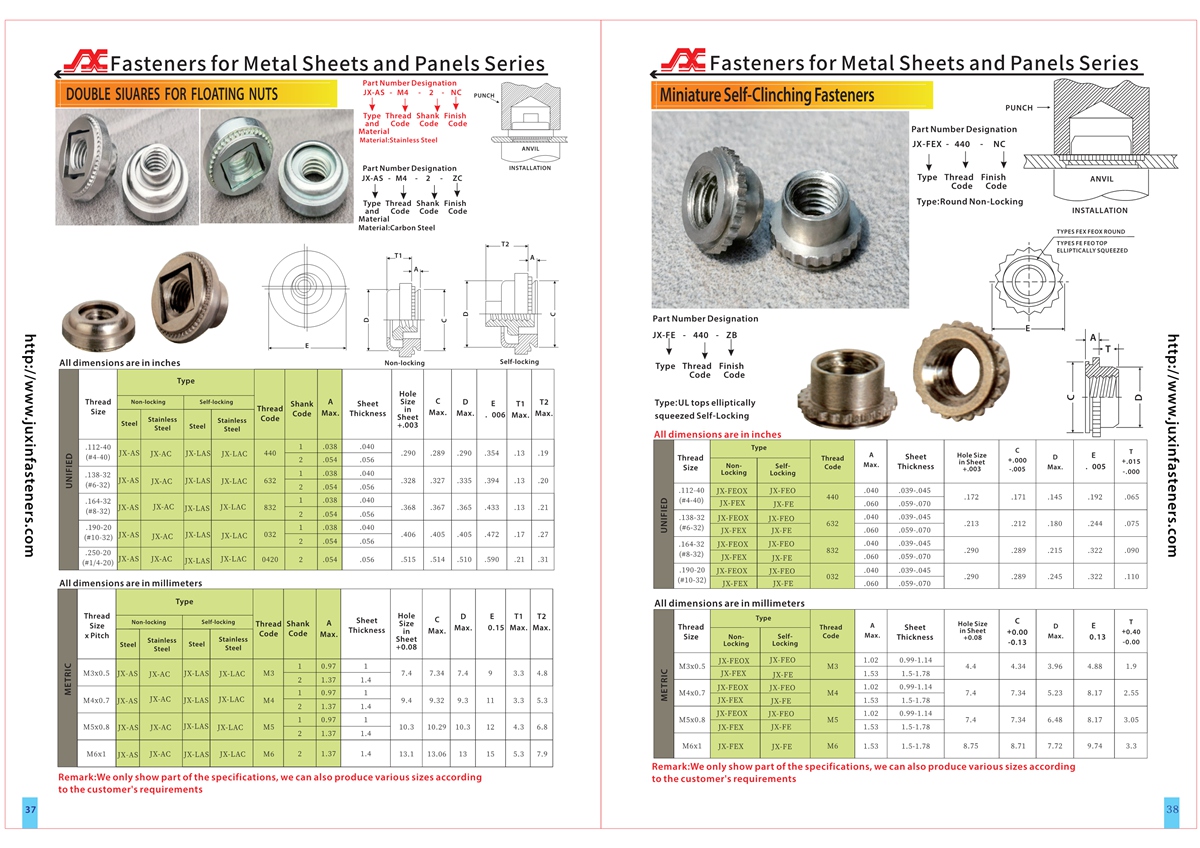
Dimensional reference: Product specification PDF or CAD drawings, pages 37–38
Custom configurations: Subject to technical and manufacturing review
What Is a Floating Self-Clinching Nut?
A floating self-clinching nut is a captive threaded fastener consisting of a retaining body and an internally threaded element capable of limited movement.
The outer body is permanently retained in the sheet through the self-clinching process.
The internal threaded element remains able to shift within the designed movement range.
When the mating screw is inserted, this movement helps the internal thread align with the mating component.
The design reduces the need to force misaligned parts together during assembly.
However, floating movement does not correct every dimensional problem.
The fastener must still be installed within its specified hole, sheet and tooling requirements.
Understanding the 0.76 mm Floating Adjustment
The supplied product family information identifies a total floating adjustment of up to 0.76 mm (0.030 in).
For engineering purposes, total floating movement should not automatically be interpreted as 0.76 mm in every direction from the nominal center.
If the movement is symmetric, a total diametral adjustment of 0.76 mm corresponds to approximately 0.38 mm radial movement from the centered position.
Actual movement limits must be verified from the approved drawing.
The available compensation should also be considered together with screw clearance, hole diameter, mating component geometry and the number of fastening locations.
A floating nut does not guarantee successful assembly when accumulated misalignment exceeds the permitted movement.
Engineering Example: Cabinet Door Alignment
Consider a sheet metal equipment cabinet with a removable access panel.
The cabinet frame contains several captive threaded attachment points.
The mating door or cover is manufactured separately.
Small dimensional variations may arise from sheet cutting, punching, forming and assembly.
When conventional fixed clinch nuts are used, these variations may cause screws to enter at an angle or prevent proper engagement.
JX-AS floating nuts allow the internal threaded elements to shift within their permitted movement range.
This can help accommodate small differences between the mating hole pattern and the captive thread locations.
The designer must still verify the total tolerance stack-up, mating hole clearances and available floating movement.
If the tolerance stack exceeds the fastener's capability, a revised hole pattern or alternative alignment strategy is required.
Floating Nuts Versus Fixed Self-Clinching Nuts
A fixed self-clinching nut provides an internal thread at a defined location relative to the mounting hole.
A floating self-clinching nut provides an internal thread with limited lateral adjustment.
Fixed nuts may be appropriate where hole location accuracy is sufficient and positional movement is unnecessary.
Floating nuts may be more suitable where separately manufactured parts must be joined and minor misalignment is expected.
The floating mechanism adds geometric complexity and may require additional assembly-space consideration.
Selection should be based on the tolerance stack, loading conditions, assembly sequence and total installed cost.
Non-Locking JX-AS Versus Locking JX-LAS
JX-AS is the non-locking floating nut configuration.
JX-LAS is the corresponding floating nut family with a locking thread feature.
Both may provide positional compensation, but their thread behavior differs.
A non-locking thread does not intentionally generate the same prevailing torque as a designed locking thread.
A locking version may be considered when the joint specification requires a verified prevailing-torque function.
The locking feature should not be confused with the clinching retention of the outer body.
These are separate functions.
The outer body must resist movement in the mounting sheet.
The internal thread must meet the mating screw and joint requirements.
Where locking performance is required, the applicable test method and acceptance criteria must be specified and verified.
Do not assume compliance with NASM25027 or another locking-thread requirement without supporting test documentation.
Steel Material Selection
The supplied material references include C45, C46, C20 and selected free-machining steel grades such as 1213, 1214 and 1215.
These are material references rather than a guarantee that every listed grade is available in every JX-AS size.
The final material selection should consider forming or machining requirements, hardness, strength, corrosion exposure and compatibility with the mounting sheet.
Where relevant, ASTM, SAE or EN material specifications may be identified on the approved drawing.
The actual material designation and condition should be agreed during technical review.
A material substitution must not be made solely because two grades have similar nominal carbon content.
Sheet Material and Hardness Compatibility
Successful self-clinching depends on controlled deformation of the host sheet.
The sheet material must be suitable for the selected fastener geometry.
Before installation approval, engineers should identify:
Sheet material grade
Sheet hardness
Nominal sheet thickness
Minimum sheet thickness
Mounting hole diameter
Mounting hole tolerance
Hole manufacturing method
Hole-to-edge distance
Distance to bends and formed features
Required installation force
Tooling accessibility
A steel floating nut is not automatically suitable for every steel, aluminum or stainless steel panel.
For harder panels, a fastener specifically designed for that substrate may be necessary.
The supplied reference discusses A4 and LA4 configurations for certain stainless steel panels; those requirements must not be transferred automatically to JX-AS.
Installation Method
JX-AS floating nuts are installed using a controlled pressing process.
The mounting hole is prepared according to the applicable drawing.
The fastener is positioned with the correct orientation in the installation tooling.
The mounting sheet is aligned over the fastener's clinching shank.
Parallel press surfaces apply a controlled squeezing force.
The sheet material flows around the designed retention features of the outer body.
The outer body becomes mechanically retained while the internal threaded nut retains its intended floating movement.
The exact punch, anvil, installation direction and force must follow the selected product's approved installation instructions.
A press should be capable of maintaining suitable alignment and controlled force.
Hole Preparation and Burr Control
Mounting hole quality directly affects clinching performance.
The supplied installation information advises against secondary deburring for certain floating fastener configurations.
However, hole preparation instructions can vary by fastener type.
JX-AS hole diameter, permitted burr condition, punch-side orientation and dimensional tolerance should be confirmed from the applicable drawing.
A hole that is too large may reduce retention.
A hole that is too small may cause excessive deformation or installation damage.
Uncontrolled burrs or poor hole geometry may affect seating and installation repeatability.
Do not substitute the installation tolerance for A4 or LA4 fasteners unless the JX-AS drawing explicitly specifies the same requirement.
Installation Force and Tooling Control
Installation force must be sufficient to form the intended mechanical engagement.
Excessive force can damage the panel, distort the retainer or interfere with the internal nut's floating movement.
Insufficient force can result in inadequate retention.
For production applications, engineers should establish an approved installation window based on the selected fastener and mounting sheet.
Relevant production controls may include press alignment, tooling wear, force monitoring, seating condition and post-installation inspection.
The internal floating element should be checked after installation to ensure it has not been unintentionally locked by deformation.
Why the Floating Nut Must Remain Movable
The design contains two distinct functional interfaces.
The first interface is between the outer retainer and the mounting sheet.
This interface must provide secure retention.
The second interface is between the floating threaded nut and the retaining body.
This interface must allow the specified movement.
A part can appear securely installed but still fail functionally if the internal nut becomes jammed.
Therefore, installation qualification should evaluate both retention performance and floating movement.
This dual-function inspection is particularly important when changing tooling, sheet material or press settings.
Push-Out and Torque-Out Considerations
Push-out resistance describes the installed fastener's resistance to being displaced from the sheet under an applicable axial test.
Torque-out resistance describes resistance to rotation or loss of retention under the relevant loading condition.
For floating nuts, the test method must account for the construction of the retainer and internal nut.
The performance of the floating internal thread should not be confused with the retention performance of the clinched outer body.
Mechanical acceptance criteria must be defined for the selected size, sheet material, thickness and installation process.
No universal strength rating should be assumed for the complete JX-AS family.
Thread Specifications
Selected JX-AS configurations may use metric or inch-series internal threads.
Metric thread definitions may reference ISO 261 and ISO 965 where applicable.
Unified inch thread definitions may reference ASME B1.1 where applicable.
The mating screw must match the exact thread designation and tolerance.
M3, M4, M5 and M6 threads are not directly interchangeable with UNC or UNF threads.
Approximate inch conversions are dimensional references only.
They do not establish thread compatibility.
Assembly Tolerance Stack-Up
Floating nuts are particularly useful when the total assembly consists of multiple manufactured components.
An engineering tolerance analysis should consider:
Location tolerance of the clinch nut mounting hole
Location tolerance of the mating clearance hole
Sheet metal forming variation
Welded frame distortion
Component mounting tolerances
Fastener floating travel
Mating screw clearance
Number and arrangement of attachment points
A design should not allocate the entire floating movement to one source of variation without considering the remaining tolerance contributors.
For multiple screw locations, assembly may become constrained as the first screws are tightened.
The tightening sequence should therefore be evaluated during prototype assembly.
Assembly Sequence and Fastener Positioning
When several floating nuts are used on one panel, an effective assembly sequence may help the threaded elements align with the mating component.
A practical approach is to engage the mating screws loosely before final tightening.
This allows the floating nuts to accommodate their permitted positional variation.
Final tightening should follow the approved joint specification.
This is not a substitute for proper tolerance design.
If screws require excessive side force or cross-thread during assembly, the hole pattern and tolerance stack should be investigated.
Application: Industrial Control Cabinets
Control cabinets commonly contain removable panels, doors and mounting brackets.
Different fabrication processes can create small differences between the nominal fastening locations.
JX-AS floating nuts can help accommodate limited misalignment during assembly.
They are particularly relevant when a panel must be removed and reinstalled during maintenance.
The final design should verify accessibility, required joint strength and the available movement range.
Application: Electronic Equipment Housings
Electronic housings often contain multiple internal and external components.
Floating clinch nuts can provide adjustable captive threads for mating covers, brackets and structural components.
They may reduce the need to force components into alignment during assembly.
Where electrical grounding or bonding is required, the relevant electrical performance must be evaluated separately.
A floating threaded connection should not automatically be treated as a qualified electrical bonding path.
Application: Telecommunications Enclosures
Telecommunications equipment often uses sheet metal chassis with replaceable modules and covers.
Small differences in hole location can create assembly difficulties when multiple fastening points must engage simultaneously.
Floating self-clinching nuts may support easier component alignment.
For OEM programs, dimensional consistency and controlled installation are important supplier qualification factors.
Application: Industrial Machinery Covers
Machine guards, access covers and service panels may be removed repeatedly.
A floating captive nut can help accommodate small positional differences during reassembly.
The application must still evaluate vibration, service loads and the required locking method.
Because JX-AS is non-locking, additional joint-retention measures may be required where specified by the equipment design.
Application: HVAC and Electrical Equipment
HVAC control housings and electrical equipment panels may contain multiple fabricated components with different manufacturing tolerances.
Floating nuts can be considered where the mounting locations require limited adjustment.
Material selection should also account for humidity, condensation and corrosion exposure.
If a corrosion-resistant fastener is required, the coating or material specification must be defined and verified.
Application: Modular Equipment and OEM Assemblies
Modular equipment frequently combines separately manufactured components.
Floating threaded fastening points can reduce sensitivity to small positional differences during final assembly.
This may be relevant to equipment racks, modular housings, removable subassemblies and industrial panels.
The engineering value is not simply easier screw insertion.
It is the ability to manage an explicitly defined portion of the assembly tolerance stack without redesigning every mating component.
Corrosion Protection and Surface Finishes
Steel floating nuts may require a protective surface finish depending on the operating environment.
Any coating must be compatible with the fastener geometry and the required floating movement.
For electroplated fasteners, ISO 4042 may be relevant where applicable.
The specified coating should include the required finish type, thickness or designation, appearance and applicable testing criteria.
Coating buildup must not interfere with the floating nut mechanism or thread fit.
Where corrosion testing is specified, ISO 9227 or ASTM B117 may be used as laboratory test methods.
A specified salt-spray duration is not a direct guarantee of field service life.
Hydrogen embrittlement risk should be assessed where material hardness and coating processes make it relevant.
JX-AS Versus Other Floating Nut Designs
JX-AS is a non-locking floating self-clinching nut.
JX-LAS is a floating self-clinching nut with a locking thread function.
JX-AC and JX-LAC are related floating fastener designations.
These product families should not be treated as interchangeable without reviewing their dimensions, mounting sheet requirements, materials and installation conditions.
For a new OEM design, the selection should begin with the required thread behavior, panel material, positional compensation and mechanical performance.
Floating Self-Clinching Nuts Versus Blind Rivet Nuts
A floating self-clinching nut requires suitable press installation and compatible sheet deformation.
A blind rivet nut is generally installed by deforming the fastener body and can be suitable where installation access is available from only one side.
These attachment technologies solve different manufacturing problems.
A standard blind rivet nut does not automatically provide floating positional adjustment.
If both one-sided installation and alignment compensation are required, the fastening architecture should be reviewed rather than assuming the products are equivalent.
Floating Self-Clinching Nuts Versus Weld Nuts
Weld nuts create a permanent attachment through a welding process.
Floating self-clinching nuts use mechanical sheet deformation for retention.
The comparison should consider panel material, production equipment, heat effects, dimensional distortion, required movement and joint performance.
Welded nuts are not automatically unsuitable for precision assemblies, and floating nuts are not automatically the lower-cost option.
The preferred method depends on the actual manufacturing process and design requirements.
OEM Design Checklist
Before releasing a floating nut design, engineering teams should confirm:
The exact JX-AS designation
Thread size and tolerance
Fastener material
Surface finish
Sheet material and hardness
Sheet thickness
Mounting hole dimensions
Hole-to-edge requirements
Press tooling geometry
Installation orientation
Installation force requirements
Available floating movement
Mating screw clearance
Tolerance stack-up
Mechanical retention criteria
Assembly tightening requirements
Corrosion exposure
Inspection and acceptance requirements
These details should be incorporated into the approved drawing or manufacturing specification.
OEM Supplier Qualification
Purchasing managers and supplier-development engineers should request the relevant dimensional drawing and material specification.
Where required by the project, qualification may also include sample evaluation, first-article dimensional inspection, installation trials and mechanical testing.
The customer should identify whether the application requires documented retention performance, coating verification, traceability or controlled engineering changes.
The exact inspection and documentation scope should be agreed during the RFQ process.
What Determines the Price of JX-AS Floating Nuts?
The quotation depends on more than the nominal thread size.
Relevant cost factors include:
Material grade
Thread specification
Outer retainer geometry
Floating nut construction
Required movement range
Dimensional tolerances
Surface finish
Inspection requirements
Special testing
Order quantity
Annual demand
Packaging
Delivery schedule
Custom dimensions or special material requirements may affect tooling and manufacturing cost.
A meaningful OEM quotation should therefore include both the fastener specification and the intended production requirements.
Total Installed Cost and Production Efficiency
A floating nut may reduce assembly difficulties caused by minor hole misalignment.
However, the purchasing decision should consider the full installed cost.
Relevant factors include component price, mounting hole preparation, installation cycle time, tooling, inspection, rework and assembly efficiency.
For large-volume production, a properly specified floating fastener may reduce some alignment-related assembly problems.
The actual benefit should be validated through production trials rather than assumed from the fastener description alone.
Frequently Asked Questions
What is the main purpose of JX-AS floating nuts?
They provide captive internal threads with limited positional movement to compensate for mating-hole misalignment.
How much misalignment can JX-AS compensate for?
The supplied family information indicates up to 0.76 mm (0.030 in) total movement. The exact available movement must be verified for the selected size.
Does JX-AS have a locking thread?
No. JX-AS is the non-locking floating configuration.
What is the difference between JX-AS and JX-LAS?
JX-AS uses non-locking threads, while JX-LAS incorporates a locking-thread function. Other dimensional and installation differences must be checked against the relevant drawings.
Can JX-AS be installed in stainless steel sheets?
Compatibility depends on the exact fastener version, sheet hardness, material and installation specification. Do not assume the stainless-panel ratings of A4 or LA4 apply to JX-AS.
Can floating nuts correct large manufacturing errors?
No. They accommodate only the permitted movement range and cannot replace proper tolerance design.
Can JX-AS be used for vibration-sensitive equipment?
It may be evaluated for such equipment, but the non-locking thread does not itself provide a prevailing-torque locking function. The complete joint must be designed and validated.
Can I order custom floating nuts?
Drawing-based configurations can be submitted for technical and manufacturing feasibility review.
Related Products and Internal Linking
The following related product categories can support internal navigation and product selection.
JX-LAS Locking Floating Self-Clinching Nuts
JX-AC Floating Self-Clinching Nuts
JX-LAC Locking Floating Self-Clinching Nuts
Self-Clinching Nuts
Self-Clinching Blind Nuts
Self-Clinching Standoffs
Self-Clinching Studs
Blind Rivet Nuts
Self-Clinching Fasteners for Sheet Metal
These product names should be linked to the corresponding verified JUXIN FASTENERS product pages.
The JX-LAS page is particularly relevant as an internal link for buyers comparing non-locking and locking floating threads.
Request an OEM Quotation
JUXIN FASTENERS supports technical inquiries for JX-AS floating self-clinching nuts and drawing-based industrial fastening requirements.
To request a quotation, please provide:
Product designation: JX-AS
Required thread size
Metric or inch thread specification
Material grade
Surface finish
Fastener drawing or CAD model
Sheet material
Sheet hardness
Sheet thickness
Mounting hole dimensions
Required floating movement
Mechanical performance requirements
Inspection and documentation requirements
Estimated order quantity
Annual purchasing forecast
Packaging requirements
Delivery requirements
Our team will review the submitted technical and commercial requirements and provide feedback based on the confirmed product configuration.
Email: info@juxinfasteners.com
Website: www.juxinfasteners.com
Product Packaging
JX-AS floating self-clinching nuts can be packed according to the approved product dimensions, order quantity and customer handling requirements.
Protective inner packaging, outer cartons and palletized shipment may be used where appropriate.
For industrial OEM and distribution orders, packaging requirements may include part-number labeling, lot identification, carton quantity control and separation of different thread sizes or product configurations.
Packaging should protect the fasteners against handling damage and contamination that could interfere with the internal floating mechanism.
Actual carton quantities, carton dimensions, pallet dimensions and shipment weights are determined by the confirmed packing specification.
Customer-specific packaging and labeling instructions can be reviewed during quotation.
For OEM packaging requirements and bulk inquiries, contact info@juxinfasteners.com.
Website: www.juxinfasteners.com
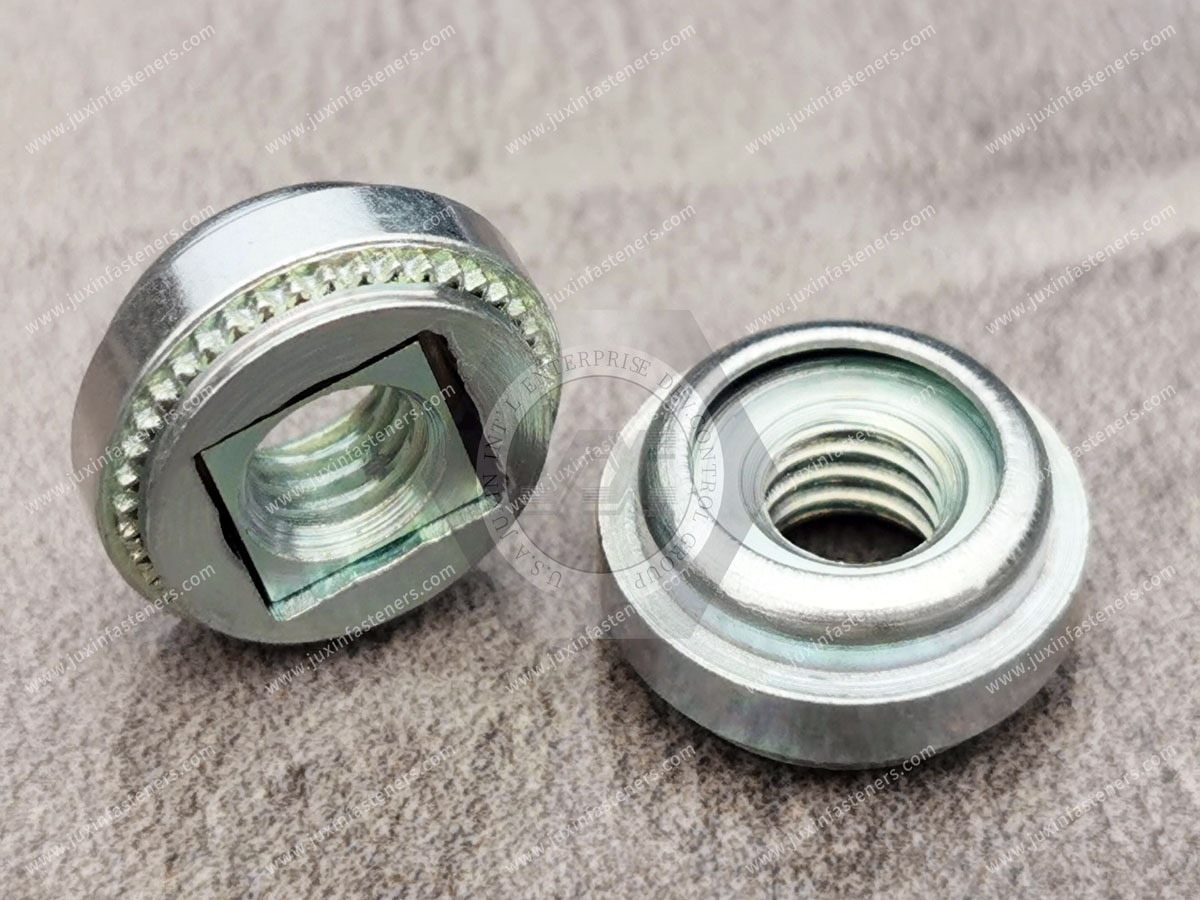
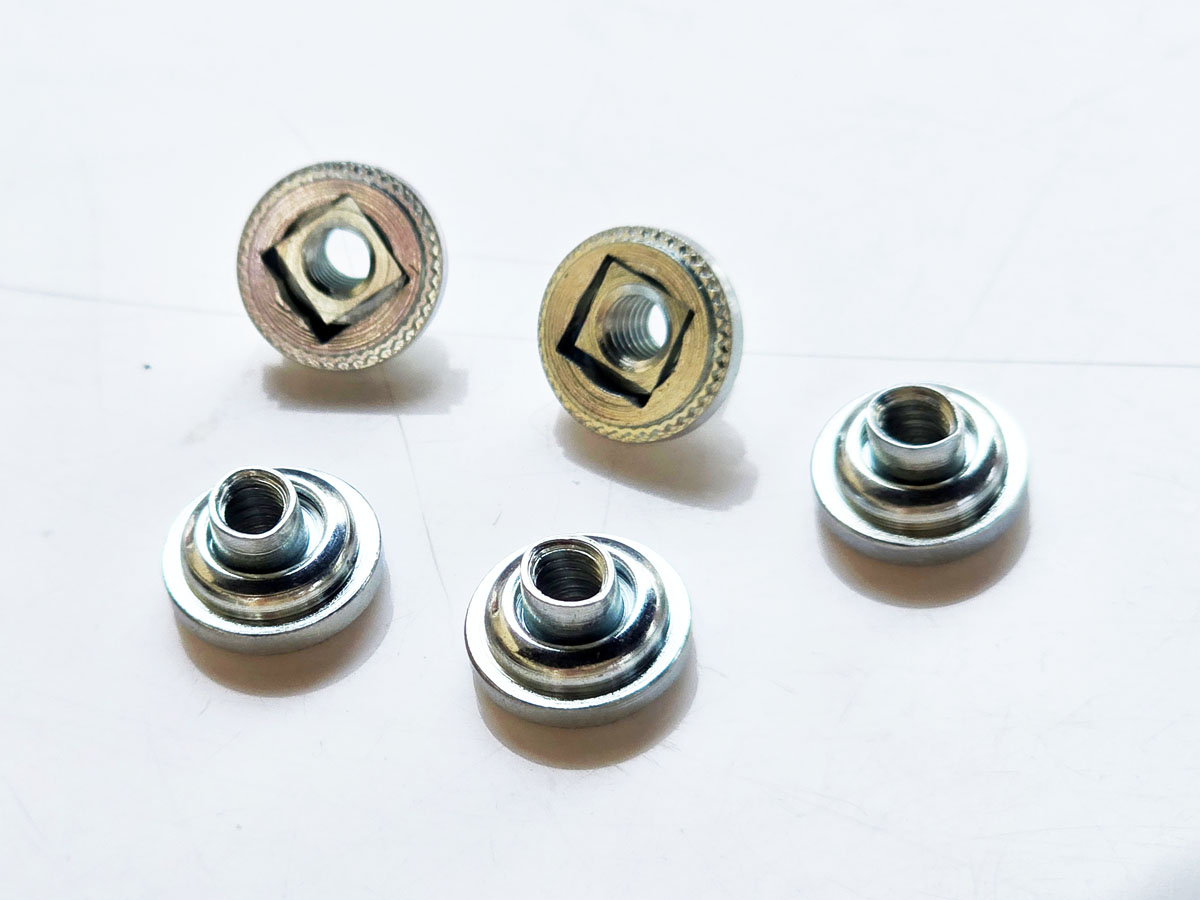
Product Pictures
Contact Us
Tel.:
+86 020 8621 0320
+86 020 3121 6067
E-mail:
Technical Support:
Navigation
SEND INQUIREY