
Call Us
+86 136 6007 9809
Call Us
+86 136 6007 9809

Sep. 26, 2023
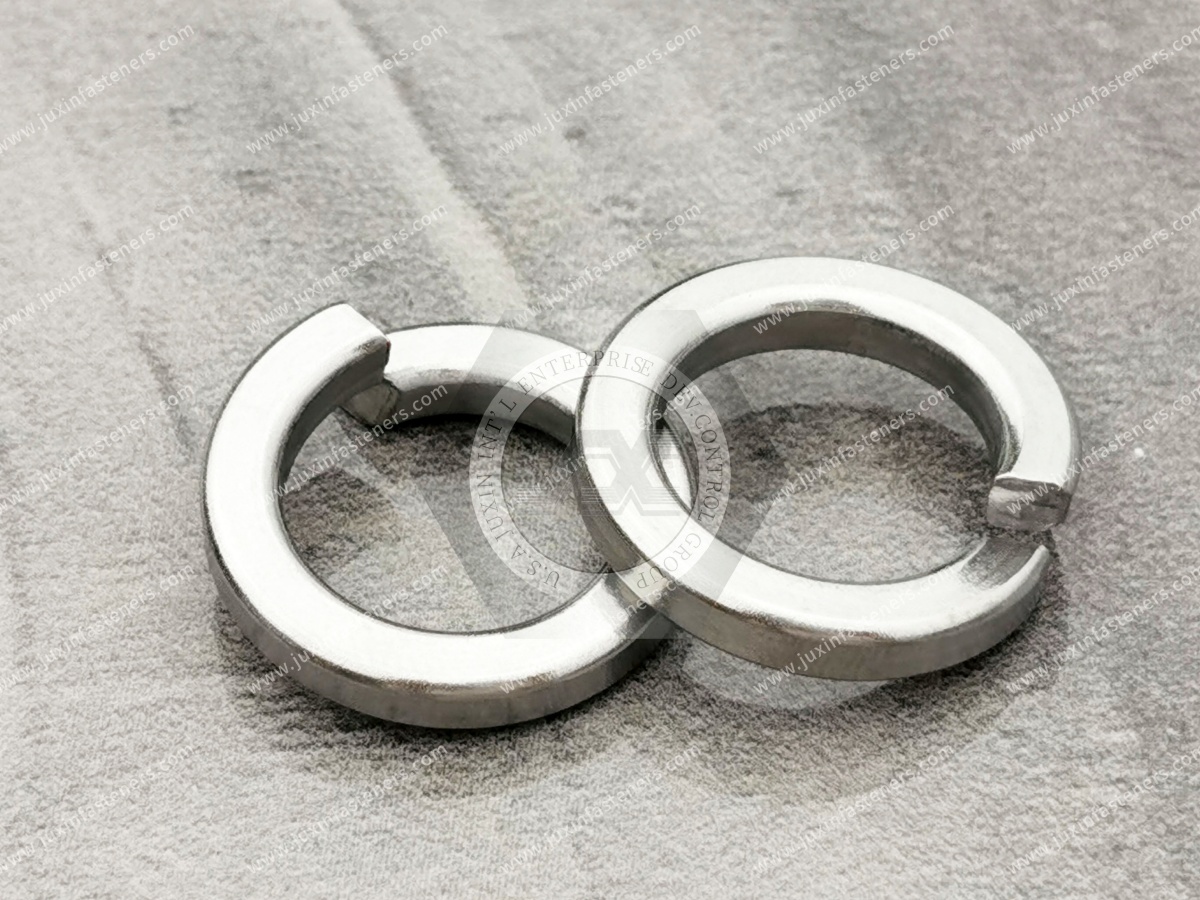
DIN 128A curved spring lock washers are elastic washers designed primarily to reduce preload loss caused by limited settlement in short bolted connections subjected mainly to axial loading.
They are also called DIN 128A washers, curved spring washers, saddle spring lock washers, curved lock washers or Type A spring washers.
When compressed beneath a bolt head or nut, the curved washer elastically deflects and produces a residual axial spring force. This force may compensate for a small amount of embedding or settlement within the joint.
DIN 128A washers should not be described as a universal anti-vibration solution.
The withdrawn DIN 128 standard specifically recognized that these washers do not effectively prevent loosening under varying radial load.
Severe transverse vibration, joint slip or dynamic shear normally requires a different locking strategy.
JUXIN FASTENERS supplies DIN 128A-type curved spring lock washers for legacy equipment, maintenance programs and drawing-specific OEM requirements.
Material, heat treatment, hardness, dimensions, surface finish and testing can be evaluated according to the customer’s drawing, sample and application conditions.
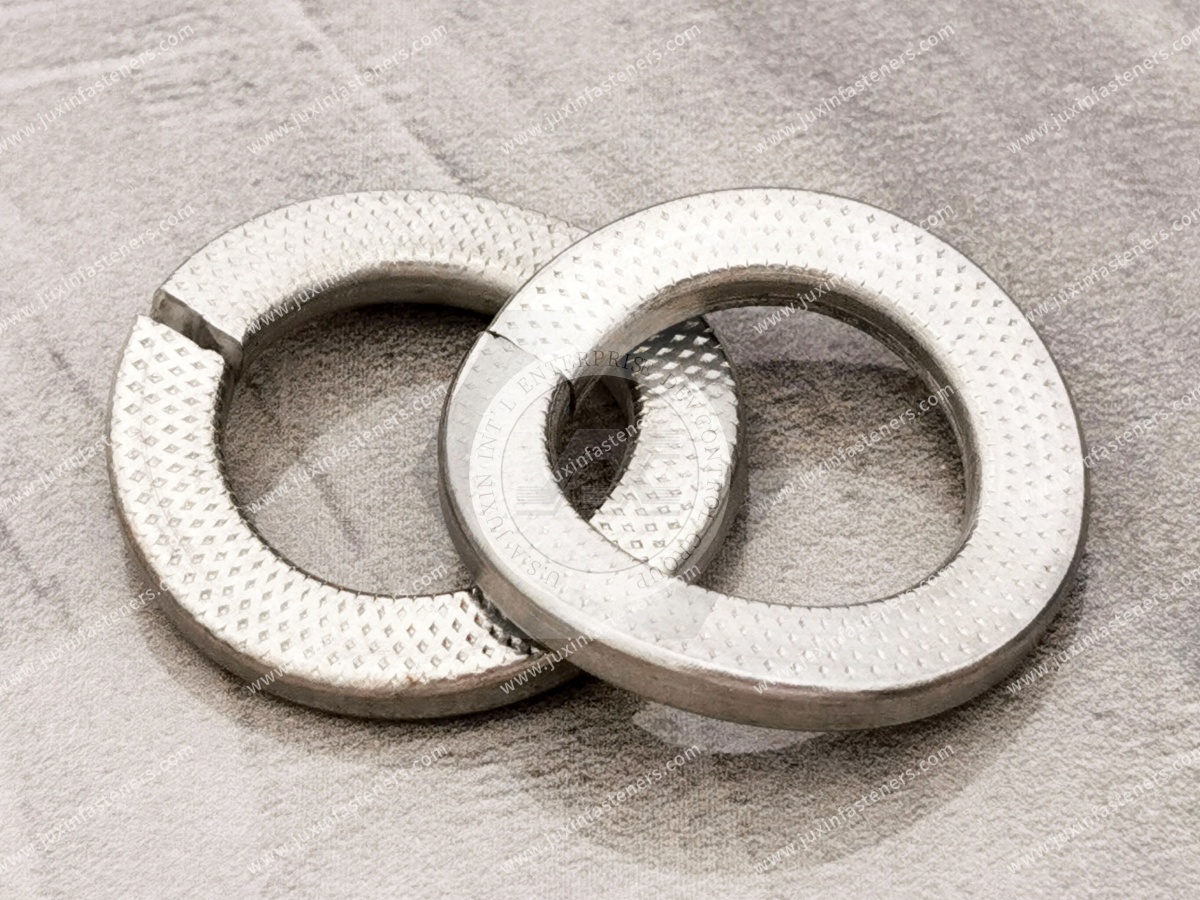
A DIN 128A washer is formed into a curved, single-coil profile rather than remaining flat.
Its geometry includes:
A central hole sized for the corresponding metric fastener
A curved spring-steel body
A defined washer width
Controlled material thickness
A free height greater than the flattened thickness
A localized peak in the curved profile
During tightening, the bolt head or nut compresses the washer. The washer attempts to recover its original shape and therefore produces an axial reaction force.
The washer’s useful function depends on its remaining elastic travel after installation. If it is permanently deformed or compressed beyond its functional range, its ability to compensate for further settlement will be limited.
DIN 128:1994-10 has been withdrawn.
However, DIN 128A components continue to appear in:
Legacy machinery drawings
Maintenance bills of materials
Industrial spare-parts lists
European equipment specifications
Older automotive and electrical assemblies
Customer-specific standards
Existing approved production programs
A withdrawn standard can still identify the geometry required for an existing assembly. It should not automatically be selected for a new design without confirming whether its intended function matches the application.
For procurement, a description such as “DIN 128A M8” may not be sufficient. The buyer should confirm:
Standard edition
Form or type
Nominal size
Critical dimensions
Material
Hardness
Surface finish
Technical delivery requirements
Spring-performance requirement
Customer-specific deviations
When a drawing is available, the drawing should control over a generic commercial description.
DIN 128 curved spring lock washers were intended for bolt-and-nut assemblies using fasteners below property class 8.8 and for short bolts subjected predominantly to axial thrust.
Their intended purpose was to counteract preload loss associated with settlement.
The standard did not position them as an effective solution against loosening caused by varying radial load.
This distinction separates three different joint problems:
Surface roughness, coating compression or interface embedding reduces the thickness of the clamped stack after tightening.
Time, temperature or material behavior causes the joint to lose clamping force without necessarily rotating the bolt or nut.
Repeated transverse movement causes relative rotation between the internal and external threads.
A DIN 128A washer may provide limited compensation for the first problem. It cannot automatically solve significant relaxation or transverse-vibration self-loosening.
When the fastener is tightened:
The bolt head or nut contacts the curved washer.
The washer begins to flatten.
Elastic deformation stores strain energy.
The washer generates an axial reaction force.
If the joint settles slightly, the washer can recover part of its deflection.
This recovery may help retain contact within the bolted assembly.
The available spring force is determined by:
Washer geometry
Material thickness
Free height
Spring material
Hardness
Heat treatment
Installed deflection
Permanent set
Operating temperature
The washer should not be evaluated only by whether it “springs back” when handled manually. A functional assessment requires load and deflection data relevant to the installed condition.
Bolt preload and washer spring force are not the same.
A tightened bolt acts as a tensioned spring and normally generates the primary clamping force in the joint. A small curved washer contributes only limited axial force and travel.
If the bolt preload is much greater than the washer load required to flatten the profile, the washer may become almost flat early in the tightening process.
Once flattened, it has little remaining deflection available to compensate for subsequent settlement.
Engineers should therefore ask:
At what load does the washer begin to flatten?
What is its load at the intended installed height?
How much elastic travel remains after tightening?
What residual spring load remains after relaxation?
Does the expected settlement exceed the remaining washer travel?
Does the washer take a permanent set after one installation?
Is the washer load meaningful compared with the bolt preload?
For joints with gaskets, polymers, thick coatings or other high-relaxation materials, a higher-capacity spring system may be required.
Learn more in the JUXIN FASTENERS guide to bolt stress relaxation and clamping-force loss.
DIN 128A and DIN 137A washers may both be described as curved or saddle-shaped spring washers, but they should not be treated as interchangeable.
Potential differences include:
Cross-sectional profile
Width
Thickness
Free height
Position of the curvature
Load-deflection behavior
Nominal-size range
Original technical requirements
Intended assembly
When replacing a legacy component, nominal bolt size alone is not enough. The buyer should compare the complete dimensional drawing or submit a physical sample.
The DIN 137A curved spring washer guide explains the related DIN 137A product family and its application limits.
Historical catalogs may identify:
Form A as a curved spring lock washer
Form B as a wave-type spring washer
Because DIN 128 has gone through different editions, and commercial catalogs do not always use identical descriptions, the form designation should not be accepted without confirming the geometry.
The RFQ should include one of the following:
Original drawing
Standard edition
Fully dimensioned sketch
Approved sample
Customer part number with revision
This prevents a curved Form A washer from being replaced by a waved washer with different contact points and spring characteristics.
A flat washer and a curved spring washer perform different primary functions.
| Selection factor | DIN 128A curved washer | Flat washer |
|---|---|---|
| Primary function | Limited elastic settlement compensation | Bearing-load distribution |
| Axial flexibility | Elastic curved profile | Relatively rigid |
| Contact area | Comparatively narrow | Can be selected with a larger bearing area |
| Protection of soft material | Limited unless supported by joint design | Better when properly sized and hardened |
| Severe vibration locking | Not reliable as a stand-alone solution | No independent locking function |
| Dimensional control | Profile, height and thickness matter | ID, OD, thickness and hardness matter |
A DIN 128A washer should not be selected as a substitute for a large flat washer when the engineering requirement is to distribute load over plastic, aluminum, composite material or thin sheet.
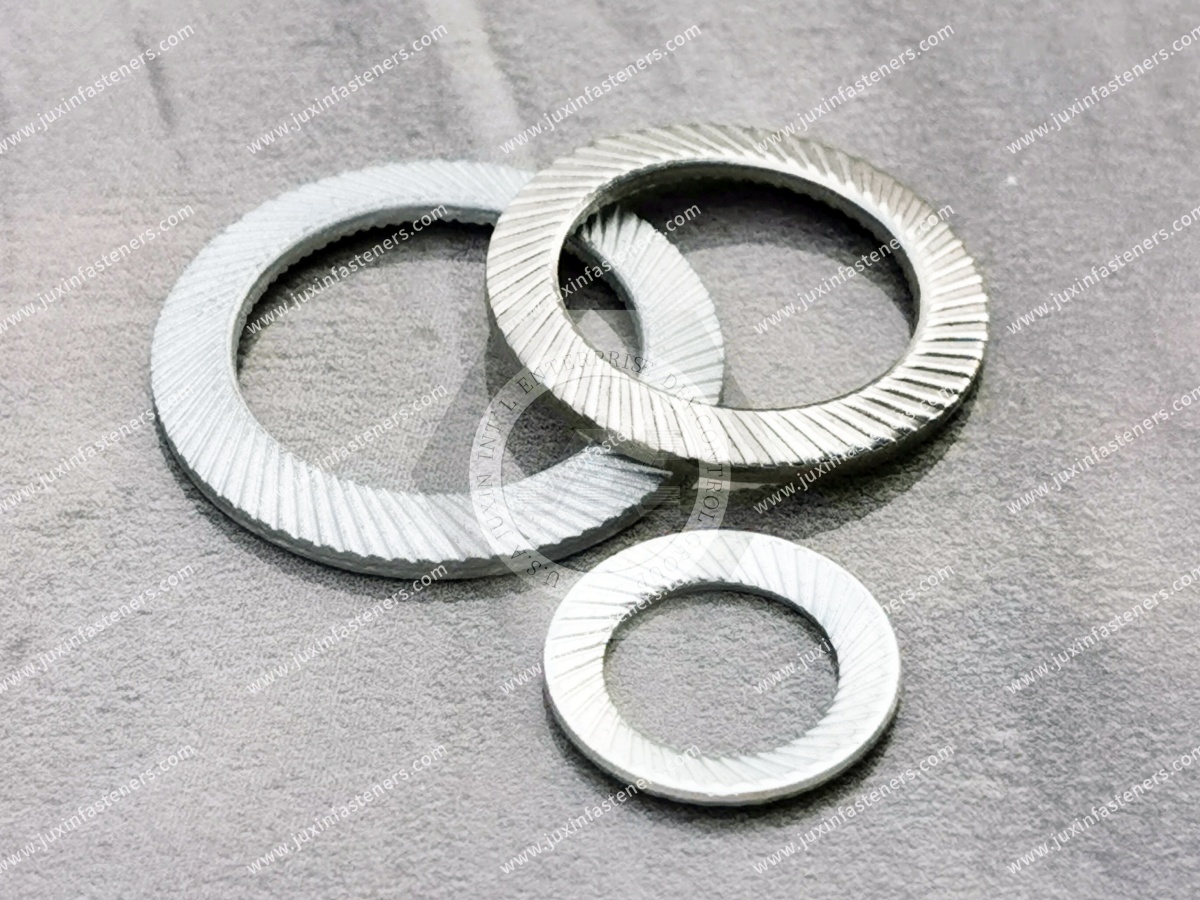
Wedge-lock washers use opposing cams and serrated outer faces to resist rotational loosening.
DIN 128A washers use elastic deflection and limited residual spring force.
For a joint dominated by transverse vibration, a validated wedge-lock system may provide a more appropriate mechanical locking principle.
For a joint dominated by small settlement in a short axially loaded bolt, a DIN 128A-type washer may be sufficient if the remaining spring travel and load have been verified.
The locking method should be selected according to the failure mode rather than by washer price or historical familiarity.
DIN 6796 conical spring washers are designed for a different load range and load-deflection behavior.
They may be considered when the assembly requires:
Higher spring load
More substantial preload support
Greater resistance to flattening
Defined technical delivery conditions
Use in a higher-load bolted joint
DIN 128A washers are generally associated with lighter-duty legacy connections and limited settlement compensation.
The two types are not direct substitutes. Changing from DIN 128A to DIN 6796 can alter:
Required tightening torque
Installed stack height
Bolt stress
Bearing pressure
Available thread engagement
Joint stiffness
See JUXIN FASTENERS’ DIN 6796 conical spring washer solutions.
Spring steel is the traditional material for DIN 128 curved washers.
The finished component requires suitable:
Elastic limit
Hardness
Strength
Heat-treatment response
Resistance to permanent set
Edge quality
Dimensional stability
The material should be specified through an internationally recognized or customer-approved material requirement rather than a local commercial grade.
For legacy DIN production, the customer should confirm whether the historical material and technical delivery requirements must be followed exactly or whether an approved modern equivalent may be used.
Stainless spring material may be used when corrosion resistance is required.
EN 1.4310 is commonly selected for spring components because it can provide a combination of spring characteristics and corrosion resistance.
Generic A2 or A4 terminology alone does not fully define spring performance.
Austenitic stainless steel used for ordinary fasteners may not provide the same:
Hardness
Yield behavior
Spring rate
Permanent-set resistance
Fatigue performance
When stainless construction is required, specify the exact material, condition, hardness and required load-deflection behavior.
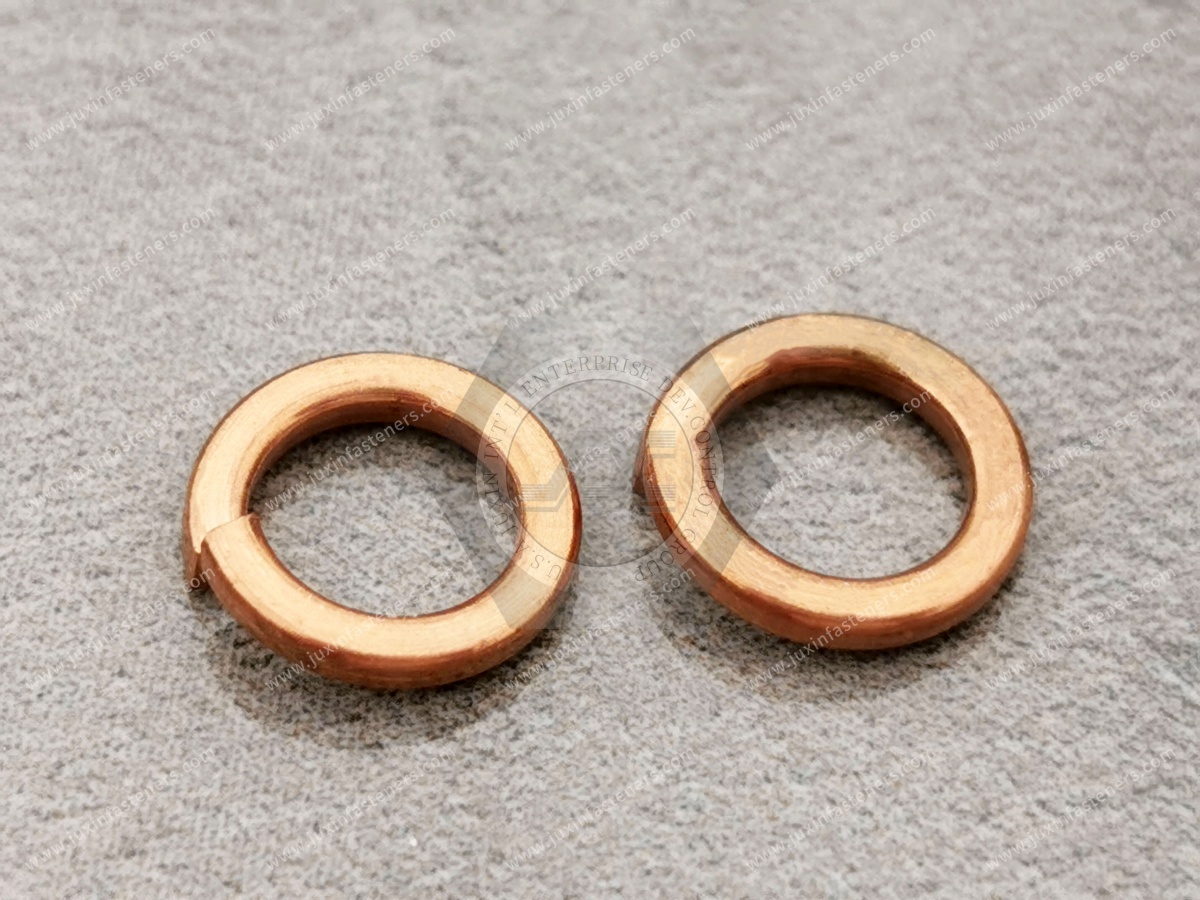
Copper-based spring materials may be evaluated for electrical, non-ferrous or corrosion-sensitive applications.
Their spring behavior, relaxation, electrical properties and cost differ from hardened carbon spring steel. They should be quoted against a complete material and performance specification.
The original article’s list of 100HV, 140HV, 200HV and 300HV should not be used as a DIN 128A selection system.
DIN 128A curved washers are spring components. Their functional performance depends on an appropriately hardened and tempered material or a stainless spring condition.
The purchasing specification should define:
Material grade
Heat-treatment condition
Required hardness range
Hardness test method
Measurement location
Permanent-set requirement
Spring-load test, where needed
A hardness value alone does not guarantee the required spring performance. Geometry, forming and heat treatment must also be controlled.
Possible finishes include:
Black oxide
Phosphate-based finishes
Mechanical zinc
Zinc-flake coatings
Electroplated zinc systems
Plain stainless steel
Customer-approved special coatings
The coating should be selected according to:
Corrosion environment
Coating thickness
Dimensional tolerance
Friction requirement
Operating temperature
Electrical requirements
Environmental compliance
Hydrogen-embrittlement risk
Customer approval
ISO 4042 defines requirements for electroplated coating systems on steel fasteners and includes measures intended to minimize hydrogen-embrittlement risk.
Spring washers can be sensitive to hydrogen-related delayed cracking because of their hardness and stored stress.
The coating process may therefore require:
Controlled pretreatment
Restricted acid exposure
Appropriate baking
Process traceability
Hydrogen-embrittlement testing
Customer approval
Baking reduces risk but does not guarantee complete removal of all hydrogen-embrittlement risk.
Mechanical coating can avoid the electrical deposition step used in electroplating and may be considered for hardened spring components.
Coating thickness and washer dimensions still require control.
Zinc-flake systems may provide good corrosion protection without a conventional electrolytic plating process.
The RFQ should define:
Approved coating system
Coating thickness
Corrosion-test requirement
Topcoat
Friction characteristics
Color
RoHS and REACH requirements
Hot-dip galvanizing should not be listed as a routine DIN 128A finish without engineering review.
The relatively thick coating and elevated processing temperature may affect:
Washer dimensions
Hole clearance
Spring characteristics
Surface condition
Fit with small fasteners
An application-specific coating system is generally more appropriate for small precision spring washers.
A washer does not automatically provide 72, 300 or 720 hours of salt-spray resistance merely because it is zinc coated.
The result depends on:
Coating system
Coating thickness
Passivation
Sealer or topcoat
Edge coverage
Handling damage
Test method
Acceptance criterion
Red-rust or white-corrosion requirement
Where salt-spray testing is required, specify the test method, such as ISO 9227, together with the duration and acceptable corrosion condition.
A salt-spray test is a comparative laboratory test. Its hour rating should not be converted directly into a guaranteed outdoor service life.
Nominal thread size is only the starting point.
Confirm:
Inside diameter
Maximum and minimum hole size
Outside diameter
Washer width
Material thickness
Minimum free height
Radius
Position of the curved peak
Bolt-head or nut bearing diameter
Under-head radius clearance
Available installation space
The washer must seat correctly without contacting the bolt’s under-head radius or incomplete thread.
For replacement programs, compare the new washer with the approved drawing or sample rather than selecting only by M-size.
Confirm that the component is the curved Form A washer required by the assembly and not a wave washer, split washer or DIN 137A product.
The washer requires sufficient bearing support. Large holes, slots or unsupported thin sheet can cause uneven loading or washer deformation.
The tightening specification should account for:
Bolt property class
Thread size
Coating
Lubrication
Bearing-surface condition
Joint material
Target preload
A spring washer does not compensate for an uncontrolled or incorrect tightening process.
Excessive compression can cause permanent flattening, cracking or loss of useful spring travel.
The approved installed condition should be based on the joint specification rather than visual judgment.
Stacking DIN 128A washers changes their contact pattern and load-deflection response. If increased spring force or travel is required, use an engineered spring arrangement.
A flat washer may be required for bearing-area control, but adding one changes the joint interfaces and stack height.
The combined arrangement must be evaluated rather than assembled according to habit.
Reuse should be based on an approved maintenance specification.
Inspect for:
Permanent flattening
Loss of free height
Cracks
Corrosion
Edge damage
Uneven deformation
Coating failure
Wear
Heat damage
A washer that appears acceptable may still have lost part of its spring performance.
For controlled production and important maintenance joints, installing a new washer normally provides more reliable process control.
This may result from excessive compression, incorrect material, inadequate heat treatment or use beyond the intended load range.
DIN 128A washers are not an effective stand-alone solution for varying radial load. The joint may require a different locking mechanism or greater resistance to interface slip.
Potential causes include hydrogen embrittlement, excessive hardness, forming defects or inadequate process control.
The washer’s narrow bearing area may indent plastic, aluminum, coatings or thin sheet.
Pitting and coating failure can reduce spring strength and create fatigue-initiation sites.
A wave, saddle, split or alternative curved washer may fit the bolt but provide different dimensions and spring behavior.
If the clamped material creeps more than the washer can recover, meaningful preload cannot be maintained.
DIN 128A washers may be used as replacement components in:
Machine housings
Equipment covers
Adjustment mechanisms
Guards
Light-duty brackets
Service panels
Short bolt-and-nut assemblies
The replacement should match the approved drawing and material requirement.
Potential applications include:
Control cabinets
Switchgear mechanisms
Terminal housings
Lighting equipment
Instrument panels
Communication equipment
Electrical enclosures
For current-carrying or grounding joints, electrical resistance and surface coatings require separate validation.
DIN 128A washers may appear in:
HVAC equipment
Commercial kitchen equipment
Pumps and fans
Appliances
Access panels
Small drive systems
Adjustment assemblies
Temperature, moisture and cleaning-chemical exposure should be considered during material and coating selection.
DIN 128A washers may remain in approved legacy designs or selected non-safety-critical brackets, covers and auxiliary mechanisms.
They should not be presented as a general locking solution for:
Steering
Braking
Suspension
Wheel attachment
Occupant restraints
Structural battery joints
Other safety-critical connections
Those applications require OEM-approved fasteners, locking systems and validation.
They may be used in light-duty auxiliary assemblies on construction or industrial machinery.
For highly loaded, shock-loaded or transversely vibrating structural joints, a different locking system is normally required.
A generic DIN 128A washer should not be marketed as an aerospace structural fastener.
Aerospace components require approved drawings, materials, processes, traceability, quality systems and customer qualification.
JUXIN FASTENERS should only evaluate such requirements against complete customer documentation.
A professional DIN 128A purchasing specification may include:
Standard edition
Form A designation
Nominal size
Inside diameter
Outside diameter
Washer width
Thickness
Free height
Curvature location
Edge and burr limits
Material grade
Heat-treatment condition
Hardness range
Permanent-set requirement
Spring-load test
Surface treatment
Coating thickness
Corrosion-test requirement
Hydrogen-embrittlement controls
Crack inspection
Dimensional inspection report
Material certificate
Lot traceability
Packaging and labeling
Where spring behavior is functionally important, the customer should specify an installed height and corresponding load rather than relying only on hardness.
To receive an accurate quotation, provide:
Original drawing or approved sample
DIN 128 edition, if specified
Form A confirmation
Nominal bolt size
Inside diameter
Outside diameter
Washer width
Material thickness
Free height
Spring material
Hardness requirement
Surface treatment
Coating thickness
Corrosion-test requirement
Bolt property class
Joint loading direction
Installed height or deflection
Required spring load
Inspection and documentation requirements
Prototype quantity
Annual production volume
Packaging and delivery requirements
If the original drawing is unavailable, send a physical sample and describe the equipment, bolt size, surface finish and operating conditions.
No. DIN 128:1994-10 has been withdrawn. DIN 128A washers remain relevant for legacy drawings, spare parts and existing approved assemblies.
Its primary purpose is to provide limited elastic compensation for preload loss caused by settlement in short, mainly axially loaded bolted joints.
Not effectively as a stand-alone method. The original standard specifically limited its suitability under varying radial load.
The original DIN 128 scope was for fasteners below property class 8.8. Use with higher-strength or different assemblies requires engineering review and validation.
No. Although both can be described as curved spring washers, their dimensional and performance requirements should be checked separately.
No. Corrosion resistance, hardness and spring performance are separate properties. The exact stainless spring material and condition must be specified.
Not automatically. Their narrow contact area can produce high bearing pressure. A supported or larger load-distribution surface may be required.
Only when the actual joint has been evaluated and the washer’s limited capability is acceptable. Transverse-vibration joints generally require a more effective locking method.
Yes, subject to material hardness, coating requirements and hydrogen-embrittlement controls. The coating process must be appropriate for hardened spring components.
Yes. JUXIN FASTENERS can evaluate drawing-specific dimensions, materials, hardness, profiles, coatings and spring-performance requirements.
JUXIN FASTENERS supports industrial customers sourcing legacy and drawing-specific spring washer components.
Available support can include:
DIN 128A-type curved spring lock washers
Metric standard and non-standard sizes
Hardened spring-steel washers
Stainless spring-material options
Drawing and sample evaluation
Customer-specific dimensions
Mechanical zinc and zinc-flake coating options
Hardness verification
Dimensional inspection
Load-deflection test requirements
Material and inspection documentation
Lot traceability
Production packaging
Multi-SKU washer and fastener sourcing
Where DIN 128A is unsuitable, JUXIN FASTENERS can also evaluate wedge-lock washers, conical spring washers, wave washers, prevailing-torque nuts and other anti-loosening solutions.
A reliable quotation requires more than the nominal bolt size or DIN designation.
Send your drawing, approved sample, washer dimensions, material, hardness, surface finish, bolt property class, joint-loading direction, spring-performance requirement, annual quantity and required quality documentation to:
JUXIN FASTENERS supports OEMs, industrial equipment manufacturers, maintenance organizations and sourcing teams requiring DIN 128A curved spring lock washers,
custom elastic washers and application-specific fastening solutions.
 MORE NEWS
Sep. 27, 2026
Sep. 27, 2026
Sep. 27, 2026
Contact Us
Tel.:
+86 020 8621 0320
+86 020 3121 6067
E-mail:
Technical Support:
Navigation
SEND INQUIREY