
Call Us
+86 136 6007 9809
Call Us
+86 136 6007 9809

Sep. 25, 2023
DIN 137A curved spring washers are compact elastic washers with a single curved or saddle-shaped profile. When compressed beneath a bolt head or nut, the washer deflects and generates an axial spring force.
They are also described as curved spring washers, saddle spring washers, Type A spring washers or elastic preload washers.
Their principal engineering function is to introduce limited axial compliance into a bolted assembly.
This compliance may help compensate for small dimensional changes caused by initial settlement, tolerance variation or thermal movement.
DIN 137A curved washers should not, however, be presented as a universal solution for severe vibration or safety-critical bolt locking.
Their available spring travel and residual load are limited compared with engineered disc springs, multi-wave washers and other higher-capacity spring elements.
JUXIN FASTENERS supplies DIN 137A-type curved spring washers for legacy equipment, replacement programs and OEM assemblies.
Production can be evaluated according to an existing drawing, sample, required dimensions, material, hardness, surface finish, installed height and expected spring performance.
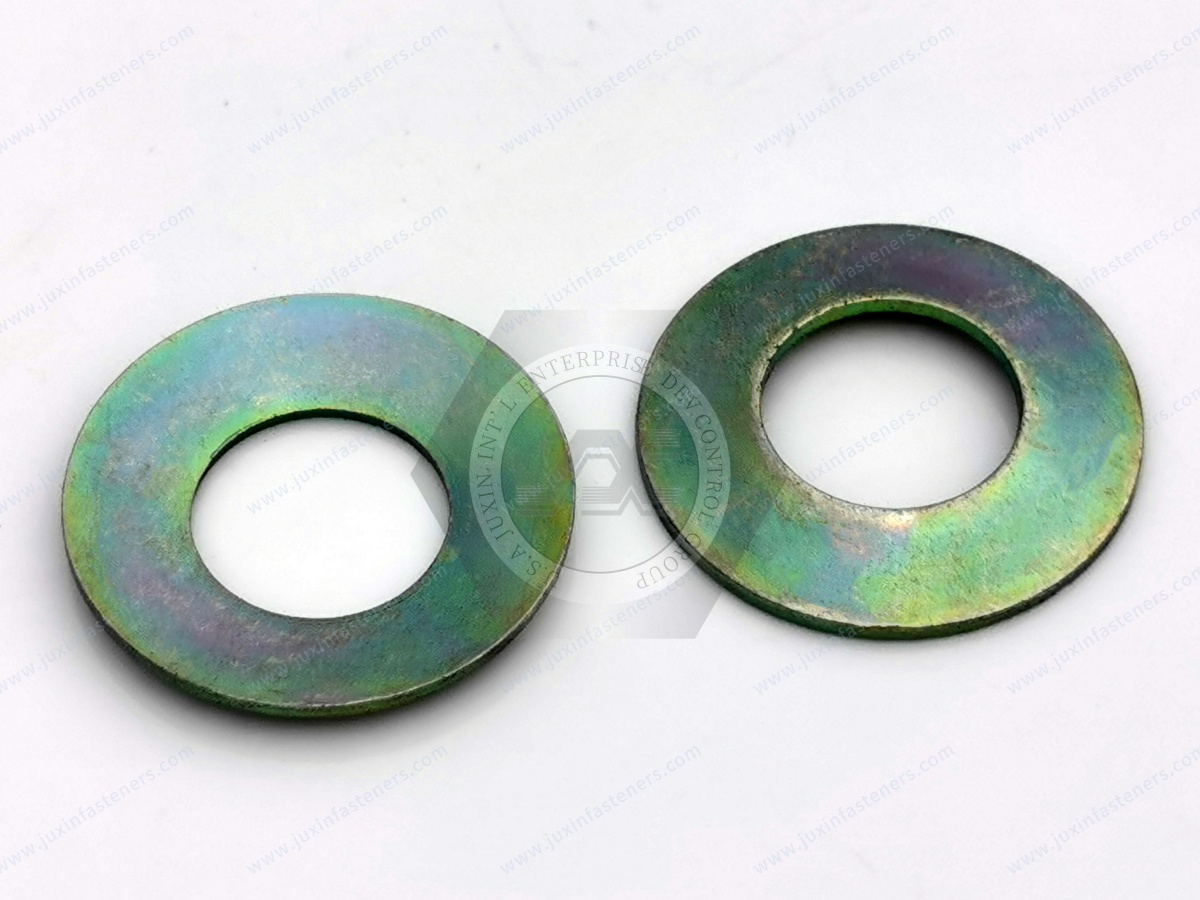
A DIN 137A washer is formed from spring material into a curved profile rather than remaining completely flat.
During installation:
The bolt or nut applies an axial load.
The curved washer begins to flatten.
Elastic strain energy is stored in the washer.
The washer produces a reaction force against the joint.
If a small amount of axial relaxation occurs, the washer may recover part of its deflection.
This behavior makes the component useful where a compact assembly needs limited elastic take-up.
The washer does not create the main structural preload in a properly tightened bolted joint. Bolt elongation normally provides the dominant clamping force. The curved washer adds a comparatively small elastic element to the load path.
DIN 137A is widely recognized in industrial catalogs and legacy technical drawings, but the standard has been withdrawn.
This distinction matters for both engineers and procurement teams.
A withdrawn standard may still be used to:
Identify an existing installed component
Purchase replacement parts for legacy machinery
Interpret an older customer drawing
Maintain dimensional compatibility
Support an approved spare-parts program
Manufacture a customer-specific equivalent
It should not automatically be treated as the preferred standard for a new design.
For a new product, the design engineer should first define the required function.
Depending on the spring load, deflection, vibration, space and maintenance requirements, a DIN 137A-type washer, wave washer, conical spring washer, disc spring,
wedge-lock washer or another locking system may be more appropriate.
If a purchasing drawing simply states “DIN 137A,” confirm the required edition, dimensions, material, surface treatment and performance expectations before production.
These names are sometimes used interchangeably in catalogs, but the geometries and load-deflection behavior can differ.
The Type A design has a simple curved or saddle-like profile. It normally provides relatively light spring force and limited deflection in a compact space.
The Type B design has a wave-shaped profile with multiple contact regions. Its load distribution and deflection behavior differ from the single-curved Type A washer.
Three-wave washers are frequently used to control axial play or provide light preload in bearings, shafts, motors and rotating assemblies.
A conical spring washer or Belleville-type washer has a conical geometry capable of producing a different and often substantially higher load-deflection response.
These components should not be substituted solely because they share the word “spring.” Their dimensions, contact patterns, spring rates and installed loads must be compared.
The washer produces a reaction force as its curved profile is compressed.
This spring force may support applications that need:
Light axial preload
Tolerance take-up
Noise or rattle reduction
Compensation for small assembly variations
Contact maintenance
Limited response to thermal dimensional changes
A conventional flat washer is comparatively rigid in the axial direction. A curved spring washer adds controlled flexibility to the joint stack.
This can be useful when a completely rigid washer arrangement would not provide the desired take-up behavior.
Surface roughness, coating compression and interface embedding can reduce bolt preload after tightening.
A spring washer may recover a small amount of displacement. Whether that recovery is sufficient depends on the washer’s available deflection and spring load compared with the total joint relaxation.
In electrical housings, covers, instruments and adjustment assemblies, a curved washer may help maintain contact or reduce free movement between components.
Electrical continuity should still be validated separately. A coated or oxidized washer is not automatically suitable as a grounding or bonding component.
Rotational self-loosening often occurs when transverse joint movement overcomes friction at the clamped interfaces.
A small curved washer cannot necessarily prevent that movement. If the joint repeatedly slips laterally, the engineer may need:
Greater bolt preload
Improved joint stiffness
Better interface design
A wedge-lock washer
A prevailing-torque nut
A mechanical locking feature
An approved thread-locking adhesive
A serrated fastener
A positive locking device
Read more in Do Spring Washers Prevent Bolts from Loosening?.
A DIN 137A curved washer is generally compact and does not automatically provide the broad bearing area needed to protect soft plastic, aluminum, composites or thin sheet metal.
Using it directly against a soft surface can produce:
Local indentation
Surface damage
Material creep
Washer embedding
Loss of preload
Permanent deformation of thin sheet
If load spreading is required, the engineer must define a suitable bearing surface or approved washer arrangement. Adding a flat washer changes the joint stack and should be included in the validation.
A spring washer may provide elastic compliance, but this is different from controlled vibration isolation or damping.
True vibration isolation normally requires a system designed around stiffness, mass, excitation frequency and damping characteristics. A small metal washer should not be marketed as a universal vibration damper.
Plastic components, gaskets, coatings and soft metals can continue to creep over time.
If the total settlement exceeds the washer’s useful deflection, the washer will no longer maintain meaningful spring force. For high-creep assemblies, a higher-capacity spring element or redesigned load path may be required.
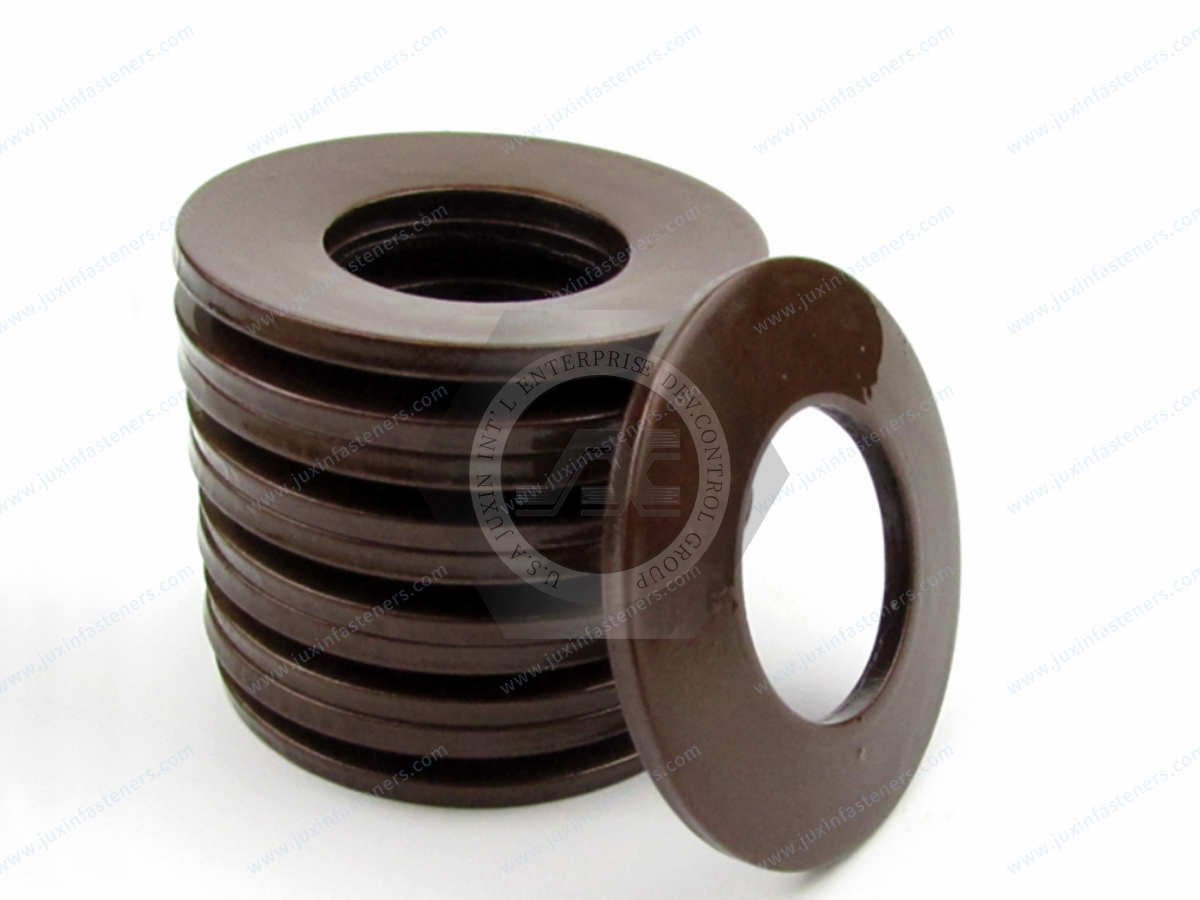
One of the most important engineering distinctions is the difference between washer spring force and bolt preload.
A tightened bolt may generate a clamping force much greater than the residual spring force of a thin curved washer. Once the washer is nearly or fully flattened, its additional travel may be very small.
This means the washer cannot be evaluated only by asking whether it “has elasticity.”
Engineers should determine:
Initial free height
Installed height
Available elastic deflection
Load at the installed height
Residual load after relaxation
Permanent set after compression
Cyclic load behavior
Temperature-dependent spring performance
If the washer becomes completely flattened at a load far below the joint preload, it may provide very limited compensation during service.
For applications where preload retention is critical, see the guide to bolt stress relaxation and clamping-force loss.
The functional performance of a curved spring washer is described by the relationship between applied load and axial deflection.
Important characteristics include:
Free height before installation
Initial contact load
Deflection at a specified load
Load at a specified installed height
Maximum recommended compression
Residual height after unloading
Permanent deformation
Fatigue life under repeated cycling
Two washers with the same inside diameter and outside diameter may behave differently if they have different:
Thicknesses
Curvature
Material grades
Hardness
Heat treatments
Forming processes
Grain directions
Edge conditions
For an application that depends on a defined spring force, dimensional interchangeability alone is insufficient. The drawing or RFQ should include a load-deflection requirement.
DIN 137A and DIN 128A are sometimes confused because both may be described as curved or spring-locking washers.
They should not be treated as identical without checking the drawing.
Differences may include:
Profile geometry
Outside diameter
Thickness
Free height
Contact pattern
Spring behavior
Intended fastening arrangement
Applicable nominal sizes
When replacing an existing washer, verify the complete dimensional table or physical sample rather than substituting only by thread size.
For the related product family, see DIN 128A curved spring washers.
DIN 6796 conical spring washers are used where a different load-deflection characteristic and typically greater spring load are required in a bolted joint.
A DIN 6796 washer may be more appropriate when the design requires:
Higher spring force
Greater preload support
A defined conical spring characteristic
Use with higher-load bolted connections
More substantial compensation capability
A DIN 137A curved washer may be preferable where:
Installation space is limited
Only light axial compensation is required
The assembly uses a legacy DIN 137A geometry
Cost and simple installation are priorities
The required spring load is relatively low
The two washer types are not direct dimensional or functional replacements.
See JUXIN FASTENERS’ DIN 6796 conical spring washers for higher-load applications.
Hardened spring steel is a common material for curved washers because it can provide:
High elastic limit
Suitable hardness
Repeatable spring response
Resistance to permanent deformation
Practical high-volume forming
Cost-effective production
The material should be specified by an appropriate EN, DIN, ASTM, SAE or customer-approved requirement.
The final washer performance depends not only on the base steel but also on forming, heat treatment, hardness and dimensional control.
Stainless spring steel may be selected where corrosion resistance is required.
EN 1.4310 is commonly used for spring components because it can combine corrosion resistance with suitable spring properties after forming and work hardening.
“Stainless steel” alone is not a complete material specification. Austenitic grades used for general fasteners may not provide the same spring characteristics as an approved stainless spring material.
The purchaser should define:
Material grade
Condition
Required hardness
Magnetic restrictions, if any
Corrosion environment
Temperature range
Surface condition
Spring bronze or another copper alloy may be considered for selected electrical, corrosion-sensitive or non-ferrous applications.
The engineering team must verify:
Required spring force
Electrical conductivity
Corrosion compatibility
Relaxation behavior
Operating temperature
Material cost
A copper-alloy washer should not be assumed to provide the same load-deflection behavior as hardened spring steel.
Possible finishes for spring-steel curved washers include:
Black oxide
Phosphate-based finishes
Mechanical zinc coatings
Zinc-flake coatings
Customer-specified protective finishes
The coating should be selected according to:
Corrosion category
Coating thickness
Dimensional tolerance
Coefficient of friction
Operating temperature
Electrical requirements
Environmental compliance
Hydrogen-embrittlement risk
Customer-approved process
High-hardness spring-steel parts require careful coating-process selection.
Acid cleaning and electrolytic plating can introduce hydrogen into susceptible steel. This may cause delayed cracking or loss of mechanical integrity.
Where applicable, coating and process controls should be evaluated according to ISO 4042, customer specifications and the actual material hardness.
Mechanical zinc or appropriately controlled non-electrolytic coating systems may be considered where hydrogen-charging risk must be reduced. The exact process still requires qualification.
Black oxide can provide a dark appearance and limited corrosion resistance when combined with oil or another protective treatment.
It should not be specified as the sole protection for long-term outdoor, marine, chemical or salt-exposed service.
Stainless spring washers can still corrode under chloride exposure, crevice conditions, incompatible chemical contact or galvanic coupling.
The complete environment and mating materials must be reviewed.
The nominal thread size is only the starting point.
Verify:
Inside diameter
Outside diameter
Material thickness
Free height
Installed height
Bolt-head or nut bearing diameter
Under-head radius clearance
Hole diameter
Available contact area
Adjacent-component geometry
The washer must fit over the fastener without interfering with thread runout or the bolt’s under-head radius.
The outside diameter must fit within the available spotface or assembly envelope.
If the joint depends on a specific spring response, also confirm the load at the intended installed height.
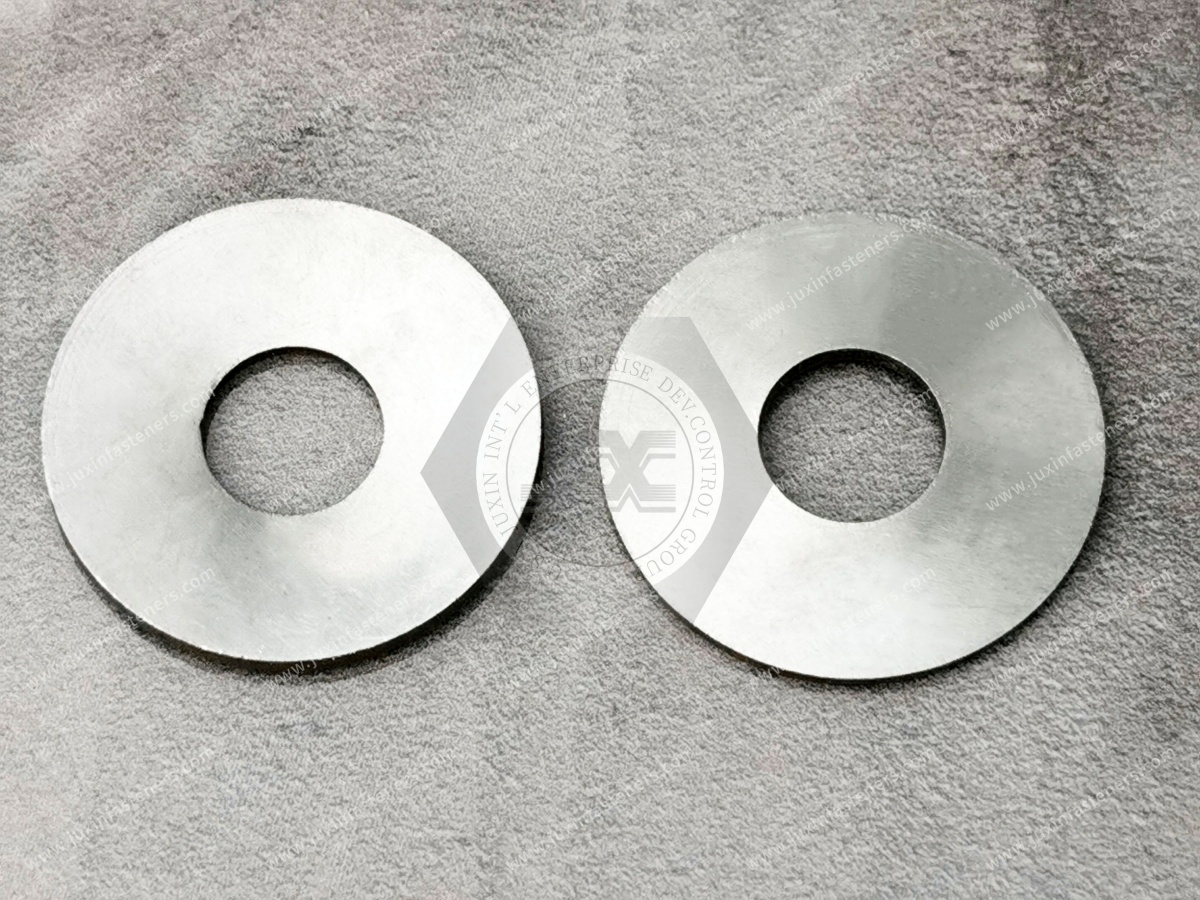
The contact surfaces should provide adequate support without excessive indentation or local collapse.
Use the tightening torque, torque-angle method or preload procedure established for the actual fastener, coating, lubrication condition and joint.
Do not assume that adding a spring washer allows a higher tightening torque.
If the washer is compressed beyond its intended range, it may:
Take a permanent set
Lose available spring travel
Crack
Damage the mating surface
Stop providing useful compensation
Whether the washer may be fully flattened depends on its design specification and the joint requirements. It should not be decided by appearance alone.
A simple curved washer can contact the assembly differently depending on orientation.
If orientation affects the customer’s load path, seating, surface protection or automatic assembly process, it should be defined on the drawing and work instruction.
Stacking multiple curved washers changes the load-deflection behavior and can create unstable contact.
If additional travel or spring force is required, use an engineered spring stack or a component specifically designed for that function.
Reuse should not be assumed.
Before reuse, inspect for:
Permanent flattening
Cracks
Corrosion
Edge damage
Uneven deformation
Coating loss
Wear
Dimensional change
Loss of free height
If the joint requires a defined spring characteristic, visual inspection alone may be insufficient. A new washer is usually a more controlled choice for production or critical maintenance.
Possible causes include excessive compression, insufficient material strength, improper heat treatment or use beyond the intended load range.
The selected washer may have inadequate thickness, curvature or installed deflection for the required function.
Possible causes include excessive hardness, forming defects, poor edge quality, hydrogen embrittlement or installation beyond the approved deflection.
The washer’s axial force may be too small to prevent transverse joint slip or rotational loosening. A different joint design or locking method may be necessary.
A compact spring washer may create concentrated contact pressure. Plastic, aluminum or thin sheet may require a larger bearing surface or reinforced joint design.
Pitting, coating damage or chemical attack can reduce the effective cross-section and initiate fatigue cracking.
The part may have been sourced by nominal bolt size without confirming outside diameter, thickness, free height or material.
DIN 137A-type curved washers may be used in:
Machine enclosures
Guards
Control mechanisms
Adjustment assemblies
Light-duty brackets
Instrument housings
Serviceable covers
They are most suitable where the required axial compensation is limited and the joint has been validated for the actual loads.
Potential applications include:
Electrical enclosures
Control cabinets
Terminal assemblies
Switchgear mechanisms
Lighting equipment
Communication equipment
Instrument panels
For current-carrying or grounding connections, engineers must separately evaluate contact resistance, coating, corrosion and applicable electrical standards.
Curved spring washers may appear in legacy vehicle assemblies, interior equipment, electrical modules, brackets and non-safety-critical mechanisms.
They should not be introduced into steering, braking, restraint, suspension or battery-structure joints without OEM approval and application-specific validation.
Potential uses include:
Commercial kitchen equipment
Heating and ventilation equipment
Pumps
Fans
Domestic appliances
Lighting systems
Access panels
Adjustment mechanisms
Material, coating and spring performance should reflect temperature, humidity, cleaning chemicals and maintenance frequency.
Curved washers can help take up small axial clearances in sensors, control devices, compact mechanisms and automation equipment.
Where positioning accuracy is critical, the washer’s spring rate, force tolerance and hysteresis should be controlled.
DIN 137A washers may be used in brackets, covers, controls or auxiliary mechanical assemblies surrounding hydraulic and pneumatic equipment.
They should not be described as pressure-regulating or fluid-sealing components unless the complete device has been specifically designed and validated for that function.
Hydraulic ports, valves and pressure fittings normally require an approved sealing system rather than a curved spring washer.
A controlled purchasing specification may include:
Nominal size
Inside diameter
Outside diameter
Thickness
Free height
Installed height
Profile geometry
Flatness or contour tolerance
Material grade
Material condition
Hardness range
Heat-treatment requirement
Spring load at specified deflection
Permanent-set limit
Surface finish
Coating thickness
Corrosion-test requirement
Edge and burr requirements
Crack inspection
Lot traceability
Material certificate
Inspection report
Packaging and labeling
For standard replacement parts, dimensional inspection may be sufficient if the customer has already approved the material and design.
For a performance-dependent application, load-deflection testing should be included.
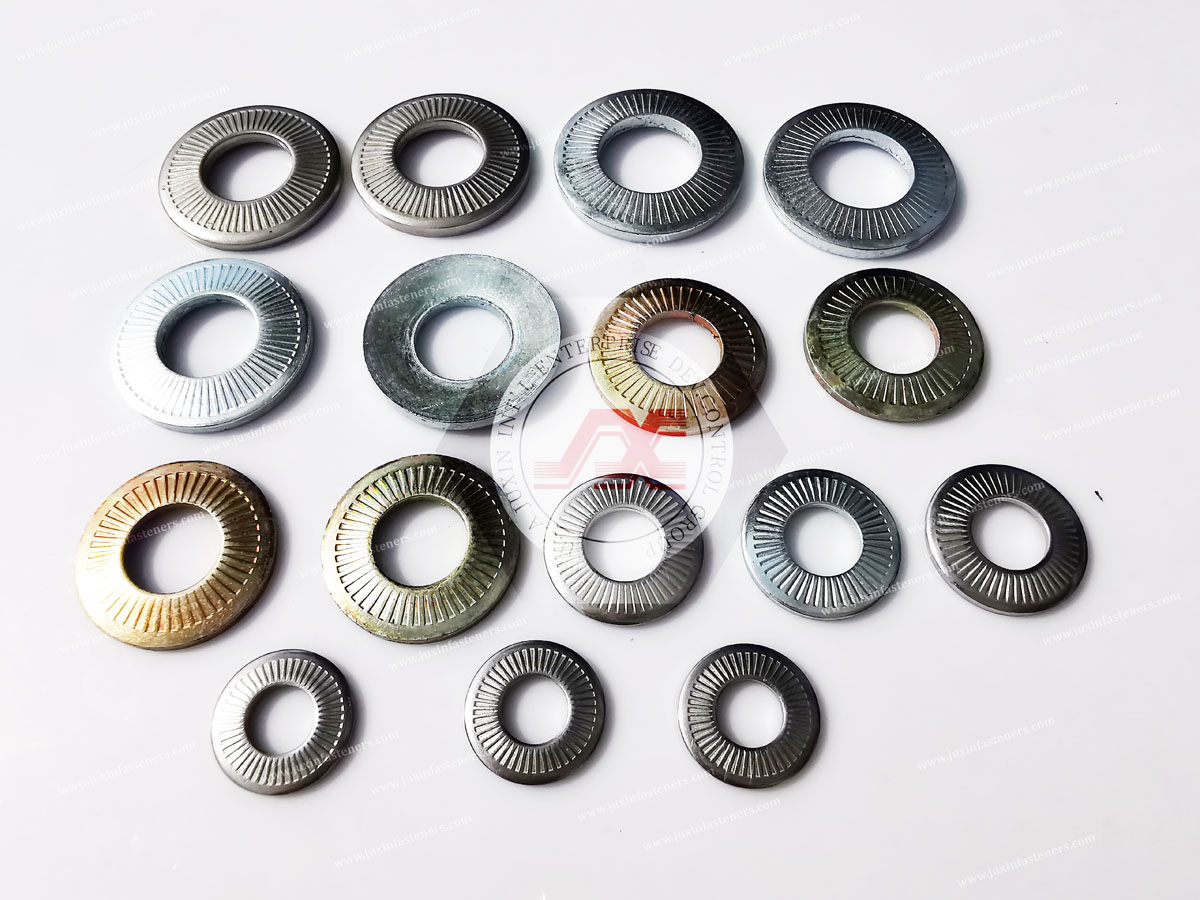
To receive an accurate quotation, send:
Existing drawing or physical sample
Nominal bolt size
Required inside diameter
Required outside diameter
Material thickness
Free height
Installed height
Required spring load or load-deflection curve
Spring steel, stainless spring steel or copper-alloy requirement
Hardness requirement
Surface treatment
Corrosion requirement
Operating temperature
Joint material
Fastener property class
Tightening condition
Applicable legacy or customer standard
Inspection and documentation requirements
Prototype quantity
Annual production volume
Packaging and labeling requirements
If only a legacy DIN 137A designation is available, provide the nominal size and any existing sample so that dimensional and material requirements can be confirmed before quotation.
Its primary function is to provide limited axial spring force and elastic take-up in a compact assembly.
No. DIN 137A is a withdrawn standard, although its dimensions remain widely used for legacy equipment and replacement sourcing.
It may support limited preload compensation, but it does not guarantee protection against severe transverse-vibration loosening.
Not automatically. Its relatively small contact area can create high local pressure. Soft components may require a separate load-spreading solution or redesigned bearing surface.
No. A flat washer primarily distributes bearing load. A DIN 137A curved washer provides elastic axial deflection.
No. A Belleville or conical disc spring has different geometry and load-deflection characteristics and is generally selected for different spring-load requirements.
Only after confirming the grade, condition, hardness, spring force and corrosion requirements. General-purpose stainless steel and stainless spring steel are not automatically equivalent.
They should not be stacked without engineering analysis. Stacking changes their contact behavior and load-deflection response.
That depends on the product design and approved operating range. Repeated or excessive flattening may cause permanent set and loss of spring performance.
Yes. JUXIN FASTENERS can evaluate customer drawings and samples for non-standard dimensions, materials, profiles, finishes, spring loads and production quantities.
JUXIN FASTENERS supports industrial customers sourcing legacy and drawing-specific spring washer components.
Available support can include:
DIN 137A-type curved spring washers
Metric standard and non-standard sizes
Hardened spring-steel washers
Stainless spring-steel washers
Customer-specified surface treatments
Drawing-based profile development
Dimensional inspection
Hardness verification
Load-deflection testing requirements
Material and inspection documentation
Lot identification
Production packaging
Multi-SKU washer and fastener sourcing
Where DIN 137A does not provide sufficient spring force or anti-loosening capability,
JUXIN FASTENERS can also evaluate wave washers, conical spring washers, wedge-lock washers and other application-specific fastening solutions.
A reliable quotation requires more than the nominal bolt size.
Send your drawing, sample, washer dimensions, material, hardness, free height, installed height, required spring load, surface finish, operating environment, annual quantity and documentation requirements to:
JUXIN FASTENERS supports OEMs, equipment manufacturers, maintenance organizations and industrial sourcing teams requiring
DIN 137A-type curved spring washers, custom elastic washers and application-specific fastening components.
 MORE NEWS
Sep. 27, 2026
Sep. 27, 2026
Sep. 27, 2026
Contact Us
Tel.:
+86 020 8621 0320
+86 020 3121 6067
E-mail:
Technical Support:
Navigation
SEND INQUIREY