
Call Us
+86 136 6007 9809
Call Us
+86 136 6007 9809

Aug. 16, 2026
Industrial equipment manufacturers require fastening systems that combine mechanical reliability, dimensional consistency, assembly efficiency, and long-term serviceability.
Machine enclosures, production equipment, industrial workstations, tooling fixtures, control cabinets, and fabricated metal assemblies frequently require permanent threaded attachment points in relatively thin sheet metal.
Self-clinching nuts, also known as clinch nuts or press-in nuts, provide mechanically retained internal threads in compatible metal sheets without conventional tapping or welding.
For industrial OEM manufacturers, the correct fastening solution must support both the equipment design and the manufacturing process.
A suitable self-clinching nut should provide the required thread engagement, resist rotation during screw tightening, maintain adequate retention in the host panel, and allow efficient installation during production.
JUXIN FASTENERS supplies self-clinching nuts and related sheet metal fastening products for industrial equipment manufacturers, machinery builders, metal fabrication companies, and OEM assembly applications.
A self-clinching nut is a threaded fastener designed to become permanently retained in a suitable metal panel through a controlled pressing operation.
Unlike a conventional loose nut, a self-clinching nut does not require an operator to hold a separate component behind the panel during subsequent screw assembly.
The fastener is inserted into a properly sized installation hole and pressed into the sheet using appropriate tooling.
During installation, the surrounding sheet material plastically deforms and flows into the fastener's specially designed retention features.
This mechanical interlock provides resistance to axial displacement and rotation.
Installation generally requires access to both sides of the sheet for the pressing punch and supporting anvil, although the mating screw can subsequently be installed from the accessible side.
Self-clinching nuts are particularly useful where thin sheet metal cannot provide sufficient thread engagement through direct tapping. They can also reduce loose-part handling, simplify assembly operations, and support repeatable manufacturing processes.
However, successful installation depends on fastener geometry, sheet material, thickness, hardness, installation hole dimensions, and controlled pressing force.
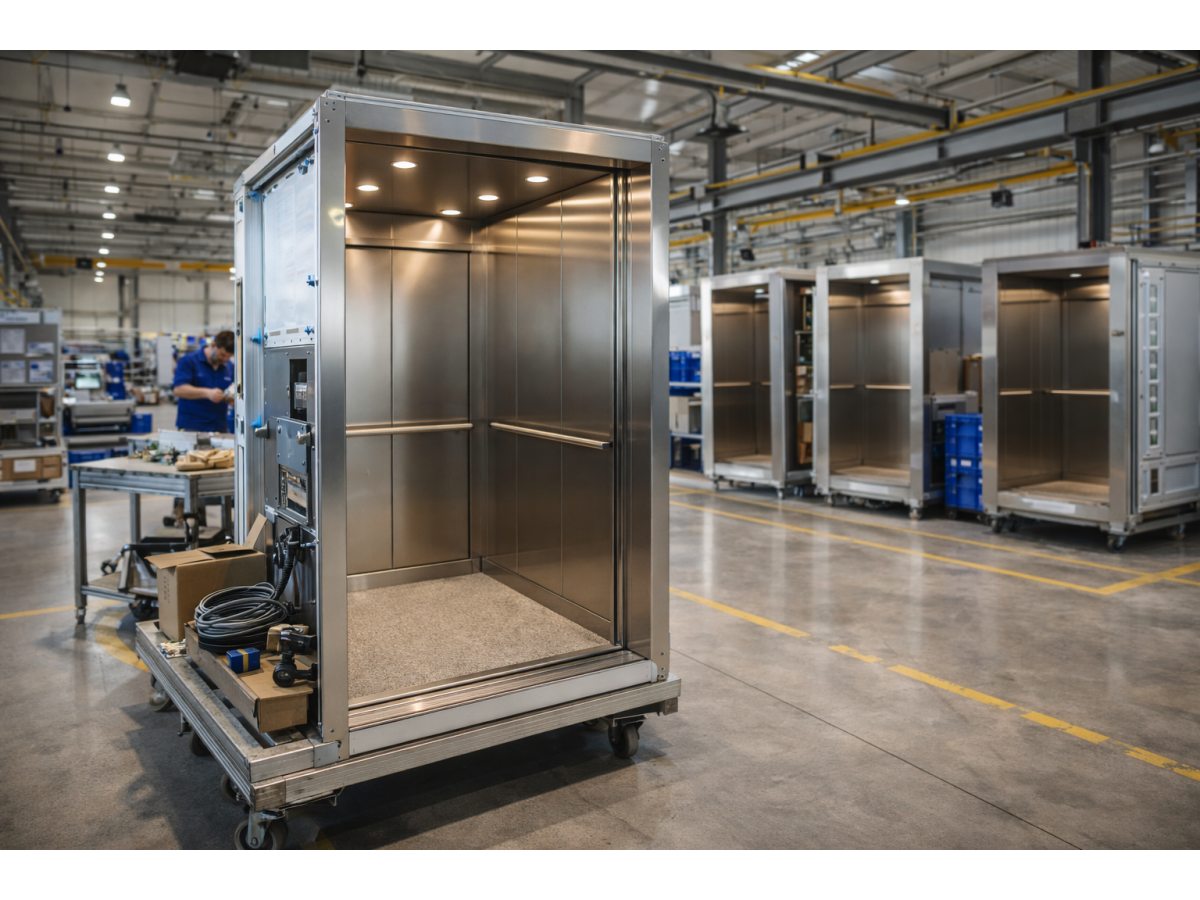
Industrial machinery frequently incorporates fabricated sheet metal covers, protective guards, internal mounting brackets, electrical compartments, and removable service panels.
Self-clinching nuts can be used in suitable applications including:
Machine enclosure panels and removable covers.
CNC machine sheet metal housings.
Industrial automation equipment cabinets.
Electrical and electronic control panels.
Cooling fan and ventilation brackets.
Cable management assemblies.
Equipment access doors and service covers.
Internal mounting brackets and support panels.
For example, a machine enclosure may contain multiple removable covers requiring consistent threaded attachment locations.
Installing clinch nuts during sheet metal fabrication can eliminate the need to position loose nuts during final assembly, particularly when the opposite side of the panel becomes inaccessible.
For equipment exposed to vibration, engineers must also consider joint preload, screw retention, cyclic loading, and loosening risk.
A self-clinching nut provides retention within the panel but does not automatically prevent the mating screw from loosening.
Industrial workbenches, assembly stations, and modular workstations often require adjustable accessories and removable components.
Potential applications include:
Lighting support brackets.
Tool holders and storage accessories.
Equipment mounting panels.
Electrical outlet and control enclosures.
Shelving brackets.
Workstation guards.
Instrument mounting plates.
Modular accessory panels.
Self-clinching nuts provide retained threads in suitable sheet metal components, helping simplify workstation assembly and modification.
For example, a fabricated workstation panel may require several mounting positions for accessories installed during final assembly.
Integrating clinch nuts into the panel can reduce loose hardware handling and improve assembly accessibility.
However, heavy vises, lifting devices, and high-load tooling components may impose substantial forces.
Engineers must evaluate the complete load path, including panel strength, fastener retention, screw strength, and local deformation.
A self-clinching nut should not be treated as a substitute for a properly engineered structural connection.
Tooling and fixture assemblies often require accurate positioning, repeated assembly, and reliable component attachment.
Self-clinching nuts may be suitable for:
Fixture covers and secondary mounting panels.
Sensor mounting brackets.
Adjustable sheet metal guards.
Tooling accessory panels.
Pneumatic control enclosures.
Inspection equipment housings.
Positioning brackets with separately defined locating features.
Removable fixture components.
An important engineering distinction is that threaded fasteners primarily provide clamping and retention. They should not automatically be relied upon as the sole precision locating feature of a tooling fixture.
Where repeatable positioning is essential, dedicated locating pins, machined reference surfaces, shoulders, or other controlled locating features may be required.
For example, a fixture cover may be attached using self-clinching nuts while precision dowel pins establish its repeatable position.
This separates the clamping function from the locating function and reduces dependence on screw-hole clearance for positional accuracy.
For fixtures exposed to frequent adjustment, designers should also consider screw access, thread wear, maintenance cycles, and the consequences of fastener replacement.
Control cabinets and industrial electrical enclosures often use relatively thin metal panels with numerous internal mounting points.
Self-clinching nuts can support suitable brackets, control components, mounting rails, covers, and cable management hardware.
These applications benefit from retained threads that simplify assembly when access behind the panel is limited.
However, electrical enclosure design may impose additional requirements involving protective bonding, corrosion protection, ingress protection, and electrical clearances.
Self-clinching nuts should not be assumed to provide a validated protective earth connection or environmental seal without appropriate joint design and testing.
Where electrical continuity is required, coating thickness, surface contact, installation condition, and relevant equipment requirements must be evaluated.
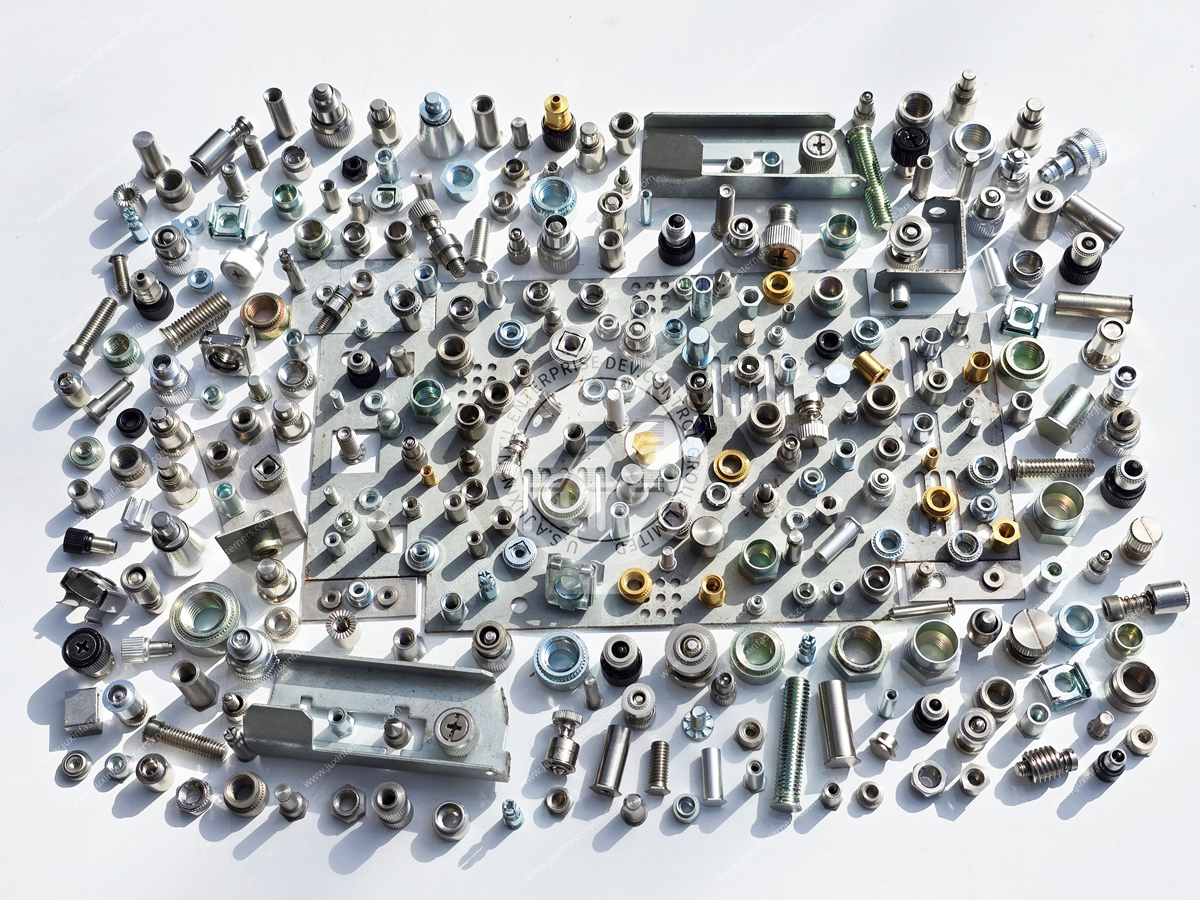
The selection of a self-clinching nut should begin with the host sheet rather than the thread size alone.
The fastener and panel function as a combined mechanical system.
A nut that performs correctly in a relatively soft aluminum panel may not be suitable for a harder stainless steel sheet, even when the thread size and nominal panel thickness are identical.
Common host materials include suitable grades of carbon steel, aluminum, and stainless steel.
The exact compatibility depends on fastener material, retention geometry, sheet hardness, ductility, and thickness.
JUXIN FASTENERS offers several self-clinching nut families intended for different sheet material conditions.
For example, the JX-CLA, JX-CLS, JX-S, and JX-SP product families address different material and hardness requirements.
JX-SP configurations are intended for certain stainless steel sheet applications, while other configurations may be selected for compatible steel or aluminum sheets.
Engineers should verify the specific hardness limits and installation requirements against the selected product specification.
See Self-Clinching Nuts – JX-S, JX-CLS, JX-CLA and JX-SP for product family information.
The minimum sheet thickness is a fundamental design constraint.
Self-clinching nuts are manufactured with different shank configurations that correspond to specific panel thickness ranges.
For certain conventional product families, minimum sheet thicknesses can begin around 0.8 mm (approximately 0.0315 in).
However, this is not a universal installation minimum.
The required thickness depends on the selected nut series, thread size, shank code, material, and installation specification.
A panel that is too thin may not provide enough material to form a reliable mechanical interlock.
An incorrectly selected shank can also cause incomplete seating, reduced retention, or local sheet deformation.
Designers should verify the minimum actual sheet thickness, including material tolerance, rather than relying only on the nominal thickness shown on the drawing.
Self-clinching installation depends on controlled displacement of the host sheet material.
If the panel is too hard for the selected fastener, sufficient material flow may not occur.
This can result in reduced torque-out resistance, inadequate push-out resistance, or installation damage.
The fastener must be designed for the hardness and mechanical characteristics of the specific host material.
Surface coatings and manufacturing processes may also influence the condition of the installation area.
For example, forming, work hardening, or heat treatment may change local material properties.
Where these conditions are relevant, installation trials should be performed using representative production material.
Correct installation hole geometry is essential to achieving reliable self-clinching performance.
The hole must provide sufficient clearance for the fastener shank while allowing the surrounding sheet material to engage the retention features during pressing.
An oversized hole may reduce retention.
An undersized hole may prevent proper seating or cause excessive panel deformation.
Important design variables include:
Installation hole diameter and tolerance.
Hole roundness and edge quality.
Burr condition.
Hole-to-edge distance.
Distance from bends and formed features.
Spacing between adjacent fasteners.
Available punch and anvil clearance.
Local sheet flatness.
The installation hole should follow the selected manufacturer's approved specification.
Hole preparation methods such as punching or drilling must produce the required dimensions and edge condition.
Uncontrolled burrs, distortion, or incorrect installation orientation can compromise the fastening system.
Minimum edge distance should be established for the exact nut type and sheet material.
Installing a clinch nut too close to a free edge may cause edge bulging, deformation, or reduced mechanical retention.
For compact machine housings, engineers should review the complete tooling envelope rather than checking hole location alone.
A hole may be dimensionally correct but impossible to access with the required installation equipment after the panel has been formed.
Industrial equipment manufacturers commonly specify ISO metric threads or Unified inch-series threads.
Metric thread selection may reference ISO 261 and ISO 965, while Unified threads may reference ASME B1.1.
The final thread specification should be defined by the approved engineering drawing.
Metric threads and UNC/UNF threads are not directly interchangeable.
For example, M6 × 1.0 and 1/4-20 UNC are different thread specifications despite their relatively similar nominal diameters.
The mating screw, internal thread, tolerance class, installation tooling, and assembly requirements must match the selected system.
For international OEM projects, maintaining a controlled thread specification across manufacturing locations helps reduce incorrect part substitutions and assembly errors.
Where customers request an alternative thread system, the change should be treated as an engineering modification rather than a simple dimensional conversion.
Self-clinching nuts are normally installed using controlled pressing equipment with suitable supporting tooling.
The process begins with a correctly prepared installation hole and an approved fastener configuration.
The nut is positioned in the hole, and a parallel squeezing force is applied using a punch and anvil.
During pressing, the panel material flows into the fastener's retention features, creating a mechanical interlock.
A typical controlled installation process includes:
Confirming the correct fastener and host sheet specification.
Inspecting the installation hole.
Positioning the fastener with the required orientation.
Supporting the panel using suitable tooling.
Applying the specified installation force.
Checking fastener seating and panel deformation.
Verifying thread condition and required retention performance.
The appropriate installation force depends on the product geometry and material combination.
Excessive pressing force may distort the sheet, damage the fastener, or affect nearby formed features.
Insufficient force may prevent complete engagement of the retention features.
Controlled pressing should not be replaced by uncontrolled hammering or impact installation.
For industrial OEM production, the installation method should be validated using the actual sheet material and representative manufacturing conditions.
Self-clinching nut performance cannot be evaluated using thread size alone.
The installed connection must resist the mechanical forces generated during assembly, operation, and maintenance.
Push-out resistance describes the force required to displace an installed fastener axially from the host sheet under a defined test condition.
This characteristic is influenced by sheet material, thickness, installation hole dimensions, fastener geometry, and installation quality.
A self-clinching nut with inadequate push-out resistance may become displaced during assembly or servicing.
The required performance must be established according to the equipment's actual loading conditions and approved test method.
Torque-out resistance describes the installed fastener's resistance to rotation within the sheet.
This is particularly important when a mating screw is tightened or removed.
Insufficient torque-out resistance can allow the nut to spin within the panel, potentially preventing proper assembly or making maintenance difficult.
Engineers should evaluate the required tightening torque and the torque transferred to the nut during screw installation.
Screw tightening torque and nut torque-out resistance are related but distinct design considerations.
The required values should be established through appropriate joint analysis and validation.
The mechanical retention of a self-clinching nut does not by itself determine the strength of the complete bolted joint.
The overall connection may be limited by screw strength, thread engagement, local panel deformation, fatigue, joint preload, or vibration-induced loosening.
For machinery subject to repeated vibration or dynamic loading, engineers should evaluate the entire assembly.
Where appropriate, a locking-thread self-clinching nut or a separately engineered screw-locking method may be considered.
JUXIN FASTENERS also offers All-Metal Locking-Thread Self-Clinching Nuts – JX-LK, JX-LKA and JX-LKS for applications requiring a prevailing-torque locking feature.
The suitability of any locking configuration should be confirmed against the expected vibration, temperature, installation torque, and reuse requirements.
For production managers and manufacturing engineers, fastener selection affects much more than the mechanical design.
It can influence assembly time, operator handling, production consistency, tooling requirements, inspection effort, and manufacturing cost.
Self-clinching nuts can be incorporated into manual, semi-automated, or automated pressing operations when the fastener and equipment are suitable.
Potential manufacturing approaches include controlled press installation, automatic fastener feeding, dedicated fixtures, part-position verification, and in-process inspection.
Automated installation feasibility depends on fastener geometry, feeding orientation, panel accessibility, tooling design, and production volume.
It should not be assumed that every self-clinching nut can be automatically fed or installed using the same equipment.
A conventional nut-and-bolt assembly may require an operator to position a loose nut behind the panel.
This becomes inefficient when access is restricted or when many threaded attachment points are required.
Installing self-clinching nuts during panel fabrication can eliminate this handling step during final assembly.
For suitable high-volume equipment manufacturing, the benefit may be reflected in reduced assembly operations and more predictable installation sequences.
Consistent clinch nut installation requires control of the process inputs.
Important variables include:
Hole preparation consistency.
Correct fastener identification.
Installation force and tooling condition.
Fastener alignment.
Panel support.
Finished installation height.
Thread condition.
Inspection and rejection criteria.
Production engineers may establish process monitoring or periodic mechanical retention testing according to the approved control plan.
The objective is to prevent installation defects from reaching downstream assembly operations, where correction may be more expensive.
One practical design decision is whether self-clinching nuts should be installed before or after sheet metal forming.
Installing before bending may improve access for pressing equipment when the flat blank is easier to support.
However, subsequent forming operations can introduce deformation or interference around the installed fastener.
Installing after bending may avoid those effects but can make tool access more difficult.
The correct sequence depends on panel geometry, bend location, fastener position, tooling clearance, and production equipment.
Manufacturing engineers should evaluate the process sequence before finalizing the panel drawing.
For automated production lines, this early review can prevent costly tooling modifications after the design has been released for production.
Self-clinching nut materials and surface finishes should be selected according to the host panel, mechanical requirements, operating environment, and customer specification.
Carbon steel self-clinching nuts may be suitable for compatible steel or aluminum panels when the required hardness relationship and mechanical properties are satisfied.
Protective finishes such as specified zinc-based coatings may be considered for corrosion protection.
The selected finish must be compatible with the thread requirements, installation conditions, and operating environment.
Stainless steel self-clinching nuts may be appropriate for applications requiring improved corrosion resistance.
However, stainless steel grades differ in mechanical properties and corrosion behavior.
A stainless steel nut is not automatically suitable for installation into every stainless steel panel.
The selected fastener must have an appropriate retention design and material compatibility for the actual host sheet.
Aluminum self-clinching nuts may be considered for selected lightweight assemblies when the product design and mechanical requirements permit.
Engineers should evaluate thread strength, wear, material compatibility, and the expected assembly cycle.
Industrial equipment may operate in environments involving humidity, coolant mist, lubricants, cleaning chemicals, temperature variation, or outdoor exposure.
The fastener material and finish should be evaluated against these conditions.
Where dissimilar metals are combined, galvanic corrosion should be considered when conductive moisture may be present.
Surface treatment should be specified according to the required corrosion performance and applicable customer requirements rather than selected solely by appearance.
An oversized or undersized installation hole can compromise fastener seating and retention.
Prevention: Use the approved hole specification and control the manufacturing process.
A panel that is too hard may not deform sufficiently to engage the retention features.
Prevention: Verify sheet material and hardness before selecting the nut series.
An unsuitable shank configuration may cause inadequate mechanical engagement or panel distortion.
Prevention: Match the fastener to the minimum actual panel thickness.
Misaligned tooling can produce tilted installation, uneven seating, or localized deformation.
Prevention: Maintain correct punch-and-anvil alignment and adequate panel support.
A nut may rotate when its installed torque-out resistance is insufficient for the assembly conditions.
Prevention: Verify installation quality and evaluate tightening requirements against the approved retention specification.
Installing too close to a panel edge or formed feature may cause local distortion.
Prevention: Review minimum edge distance, local geometry, and tooling clearance during design.
A securely clinched nut does not guarantee that the mating screw will remain tight.
Prevention: Evaluate joint preload, vibration conditions, and appropriate locking methods.
A threaded joint may provide adequate clamping while allowing positional variation caused by screw-hole clearance.
Prevention: Use dedicated locating features where precision positioning is required.
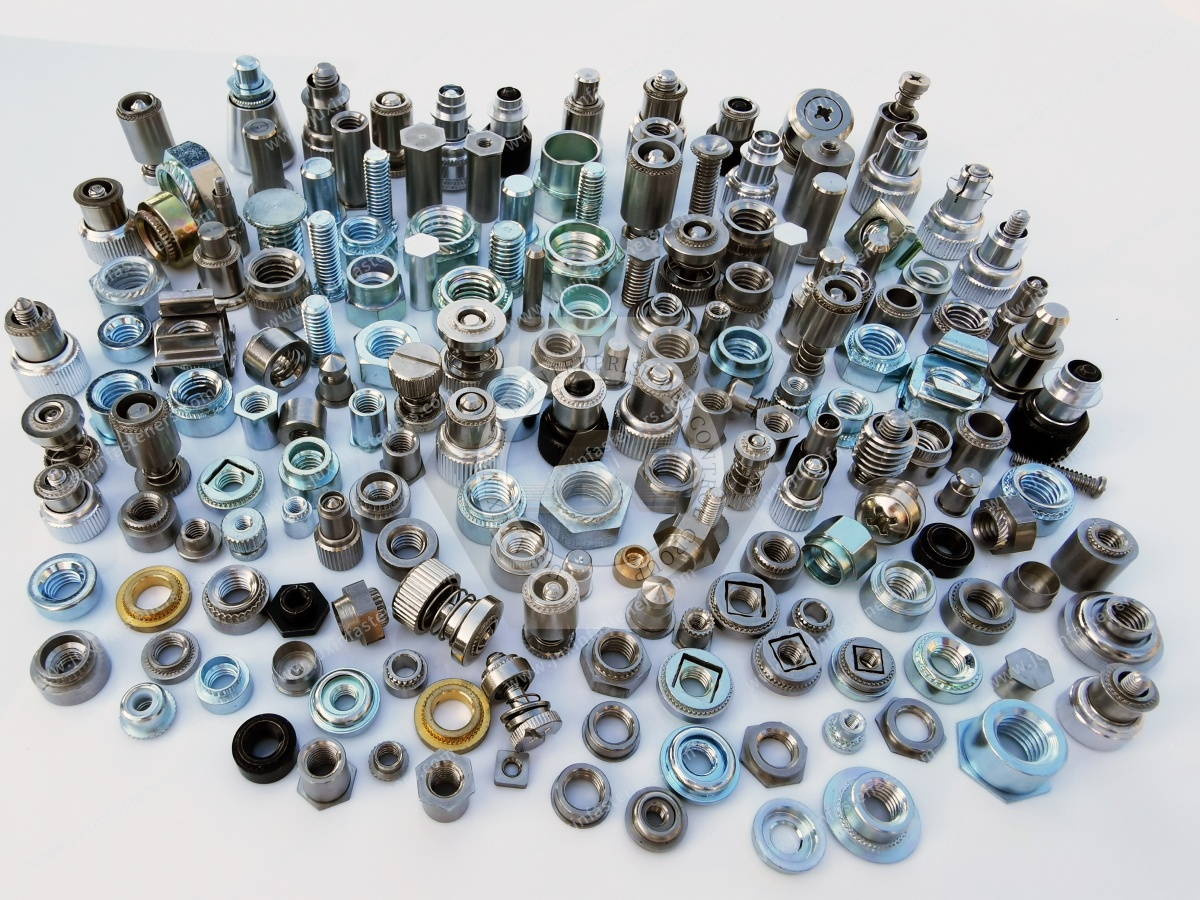
Weld nuts provide threaded attachment points through a welding process.
They may be appropriate for certain heavier metal structures or applications where welding is already integrated into production.
Self-clinching nuts avoid welding heat and can be advantageous for suitable precision sheet metal panels.
However, self-clinching nuts require compatible sheet material and pressing access.
The choice should consider panel thickness, material properties, loading, manufacturing equipment, and production cost.
Rivet nuts can provide threaded attachment points where installation access is available from only one side.
This can be advantageous for closed structures or assembled tubular components.
Self-clinching nuts generally require access for both the pressing punch and supporting anvil during installation.
For accessible sheet metal panels, self-clinching nuts may offer a practical alternative when their installation and retention requirements are satisfied.
Neither technology should be selected solely on the basis of nominal thread size.
Direct tapping can be suitable where the host material provides sufficient thread engagement and strength.
In thin sheet metal, the limited material thickness may restrict thread engagement and resistance to stripping.
A self-clinching nut introduces a separate threaded component with a designed mechanical retention interface.
This can be useful when repeated screw installation or greater thread engagement is required.
The final decision should consider panel thickness, expected loads, assembly frequency, and total manufacturing cost.
Not every industrial assembly requires a conventional open-ended clinch nut.
Different designs can address specific mechanical or manufacturing challenges.
Blind self-clinching nuts provide a closed-end threaded cavity.
They may be useful where screw projection must be controlled or where nearby components require protection from an extending screw tip.
However, a blind configuration does not automatically provide a waterproof or airtight connection.
See Blind Self-Clinching Nuts – Engineering and OEM Applications.
Locking-thread configurations may be considered for equipment exposed to vibration or applications requiring controlled resistance to screw loosening.
The selected locking mechanism should be evaluated for prevailing torque, temperature, screw compatibility, and repeated use.
For applications requiring frequent maintenance, engineers should consider the effect of repeated screw installation on locking performance.
Some industrial equipment manufacturers require special dimensions, nonstandard thread configurations, restricted installation envelopes, or customer-defined materials and finishes.
These requirements may be evaluated as OEM custom fastener projects.
The feasibility of a custom design depends on drawings, material specifications, tooling considerations, expected production volume, and performance requirements.
For industrial equipment OEMs, selecting a self-clinching nut supplier involves technical compatibility, manufacturing consistency, commercial requirements, and long-term supply planning.
A technically suitable product must also be available under an agreed purchasing arrangement that supports the customer's production schedule.
Before requesting a quotation, buyers should establish the required thread specification, fastener configuration, host sheet material, thickness, finish, and installation conditions.
Providing complete technical information helps avoid quotations for products that match the nominal thread size but are incompatible with the actual panel.
When evaluating an alternative to an existing specified fastener, purchasing teams should not assume that two products are interchangeable because they share the same nominal thread.
Potential differences include:
Installation hole diameter.
Minimum sheet thickness.
Shank geometry.
Fastener height.
Material hardness compatibility.
Push-out and torque-out characteristics.
Surface finish.
Installation tooling requirements.
Any proposed alternative should be evaluated against the approved engineering drawing and validated where necessary.
The lowest fastener unit price does not always produce the lowest assembly cost.
A more complete purchasing evaluation considers:
Fastener purchase price.
Installation labor.
Tooling and equipment requirements.
Inspection effort.
Scrap and rework risk.
Packaging and handling.
Production downtime.
Delivery reliability.
For recurring OEM production, consistency and installation efficiency can have a substantial influence on the total cost of ownership.
MOQ and lead time depend on the selected product, material, thread, finish, tooling requirements, and order quantity.
Standard configurations and customer-specific fasteners may require different commercial arrangements.
Procurement teams should provide estimated initial demand, annual usage, delivery schedule, and any forecast requirements during supplier evaluation.
This allows the supplier to review production feasibility and provide a quotation based on the actual purchasing program.
OEM buyers may require dimensional inspection, material verification, thread inspection, finish conformity, and other agreed quality documentation.
For applications with defined retention requirements, installed push-out and torque-out testing may also form part of qualification.
Acceptance criteria and inspection frequency should be established according to the customer's technical specification and agreed quality plan.
A supplier evaluation should distinguish between fastener manufacturing quality and the performance of the final installed assembly.
Both are important, but the installation process is also controlled by the equipment manufacturer's sheet metal fabrication and assembly operations.
Before approving a self-clinching nut for an industrial equipment project, engineering and procurement teams should confirm the following information.
| Evaluation Area | Required Information |
|---|---|
| Host panel | Material grade, hardness, thickness and finish |
| Thread | Metric or Unified series, diameter, pitch and tolerance |
| Nut configuration | Product family, shank code, material and dimensions |
| Installation hole | Diameter, tolerance, burr condition and edge distance |
| Assembly | Pressing access, tooling, installation sequence and screw engagement |
| Mechanical performance | Required push-out, torque-out and joint loading |
| Operating conditions | Vibration, temperature, corrosion and maintenance |
| Quality | Inspection criteria, validation and documentation |
| Procurement | Order quantity, annual demand, MOQ and delivery requirements |
This information helps reduce engineering clarification cycles, incorrect product selection, and avoidable changes during production preparation.
JUXIN FASTENERS supplies self-clinching nuts, press-in nuts, clinch nuts, and related sheet metal fastening solutions for industrial OEM manufacturers.
Our product portfolio supports applications involving machinery enclosures, industrial control cabinets, automated equipment, fabricated metal panels, tooling accessories, and production workstations.
We can review customer requirements involving:
Standard self-clinching nut configurations.
Metric and Unified thread specifications.
Carbon steel and stainless steel material options.
Suitable alternative fastener configurations.
Customer-specific dimensions and finishes.
Sheet material and thickness compatibility.
Installation and assembly considerations.
OEM drawings and technical specifications.
Prototype evaluation and recurring production requirements.
Bulk purchasing and supply planning.
For additional technical guidance, see How to Choose Self-Clinching Nuts for Sheet Metal.
You can also explore our Self-Clinching Fasteners for Sheet Metal – Engineering and OEM Solutions for related product families and applications.
Are you developing industrial equipment, machinery enclosures, tooling fixtures, production workstations, or sheet metal assemblies requiring reliable threaded fastening points?
JUXIN FASTENERS welcomes inquiries from equipment manufacturers, mechanical engineers, manufacturing engineers, production teams, purchasing departments, and global OEM supplier development teams.
For an accurate technical evaluation and quotation, please provide:
Available 2D drawings or 3D CAD models.
Required nut type and thread specification.
Host sheet material, thickness and hardness.
Required fastener material and surface finish.
Installation hole details, if available.
Mechanical performance or environmental requirements.
Estimated order quantity and annual demand.
Target delivery schedule.
If you are seeking an alternative to an existing clinch nut, please include the original drawing or technical reference so dimensional and installation compatibility can be reviewed.
Our objective is to help industrial OEM customers identify suitable fastening solutions that support reliable assembly, efficient production, and consistent long-term procurement.
JUXIN FASTENERS
Website: https://www.juxinfasteners.com
Email: info@juxinfasteners.com
Send your technical drawings and RFQ to discuss your industrial self-clinching nut requirements.
Contact Us
Tel.:
+86 020 8621 0320
+86 020 3121 6067
E-mail:
Technical Support:
Navigation
SEND INQUIREY



