
Call Us
+86 136 6007 9809
Call Us
+86 136 6007 9809

Aug. 16, 2026
Self-Clinching Nuts for Medical Equipment and Precision Sheet Metal
Medical equipment manufacturers require fastening solutions that combine dimensional accuracy, reliable mechanical attachment, efficient assembly, and long-term serviceability.
From diagnostic imaging systems and laboratory instruments to rehabilitation equipment and electronic control housings, many medical technology products rely on precision sheet metal structures that require durable internal threads.
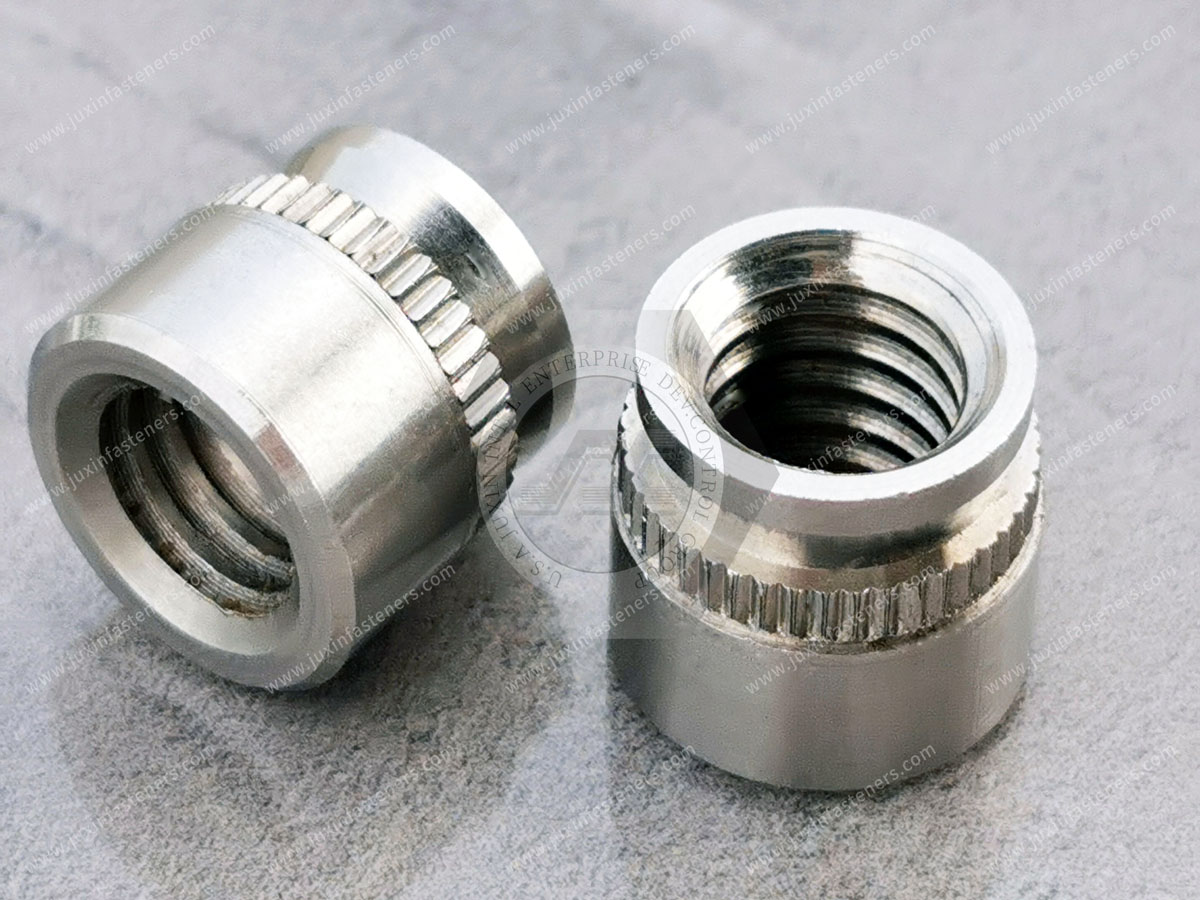
Self-clinching nuts, also known as clinch nuts or press-in nuts in relevant sheet metal applications,
provide permanently retained female threads in compatible metal panels without conventional welding or directly tapping the thin sheet.
For OEM medical equipment manufacturers, choosing the correct self-clinching nut involves more than selecting a thread diameter.
Sheet thickness, material hardness, installation hole geometry, mechanical loading, cleaning exposure, production sequence, and maintenance requirements all influence fastening performance.
JUXIN FASTENERS supplies self-clinching nuts and related engineered sheet metal fastening solutions for industrial OEM applications, including suitable medical equipment assemblies.
We support technical evaluation based on customer drawings, material requirements, thread specifications, and production conditions.
Why Self-Clinching Nuts Are Used in Medical Equipment
Medical equipment commonly incorporates thin sheet metal panels, formed brackets, electronic enclosures, internal supports, removable covers, and compact mechanical assemblies.
These structures often need secure threaded attachment points even when the base material is too thin to provide sufficient thread engagement through conventional tapping.
Self-clinching nuts address this challenge by creating a mechanical interlock with the host sheet.
During installation, the nut is positioned in a correctly prepared hole. A controlled pressing force causes compatible sheet material to flow into the fastener's retention features.
The resulting mechanical engagement resists rotation and axial displacement.
Unlike a conventional loose nut, the installed fastener remains attached to the panel during subsequent assembly and servicing.
This can offer several practical advantages:
Permanent internal threads in suitable thin sheet metal.
Reduced handling of loose nuts during final assembly.
Mechanical installation without welding heat.
Repeatable fastening positions for removable components.
Potential improvements in production efficiency.
Reduced need for access to the opposite side during final screw assembly.
Support for standardized panel and enclosure manufacturing.
However, successful clinching depends on the compatibility of the fastener and sheet material. A self-clinching nut should never be selected solely because its thread size matches the mating screw.
Medical Equipment Applications and Fastening Requirements
Medical Imaging and Diagnostic Equipment
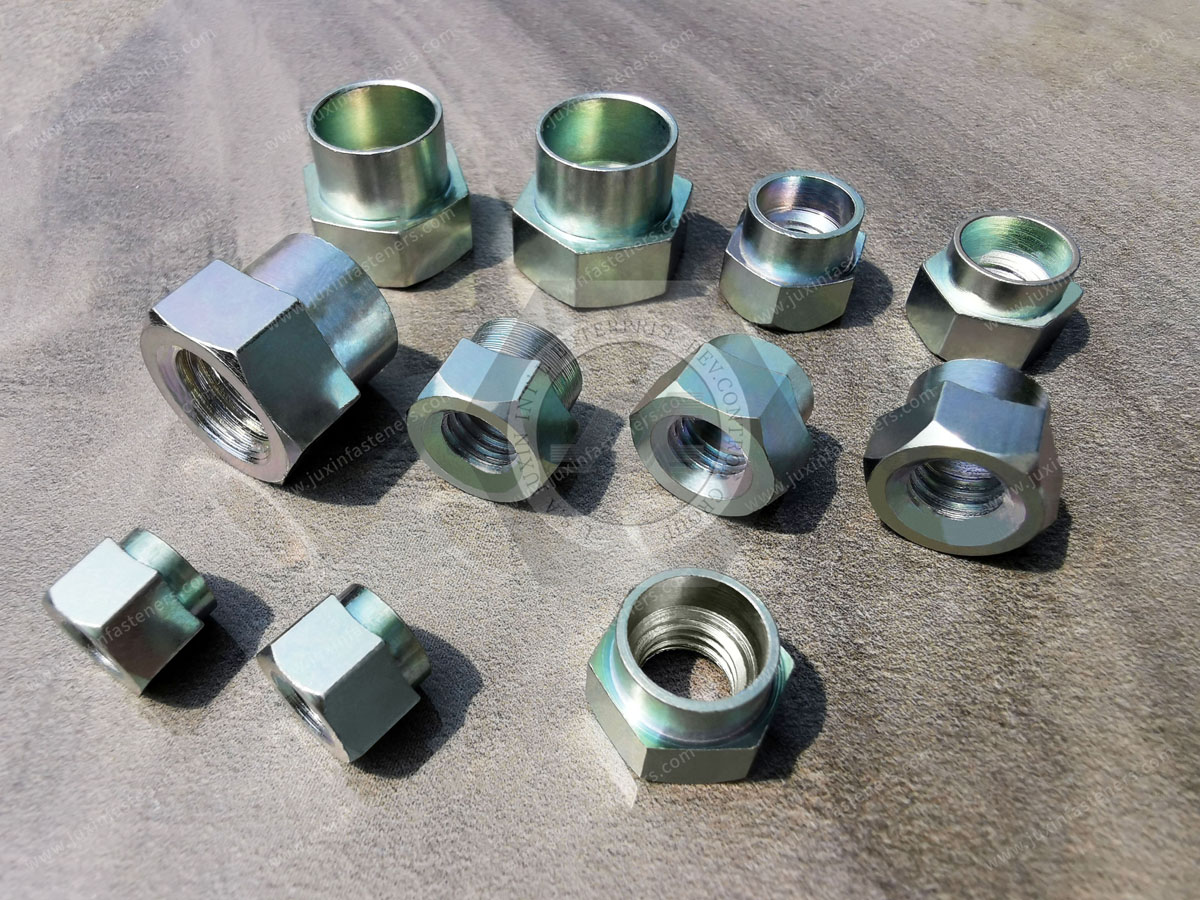
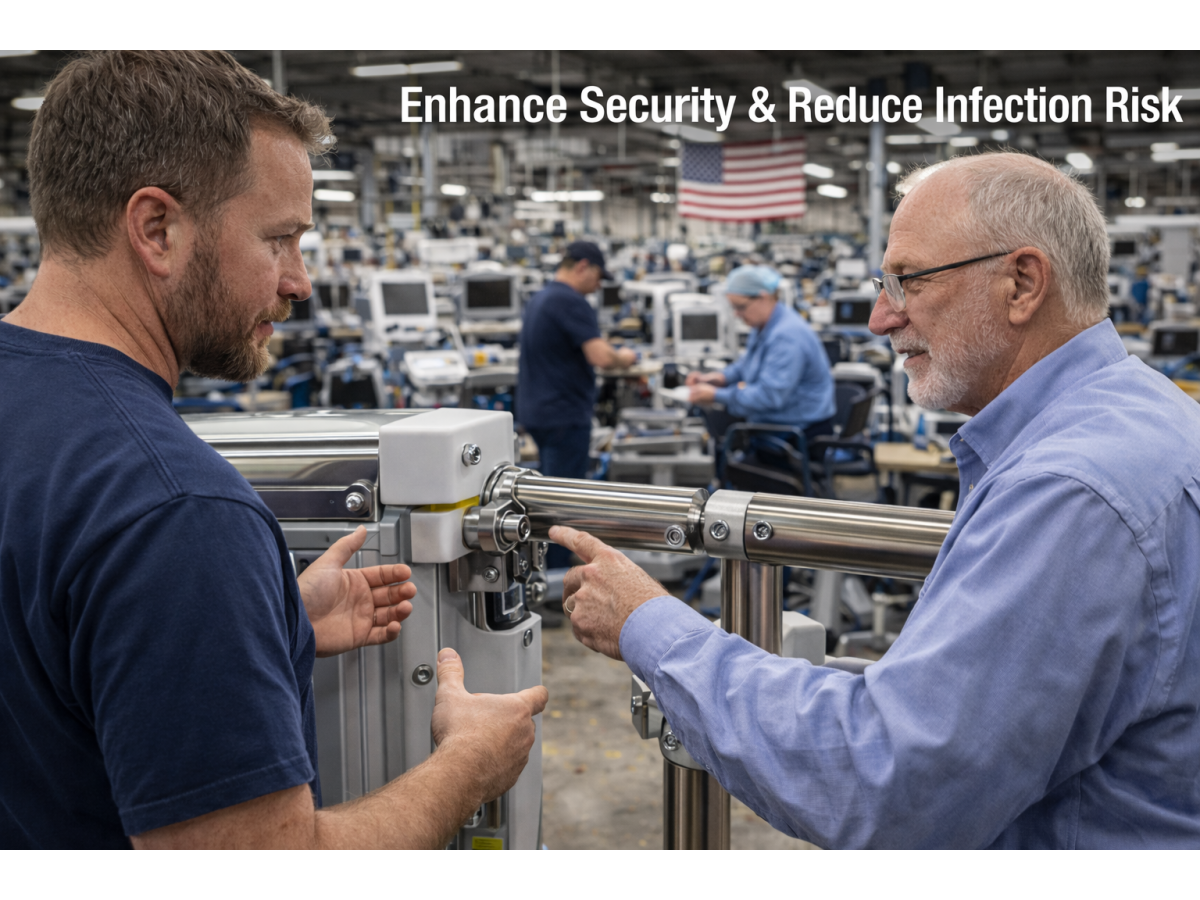
Medical imaging and diagnostic systems frequently contain precision metal housings, electrical compartments, structural brackets, cable management supports, and removable service panels.
Potential applications include:
Diagnostic imaging equipment enclosures.
Internal electronic module mounting.
Control cabinet panels.
Equipment covers and access doors.
Cable management brackets.
Instrument support structures.
Non-patient-contact sheet metal assemblies.
In these applications, self-clinching nuts can provide permanent threaded locations while allowing mating components to be installed or removed with conventional screws.
For example, an internal electronics bracket may require several threaded attachment points distributed across a relatively thin metal panel.
Integrating clinch nuts into the panel can eliminate the need for technicians to position separate nuts during final assembly.
Design engineers should verify fastener placement, access for installation tooling, screw engagement, and clearance around adjacent electrical components.
For equipment exposed to vibration or repeated transportation, the complete joint must also be evaluated for loosening, fatigue, and mechanical retention.
Laboratory Instruments and Analytical Equipment
Laboratory equipment manufacturers often prioritize precision assembly, controlled internal layouts, cleanable surfaces, and access for calibration or maintenance.
Self-clinching nuts may be suitable for:
Laboratory analyzer housings.
Diagnostic instrument panels.
Electronic control enclosures.
Internal mounting brackets.
Instrument access covers.
Equipment support assemblies.
Serviceable mechanical modules.
A major engineering consideration is the relationship between fastening performance and the operating environment.
For example, a laboratory instrument may experience occasional cleaning with chemical agents. The selected fastener material and finish must therefore be compatible with the specified cleaning procedure.
The designer should also consider whether exposed threads, recesses, or panel interfaces could retain contaminants.
Self-clinching installation does not automatically create a sealed or hygienic joint. Where sealing or validated cleanability is required, additional design measures and application-specific testing may be necessary.
Rehabilitation and Physical Therapy Equipment
Rehabilitation equipment can incorporate sheet metal covers, structural brackets, adjustable mechanisms, control panels, and protective enclosures.
Self-clinching nuts may be considered for suitable secondary assemblies where removable threaded attachment points are needed.
Typical examples include:
Control unit housings.
Equipment covers.
Non-load-bearing brackets.
Electronic module supports.
Protective panels.
Service access assemblies.
Mechanical requirements vary significantly between applications.
A threaded connection in an electronic enclosure is not equivalent to a load-bearing joint in a patient-support mechanism.
For components exposed to substantial cyclic loading, impact, or patient-support forces, engineers must perform appropriate structural analysis and validate the complete fastening system.
Standard self-clinching nuts should not be assumed suitable for safety-critical load paths without documented application-specific verification.
Medical Equipment Cabinets and Precision Sheet Metal Assemblies
Medical technology equipment often uses fabricated sheet metal enclosures to protect electronics, provide mechanical support, and maintain consistent external dimensions.
The manufacturing process may include laser cutting, punching, bending, surface finishing, fastener installation, and final assembly.
Self-clinching nuts can be integrated into this production sequence when the selected installation stage provides adequate access and prevents damage to finished surfaces.
For example, installing nuts before a complex bending operation may improve tool accessibility. However, the subsequent forming process must not deform the fastener or compromise its retention.
In other cases, installation after forming may be preferable when the finished panel geometry permits proper punch-and-anvil support.
The correct sequence depends on the panel design and available production equipment.
Engineering Selection: Sheet Thickness, Material Hardness and Thread Requirements
Selecting a self-clinching nut begins with understanding the host sheet rather than choosing the nut independently.
Sheet Thickness and Minimum Installation Requirements
Self-clinching nuts are available in different shank configurations designed for particular minimum sheet thicknesses.
A panel that is too thin may not provide sufficient material to form a reliable mechanical interlock.
Conversely, an incorrectly selected shank configuration may prevent proper seating or create undesirable panel deformation.
The engineer should confirm:
Nominal and minimum sheet thickness.
Sheet thickness tolerance.
Fastener shank designation.
Required installation hole diameter.
Minimum distance from the hole to a free edge.
Available installation clearance.
Expected mechanical loading.
Certain self-clinching nut families are designed for sheet thicknesses beginning around 0.8 mm (approximately 0.0315 in), but this is not a universal minimum.
The permitted thickness must be confirmed against the exact fastener type, thread size, shank code, and material combination.
A thinner panel may require an alternative fastening design.
Sheet Material and Hardness Compatibility
Self-clinching technology depends on controlled plastic deformation of the host sheet.
For proper installation, the sheet must be sufficiently ductile and compatible with the hardness and retention geometry of the selected fastener.
Common host materials include suitable grades of:
Carbon steel sheet.
Aluminum sheet.
Stainless steel sheet.
Different materials require different fastener configurations.
A clinch nut designed for relatively soft aluminum or mild steel should not automatically be used in a harder stainless steel panel.
Insufficient material displacement can lead to poor mechanical retention, inadequate torque-out resistance, or installation damage.
JUXIN FASTENERS offers different self-clinching nut families, including JX-S, JX-CLS, JX-CLA, and JX-SP configurations, with application-specific sheet hardness requirements.
For detailed product information, see Self-Clinching Nuts – Types JX-S, JX-CLS, JX-CLA and JX-SP.
The appropriate configuration should be selected using the actual sheet material grade, hardness condition, thickness, and required performance.
Metric and Unified Thread Selection
Medical equipment manufacturers may specify metric ISO threads or Unified inch-series threads depending on the equipment design, manufacturing location, and existing component standards.
Typical engineering references include:
ISO 261 and ISO 965 for relevant metric thread series and tolerances.
ASME B1.1 for Unified inch screw threads.
Applicable customer drawings and approved fastening specifications.
The exact standard and tolerance class must be confirmed for each component.
Metric threads and UNC/UNF threads are different systems and must not be treated as interchangeable merely because their nominal diameters appear similar.
For example, an M4 × 0.7 thread is not a direct replacement for a #8-32 UNC thread.
A change in thread system requires verification of the mating screw, engagement, assembly tooling, dimensional clearances, and approved product documentation.
For global OEM programs, standardizing thread specifications across production locations can help reduce assembly errors and simplify spare-part management.
Installation Hole Design and Panel Geometry
A properly designed installation hole is essential to the performance of a self-clinching nut.
The hole diameter must match the selected fastener's installation specification.
An oversized hole can reduce the amount of sheet material available for mechanical retention. An undersized hole can interfere with seating or damage the panel and fastener.
Hole quality also matters.
Excessive burrs, distorted edges, and uncontrolled hole geometry may affect installation consistency.
Engineering drawings should specify the required hole diameter, tolerance, location, and relevant manufacturing conditions.
Hole-to-Edge Distance
When a clinch nut is installed too close to a free edge, the pressing operation may deform the edge or reduce the material available to retain the fastener.
Minimum edge distance depends on the specific fastener design, sheet material, and thickness.
Designers should use the manufacturer's applicable minimum centerline-to-edge dimension rather than adopting one universal value for all clinch nuts.
Hole Spacing and Formed Features
Adjacent fasteners, bends, embossed features, and narrow sheet metal sections can influence installation feasibility.
The designer should verify sufficient space for the installation punch and anvil, as well as adequate material around the fastening location.
A panel may satisfy the nominal hole specification yet still be difficult to manufacture if the tooling cannot access the installation location.
This is particularly important for compact medical instrument housings and densely packaged electronic assemblies.
How Self-Clinching Nuts Are Installed in Precision Sheet Metal
Self-clinching nuts are normally installed using a controlled pressing operation with appropriate supporting tooling.
A typical process includes:
Prepare the installation hole according to the approved fastener drawing.
Inspect hole dimensions and remove unacceptable burrs.
Position the correct nut in the hole with the specified orientation.
Support the panel using suitable installation tooling.
Apply a controlled squeezing force with parallel punch and anvil surfaces.
Verify proper seating and inspect the surrounding sheet.
Perform the required dimensional and mechanical checks.
The required installation force varies with fastener type, size, material, and panel characteristics.
Excessive force can deform the sheet or damage the fastener. Insufficient force may prevent complete engagement of the clinching features.
Installation force should therefore be established through the applicable technical specification and validated production trials.
Impact installation methods should not be substituted for controlled pressing unless expressly approved for the specific fastener design.
Manufacturing Sequence and Production-Line Efficiency
For production managers and manufacturing engineers, the fastening solution must support reliable assembly at the required production volume.
A self-clinching nut can simplify downstream assembly by providing a retained threaded component before the final product reaches the assembly line.
However, this advantage depends on maintaining consistent installation quality.
Important production considerations include:
Repeatable hole preparation.
Controlled installation force.
Reliable fastener feeding and orientation.
Proper tooling alignment.
Protection of cosmetic panel surfaces.
Fastener inspection after pressing.
Prevention of mixed fastener sizes or thread types.
Compatibility with automated or semi-automated assembly.
For high-volume production, installation process capability may be more important to total manufacturing cost than a small difference in the individual nut price.
A lower-cost fastener that creates frequent installation defects, rework, or assembly interruptions may increase the overall cost of the finished equipment.
OEM buyers should therefore evaluate fastener cost together with installation labor, tooling requirements, rejection rates, and production consistency.
Mechanical Reliability: Push-Out, Torque-Out and Joint Performance
Two important retention characteristics of self-clinching nuts are push-out resistance and torque-out resistance.
Push-Out Resistance
Push-out resistance describes the force required to displace an installed fastener axially from its host sheet under a defined test arrangement.
Insufficient push-out resistance may result from unsuitable sheet thickness, incorrect hole dimensions, inadequate installation, or incompatible material hardness.
The required resistance depends on the assembly's actual loading conditions.
Torque-Out Resistance
Torque-out resistance describes the resistance of an installed nut to rotation relative to the sheet.
This characteristic is important when a mating screw is tightened or removed.
If the nut rotates within the panel, the assembly may become difficult to tighten or service.
The required torque-out resistance should be evaluated against the tightening conditions and anticipated maintenance operations.
Retention Strength Is Not the Same as Joint Strength
A critical engineering distinction is that self-clinching retention performance does not by itself establish the strength of the complete bolted joint.
The complete connection may be limited by:
Screw tensile strength.
Thread stripping resistance.
Fastener retention.
Local sheet deformation.
Joint preload.
Vibration-induced loosening.
Fatigue loading.
Corrosion or environmental degradation.
A self-clinching nut can remain securely attached to the panel while the mating screw or surrounding structure becomes the limiting element.
Design validation should therefore consider the complete fastening system rather than relying exclusively on fastener retention data.
Material and Surface Finish Selection for Medical Equipment
Medical equipment fastener selection must reflect the actual operating and maintenance environment.
Carbon Steel Self-Clinching Nuts
Carbon steel fasteners may be appropriate for suitable enclosed assemblies where the required mechanical properties and corrosion protection can be achieved.
Protective finishes may be considered according to the application and customer specification.
The finish must be evaluated for corrosion resistance, dimensional compatibility, surface condition, and any restrictions associated with the equipment's cleaning environment.
Stainless Steel Self-Clinching Nuts
Stainless steel fasteners may be considered where corrosion resistance is a significant requirement.
However, stainless steel is not a single material with universal properties.
Different grades have different corrosion behavior, mechanical properties, and suitability for clinching.
The selected stainless steel nut must also be compatible with the hardness of the host panel.
Using stainless steel for both the nut and panel does not automatically ensure successful installation.
Aluminum Self-Clinching Nuts
Aluminum fasteners may be considered for selected lightweight assemblies when their mechanical and environmental limitations are acceptable.
Designers should evaluate thread strength, wear, corrosion compatibility, and the potential effects of repeated screw installation.
Cleaning Agents, Corrosion and Surface Compatibility
Medical equipment can be exposed to cleaning solutions, disinfectants, humidity, and other environmental conditions.
The exact exposure varies widely between equipment types.
Fastener material and finish selection should account for the manufacturer's approved cleaning agents, cleaning frequency, temperature, and required service life.
Where dissimilar metals are combined, galvanic corrosion risk should be considered in the presence of conductive moisture.
For equipment requiring validated cleaning, disinfection, sterilization, or biocompatibility, the fastening system must be evaluated against the specific device requirements.
General-purpose industrial self-clinching nuts should not be assumed to satisfy such requirements without appropriate verification.
Avoiding Common Self-Clinching Nut Installation Failures
Many fastening problems originate from mismatches between the fastener design and the manufacturing process.
Incorrect Hole Diameter
An oversized hole can reduce retention, while an undersized hole can prevent proper installation.
Solution: Control hole preparation and verify dimensions against the selected fastener specification.
Incompatible Sheet Hardness
A panel that is too hard may not deform sufficiently to engage the fastener's retention features.
Solution: Confirm sheet hardness and select a fastener specifically suitable for the host material.
Insufficient Sheet Thickness
An incorrectly selected shank can result in poor seating or inadequate mechanical engagement.
Solution: Match the nut's shank configuration to the actual minimum panel thickness.
Poor Tooling Alignment
Nonparallel pressing surfaces or inadequate panel support can cause tilted installation and localized deformation.
Solution: Use suitable installation tooling and verify press alignment.
Installation Near Bends or Edges
Insufficient surrounding material or tool clearance can compromise retention and manufacturing consistency.
Solution: Review hole locations, edge distances, formed geometry, and tooling access during design.
Thread Damage or Contamination
Incorrect screw engagement, excessive tightening, or contamination can damage the internal thread.
Solution: Control thread compatibility, assembly torque, cleanliness, and screw installation procedures.
Loss of Retention During Repeated Maintenance
Repeated servicing can introduce loads that differ from those experienced during initial assembly.
Solution: Evaluate the anticipated maintenance cycle, screw tightening conditions, and joint design. Validate the required service performance rather than assuming unlimited reuse.
Self-Clinching Nuts Compared with Alternative Sheet Metal Fastening Methods
Self-clinching nuts are not the best solution for every panel design.
Engineers should compare them with alternative fastening methods according to the equipment's structural and manufacturing requirements.
Self-Clinching Nuts vs. Weld Nuts
Weld nuts require a welding process to attach the threaded component to the host structure.
Self-clinching nuts use mechanical pressing and do not require welding heat.
This can be advantageous for precision panels where heat distortion, welding access, or post-weld finishing would complicate production.
However, self-clinching nuts require suitable sheet ductility and pressing access.
Weld nuts may be preferable for certain thicker or harder metal structures when the welding process and joint design are appropriate.
Self-Clinching Nuts vs. Rivet Nuts
Rivet nuts can be useful when installation access is available from only one side of a panel.
Self-clinching nuts generally require access for the installation punch and supporting anvil.
For a closed or inaccessible structure, a rivet nut may offer a more practical installation method.
For an accessible precision sheet metal panel, a self-clinching nut may offer advantages in installation geometry and repeatability.
The final choice depends on sheet properties, access, loading, production sequence, and service requirements.
Self-Clinching Nuts vs. Directly Tapped Sheet Metal
Directly tapping a thin sheet may provide insufficient thread engagement for repeated assembly or higher mechanical loads.
A self-clinching nut introduces a separate threaded component with a designed retention interface.
This can improve the available thread engagement, provided that the nut and sheet combination is correctly selected and installed.
However, the complete joint must still be evaluated for the intended load.
Specialized Self-Clinching Nut Options for Medical Equipment Design
Different equipment assemblies may require fastening features beyond those of a conventional open-ended clinch nut.
Blind Self-Clinching Nuts
Blind self-clinching nuts provide a closed-end threaded cavity.
They may be considered where designers need to limit screw penetration or protect nearby components from an extending screw tip.
The closed-end configuration can also reduce direct exposure through the threaded cavity, but it does not automatically provide a fluid-tight or contamination-proof seal.
See Blind Self-Clinching Nuts – Engineering and OEM Solutions.
Floating Self-Clinching Nuts
Floating self-clinching nuts allow limited movement of the threaded element within a retained assembly.
This can help accommodate controlled mating-hole misalignment in multi-point assemblies.
They may be useful for precision equipment covers, brackets, or electronic modules where accumulated dimensional tolerances make simultaneous screw alignment difficult.
The allowable float, loading, and retention characteristics must be confirmed for the selected design.
See Floating Self-Clinching Nuts – JX-AC Series.
Flush Self-Clinching Fasteners
Flush self-clinching fasteners may be considered when the equipment design requires smooth panel surfaces or restricted protrusion.
They can be relevant to compact enclosures and assemblies with limited internal clearance.
See Self-Clinching Flush Fasteners – JX-F and JX-FS.
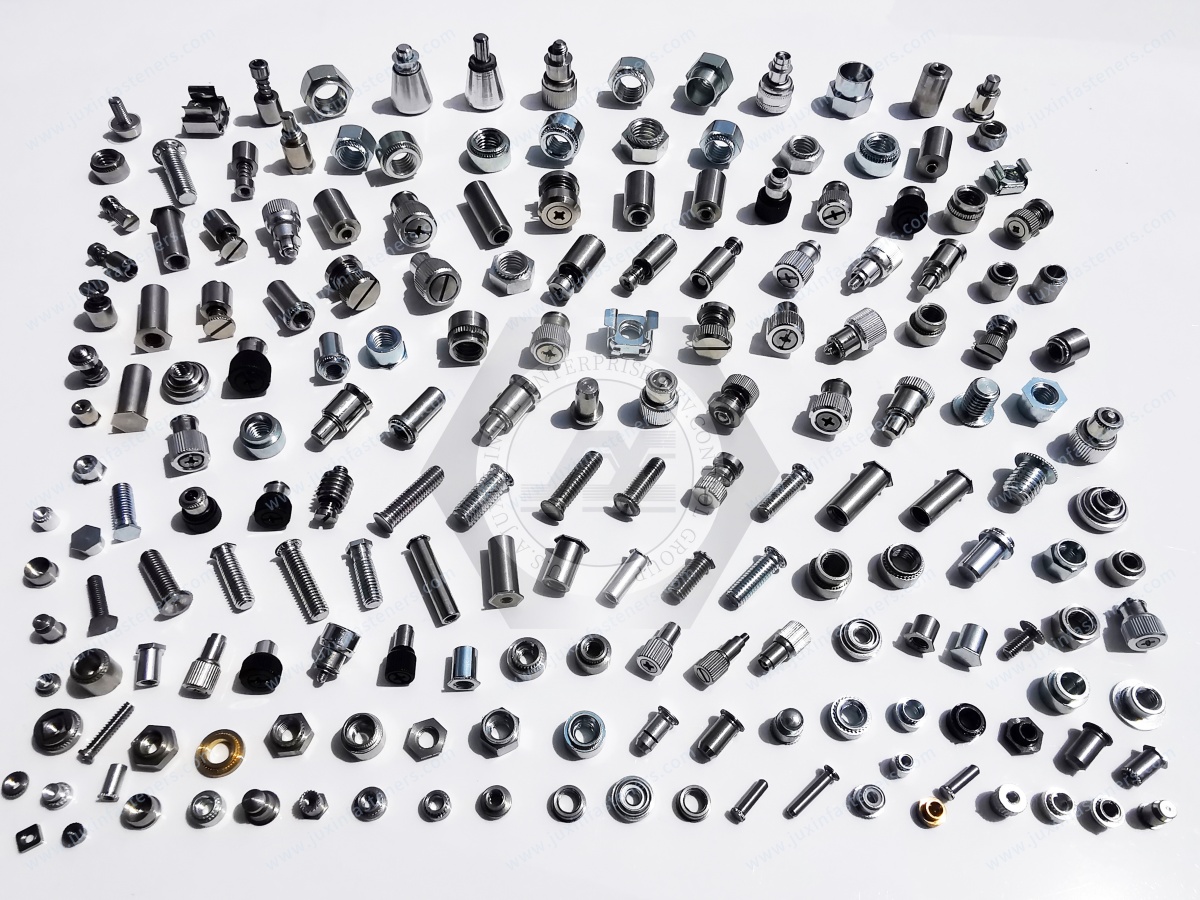
Each specialized design has its own installation requirements and limitations. Product selection should follow the approved engineering drawing rather than relying on a general product description.
Quality Control and Validation for Medical Equipment Sheet Metal Fasteners
Medical equipment OEMs often require controlled manufacturing documentation and traceable component specifications.
The appropriate quality requirements depend on the equipment application, customer contract, and regulatory obligations.
For self-clinching nuts, relevant inspection characteristics may include:
Fastener dimensional conformity.
Internal thread dimensions and functional fit.
Material and finish conformity.
Installation hole diameter.
Installed fastener position.
Panel deformation.
Seating condition.
Push-out resistance.
Torque-out resistance.
Visual surface condition.
Packaging and identification.
Thread verification should follow the applicable approved specification and inspection method.
Where relevant, ISO 965 or ASME B1.1 can provide the dimensional framework for the selected thread system.
Mechanical retention acceptance limits should come from the approved product specification or customer validation plan, not from an arbitrary universal value.
Why Installation Validation Matters
A fastener that passes dimensional inspection before installation may still perform poorly if the panel hole or pressing process is incorrect.
For this reason, OEM validation should consider both the supplied component and the installed assembly.
A practical qualification approach may include initial sample inspection, installation trials, retention testing, assembly verification, and documented approval before volume production.
The required sample size, acceptance criteria, and testing conditions should be agreed upon for the specific project.
OEM Procurement and Supplier Development Considerations
For procurement managers and supplier development teams, self-clinching nut sourcing should extend beyond unit price.
A technically suitable fastener must also support consistent manufacturing, predictable replenishment, and long-term product configuration control.
Key sourcing considerations include:
Drawing and Specification Compatibility
Confirm that the proposed product matches the required thread, material, dimensions, shank configuration, and installation conditions.
A fastener with the same nominal thread size may still differ in clinching geometry, minimum sheet thickness, or retention performance.
Alternative Fastener Evaluation
When evaluating an alternative to an existing specified component, compare the complete interface rather than the product name alone.
Important differences may include installation hole diameter, fastener height, sheet hardness limits, edge distance, and retention characteristics.
An alternative product should not be approved as a direct replacement until the relevant dimensional and functional requirements have been verified.
OEM Customization
Some medical equipment projects require nonstandard dimensions, special thread configurations, material selections, or customer-defined finishes.
These requirements should be reviewed against technical drawings and manufacturing feasibility before quotation.
Total Assembly Cost
Procurement teams should consider installation labor, tooling, inspection, rework risk, packaging, and delivery requirements in addition to the fastener purchase price.
Production Consistency and Supply Planning
For recurring OEM programs, suppliers should be evaluated for specification control, quality documentation, agreed production lead times, and the ability to support the forecasted purchasing schedule.
MOQ, sample requirements, tooling arrangements, and delivery commitments should be confirmed during the RFQ process rather than assumed.
A Practical Engineering and Purchasing Checklist
Before approving a self-clinching nut for medical equipment production, engineering and procurement teams should establish the following information:
| Evaluation Area | Required Information |
|---|---|
| Host sheet | Material grade, thickness, hardness and finish |
| Thread | Metric or Unified specification, diameter, pitch and tolerance |
| Fastener | Type, shank configuration, material and surface finish |
| Panel geometry | Hole diameter, edge distance, nearby bends and tooling access |
| Installation | Pressing method, tooling, sequence and process validation |
| Mechanical performance | Required retention, screw loading and service conditions |
| Environment | Humidity, cleaning agents, corrosion and temperature exposure |
| Quality | Drawings, inspection criteria, testing and documentation |
| Procurement | Estimated quantity, annual demand, MOQ and delivery schedule |
This information allows engineering and purchasing teams to identify unsuitable configurations early and reduce the risk of costly design changes after tooling or production begins.
OEM Self-Clinching Nut Supply and Technical Support from JUXIN FASTENERS
JUXIN FASTENERS supplies industrial self-clinching nuts, press-in nuts, clinch nuts, and related precision sheet metal fastening products for OEM manufacturing applications.
Our product range includes conventional self-clinching nuts and specialized fastening configurations for suitable sheet metal assemblies.
For medical equipment manufacturers, laboratory instrument producers, enclosure fabricators, and precision equipment OEMs, we can review customer specifications to help identify appropriate fastening options.
Our technical and commercial evaluation can consider:
Standard or customer-specified self-clinching nut designs.
Metric and Unified thread requirements.
Carbon steel, stainless steel, and other applicable material options.
Host sheet compatibility.
Installation geometry and manufacturing requirements.
Customer-defined surface finishes.
OEM drawings and special dimensional requirements.
Sample evaluation and project-specific quality expectations.
Estimated order quantities and recurring supply requirements.
Explore our Self-Clinching Fasteners for Sheet Metal – Engineering and OEM Solutions for related product families and engineering considerations.
Request a Technical Review or OEM RFQ
If you are developing or sourcing self-clinching nuts for medical equipment, diagnostic instruments, laboratory systems, rehabilitation equipment,
or precision sheet metal assemblies, JUXIN FASTENERS welcomes your technical inquiry.
For a more accurate product recommendation and quotation, please provide your available 2D drawings, 3D models, thread specifications,
host sheet material and thickness, required finish, estimated order quantity, and expected annual demand.
If you are considering an alternative to an existing self-clinching nut, please also include the original part drawing or reference specification so that dimensional compatibility and installation requirements can be evaluated.
Our objective is to help OEM engineering, manufacturing, and procurement teams identify practical fastening solutions that support product reliability, efficient assembly, and sustainable long-term sourcing.
JUXIN FASTENERS
Website: https://www.juxinfasteners.com
Email: info@juxinfasteners.com
Contact JUXIN FASTENERS to discuss your medical equipment sheet metal fastening project and request an OEM quotation.
Contact Us
Tel.:
+86 020 8621 0320
+86 020 3121 6067
E-mail:
Technical Support:
Navigation
SEND INQUIREY



