Call Us
+86 136 6007 9809
Call Us
+86 136 6007 9809

Aug. 21, 2026
Self-Clinching Fasteners for Rail Vehicles and Rolling Stock Equipment
Rail vehicles operate under repeated vibration, acceleration, braking, thermal variation, and demanding service conditions.
Passenger trains, high-speed rail vehicles, metro cars, and railway equipment contain numerous sheet metal assemblies that require reliable threaded attachment points for electrical systems,
interior equipment, cable management, HVAC components, and maintenance-access panels.
Self-clinching fasteners provide a mechanical method of integrating threaded mounting points into compatible sheet metal without welding heat during installation.
Self-clinching studs create permanently retained external threads, while self-clinching nuts provide internal threads for mating screws or bolts.
Other configurations, including flush-head studs, concealed-head studs, and floating clinching nuts, can address specific assembly requirements.
For rail vehicle manufacturers, the advantages may include reduced loose hardware handling, controlled press installation, repeatable mounting geometry, and compatibility with suitable automated production processes.
However, reliable performance depends on more than nominal thread size. Sheet material, hardness, thickness, installation-hole dimensions,
fastener retention geometry, vibration loading, corrosion exposure, and maintenance requirements must all be considered.
JUXIN FASTENERS supplies self-clinching studs, nuts, and related industrial sheet metal fastening products.
For railway-related OEM projects, product suitability can be evaluated against customer drawings, installation specifications, operating conditions, and applicable qualification requirements.
Where Are Self-Clinching Fasteners Used in Rail Vehicles?
Rail vehicles contain both primary structural assemblies and secondary equipment installations.
Self-clinching fasteners are particularly relevant to compatible fabricated sheet metal components where a retained threaded feature simplifies subsequent assembly.
Potential applications include:
Train interior panels and mounting brackets.
Electrical control cabinets.
Power distribution equipment housings.
Communication equipment enclosures.
HVAC sheet metal accessories.
Cable management brackets.
Sensor mounting panels.
Inspection covers.
Auxiliary equipment brackets.
Serviceable sheet metal compartments.
The fastener must be selected according to the actual application.
A stud securing a lightweight cable support has different mechanical requirements from a fastener used near heavy underfloor equipment.
Conventional self-clinching fasteners should not automatically be selected for primary carbody structures, crash-critical attachments, or safety-critical equipment supports.
Those applications require specific engineering approval and validation of the complete connection.
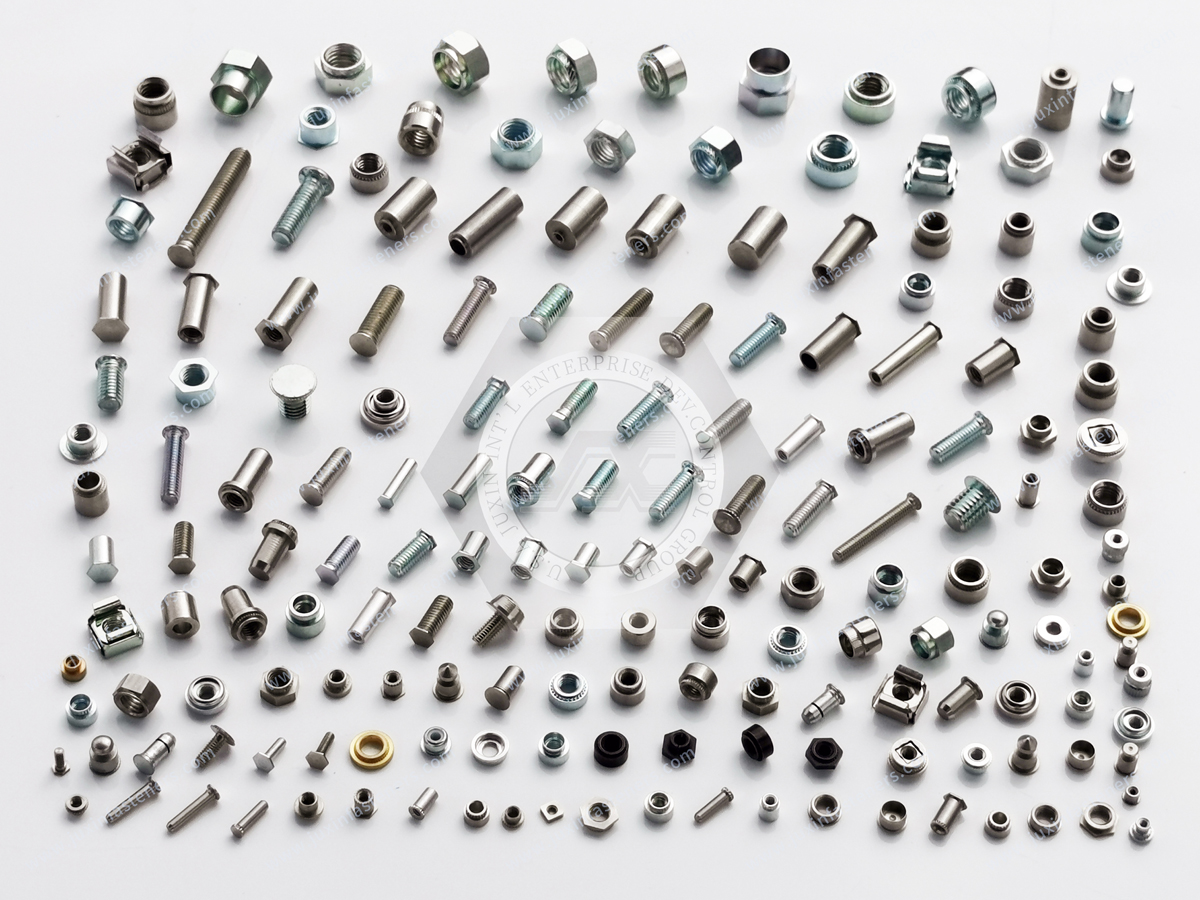
Self-Clinching Studs for Train Interior Panels
Train interiors incorporate fabricated panels, support brackets, equipment covers, and other components that must remain secure during operation while allowing appropriate maintenance access.
Self-clinching studs can provide permanently retained external threads in compatible sheet metal panels.
Potential applications include:
Interior wall mounting brackets.
Ceiling equipment accessories.
Instrument panel support components.
Lightweight service covers.
Interior cable support brackets.
Non-primary mounting plates.
Reducing Loose Hardware During Assembly
A permanently retained stud can simplify installation when a bracket or panel must be positioned over fixed threaded projections.
This may reduce the need to hold a separate bolt head during assembly.
However, the mating nut remains a separate component unless the assembly uses another specifically designed retention arrangement.
Panel Appearance and Surface Requirements
Some train interior components require a relatively smooth visible surface.
Flush-head self-clinching studs may be considered where the head must sit flush with the designated sheet surface.
JUXIN FASTENERS offers Flush-Head Self-Clinching Studs JX-FH for compatible sheet metal applications.
The required sheet thickness, hardness, installation-hole geometry, and press conditions must match the selected product.
Service and Maintenance
Interior equipment may require periodic inspection or replacement.
A self-clinching stud remains attached to the sheet, while the mating nut can be removed.
Engineers should consider repeated service cycles and the possibility of stud rotation during nut removal.
Where frequent maintenance is expected, torque-out resistance and thread durability become important design considerations.
Self-Clinching Nuts for Railway Electrical Cabinets
Rail vehicles contain electrical distribution systems, communication equipment, control modules, and monitoring systems.
Many of these components use fabricated steel or aluminum sheet metal housings.
Self-clinching nuts can provide permanent internal threads for equipment mounting and removable covers.
Potential applications include:
Electrical enclosure mounting panels.
Control cabinet brackets.
Internal equipment supports.
Removable cabinet covers.
Instrument mounting plates.
Auxiliary electrical accessories.
Internal Threads Without Sheet Tapping
Thin sheet metal may not provide sufficient thread engagement for direct tapping.
A self-clinching nut creates a separate threaded feature within the sheet metal assembly.
However, the nut's mechanical retention depends on the sheet material, thickness, and installation conditions.
Electrical Clearance and Bonding
The location of metallic fasteners must be coordinated with electrical equipment.
Engineers should evaluate required electrical clearances, insulation, and access for maintenance.
A self-clinching fastener does not automatically provide a validated protective bonding connection.
Where electrical continuity is required, the complete joint must be evaluated, including coatings, mating hardware, contact conditions, and corrosion.
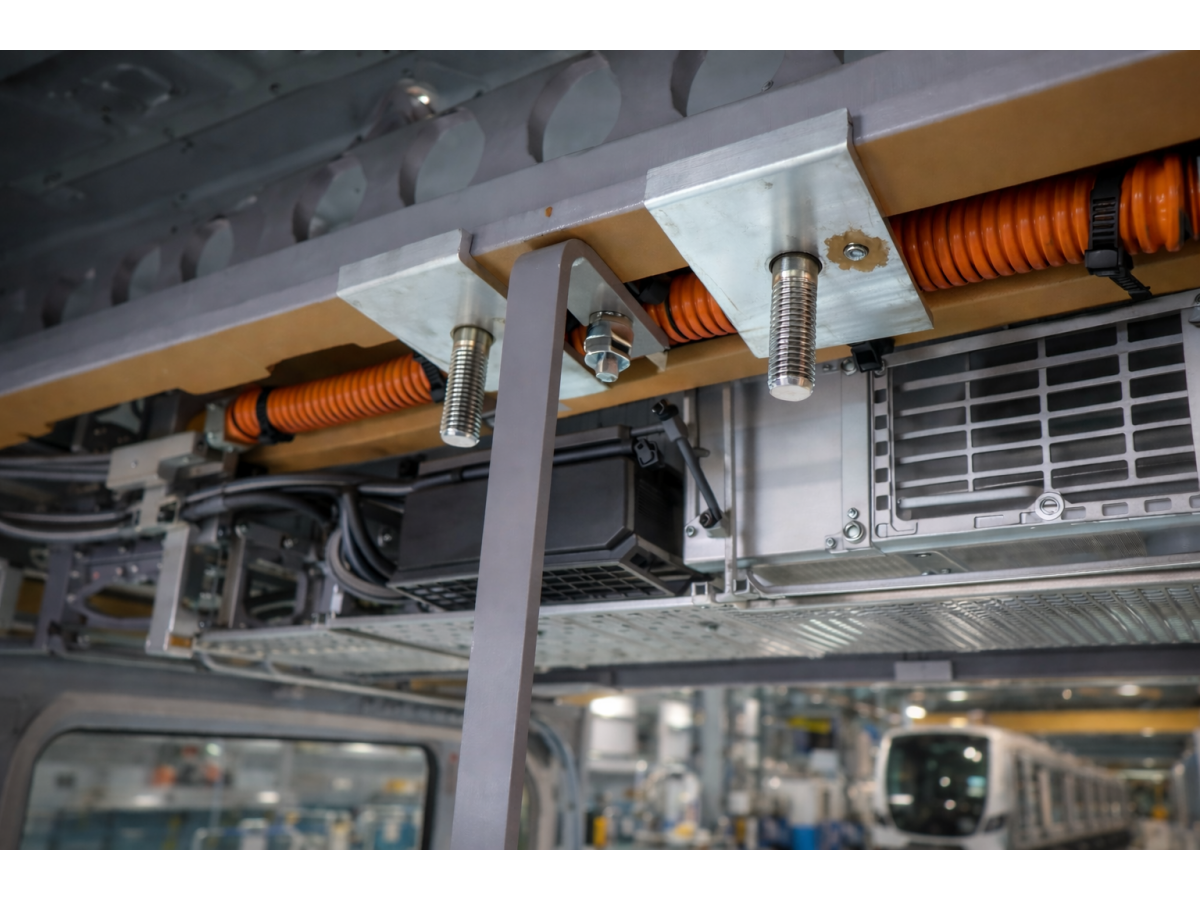
Floating Self-Clinching Nuts for Cabinet Assembly
Electrical cabinets may contain multiple mating holes, brackets, and mounting rails.
Manufacturing tolerances can cause small alignment differences.
Floating self-clinching nuts allow limited positional adjustment within their designed range.
JUXIN FASTENERS offers Floating Self-Clinching Locking Thread Nuts JX-LAC and JX-LAS.
These products may be considered where the mating assembly requires controlled positional adjustment.
The actual float range, locking characteristics, installation requirements, and mechanical performance must be confirmed for the selected configuration.
A floating nut does not eliminate the need for proper tolerance design.
Railway HVAC Equipment and Auxiliary Sheet Metal Assemblies
Rail vehicle HVAC systems may contain fabricated sheet metal housings, air distribution components, mounting brackets, and service panels.
Self-clinching studs or nuts may be considered for suitable secondary attachments.
Potential applications include:
HVAC enclosure covers.
Air distribution accessory brackets.
Sensor mounting panels.
Electrical accessory supports.
Lightweight service covers.
Cable routing brackets.
Thermal Cycling
HVAC equipment may experience repeated temperature variation.
Different materials expand and contract at different rates.
The joint should be evaluated for the expected operating temperature range, particularly where steel fasteners are installed in aluminum panels.
Vibration and Equipment Loads
HVAC equipment may introduce mechanical vibration.
The clinched fastener must provide sufficient retention for the application, and the mating threaded joint may require an appropriate locking method.
A permanently retained clinching stud does not automatically prevent the mating nut from loosening.
Heavy Equipment Limitations
A standard self-clinching fastener should not automatically be used as a primary mounting anchor for heavy compressors, motors, or other high-load equipment.
Such applications may require reinforced brackets, welded connections, through-bolting, or another engineered fastening method.
Self-Clinching Fasteners for Railway Cable Management
Modern rail vehicles contain extensive wiring for propulsion control, communication, lighting, passenger systems, and auxiliary equipment.
Cable management components must accommodate vibration, temperature changes, maintenance access, and the intended cable routing arrangement.
Self-clinching studs can provide attachment points for suitable cable clamps and support brackets.
Self-clinching nuts may be used where screws are preferred for installing cable management hardware.
Cable Support Design Considerations
Engineers should review:
Cable bundle weight.
Bracket geometry.
Support spacing.
Vibration.
Fastener orientation.
Installation accessibility.
Cable protection.
Maintenance requirements.
A secure fastener does not compensate for an inadequately designed cable support bracket.
The complete assembly must be evaluated.
Avoiding Cable Damage
Stud projection length and location should be coordinated with cable routing.
Exposed threaded ends must not create abrasion risks or interfere with cable insulation.
Where necessary, the assembly should include suitable protective features.
Self-Clinching Studs vs. Self-Clinching Nuts for Rail Equipment
Both products provide permanent threaded features, but they serve different assembly functions.
| Evaluation | Self-Clinching Stud | Self-Clinching Nut |
|---|---|---|
| Threaded feature | External thread | Internal thread |
| Mating hardware | Nut | Screw or bolt |
| Typical application | Brackets, mounting panels, cable supports | Electrical cabinets, covers, equipment panels |
| Installation | Controlled pressing | Controlled pressing |
| Key retention requirements | Pushout and torque-out | Pushout and torque-out |
| Main design considerations | Stud length, projection, loading and clearance | Thread engagement, screw access and panel geometry |
The correct choice depends on the assembly direction, available installation space, maintenance requirements, and mechanical loads.
For example, a fixed threaded stud may simplify positioning a bracket over several mounting points.
A clinching nut may be preferable where a removable cover is secured using screws inserted from the accessible side.
Flush-Head and Concealed-Head Stud Designs
Some rolling stock equipment requires specific head geometry or surface appearance.
Flush-Head Studs
Flush-head studs are designed to sit flush with the specified sheet surface when correctly installed.
This may be useful for suitable interior panels and equipment housings where a protruding head would interfere with another component.
JUXIN FASTENERS supplies:
Flush-Head Self-Clinching Studs JX-FH
Stainless Steel Flush-Head Studs JX-FHS
The selected product must be matched to the substrate and installation requirements.
Concealed-Head Studs
Concealed-head studs may be considered where the opposite panel surface should remain uninterrupted.
These designs require a suitable blind recess or other specifically prepared installation feature.
JUXIN FASTENERS offers Concealed-Head Self-Clinching Studs.
A concealed-head stud is not a direct substitute for a conventional through-hole clinching stud.
The panel thickness, prepared feature, retention performance, and production method must be reviewed.
Sheet Material Selection for Railway Self-Clinching Fasteners
Rolling stock equipment may use carbon steel, stainless steel, aluminum alloys, and other engineered materials.
Self-clinching performance depends on the compatibility between the fastener and the substrate.
Carbon Steel Sheet Metal
Carbon steel sheet may be suitable for many conventional self-clinching fastener designs.
However, the actual steel grade, hardness, and thickness must be confirmed.
A fastener designed for relatively soft sheet metal should not automatically be installed into high-strength steel.
Stainless Steel Sheet
Stainless steel sheet may be harder than conventional low-carbon steel.
A standard clinching fastener may not provide adequate retention in a harder substrate.
The selected fastener must be specifically compatible with the stainless steel grade and sheet hardness.
Aluminum Sheet Metal
Aluminum panels are used in lightweight rolling stock equipment.
Some self-clinching fasteners are suitable for compatible aluminum alloys.
However, the actual alloy and temper affect installation behavior.
The sheet must provide sufficient material flow without excessive local deformation.
Fastener Hardness vs. Sheet Hardness
Self-clinching installation depends on the substrate material deforming into the retention features.
If the sheet is too hard relative to the fastener design, adequate material flow may not occur.
If the panel is too thin or insufficiently supported, installation may cause deformation.
The correct fastener cannot be selected from thread diameter alone.
Minimum Sheet Thickness and Installation-Hole Design
There is no universal minimum sheet thickness for all railway self-clinching fasteners.
The required thickness depends on the selected fastener, retention geometry, and substrate material.
Installation-Hole Diameter
An oversized hole may reduce retention.
An undersized hole may increase installation force or damage the panel.
The hole diameter and tolerance should follow the selected product specification.
Burrs and Hole Edge Condition
Punching or drilling may create burrs and local deformation.
These conditions can influence fastener seating and mechanical retention.
Hole preparation should follow the selected fastener's installation instructions.
Unapproved chamfering or countersinking may remove material required for clinching.
Edge Distance
Installing a clinching fastener close to a panel edge, bend, or another hole may cause distortion.
The required edge distance should be determined from the selected product's technical requirements and validated for the actual panel.
Press Access
Conventional self-clinching installation generally requires suitable support and controlled pressing access.
A fastener that can be installed in a flat panel may be difficult to install after the component has been folded or assembled into a closed cabinet.
The installation sequence should be considered during design.
Mechanical Reliability Under Rail Vibration
Rail vehicles experience repeated acceleration, braking, vibration, and service loading.
Self-clinching fasteners must be evaluated for their actual mechanical function.
Pushout Resistance
Pushout resistance describes the force required to displace the installed fastener axially from the sheet under a defined test condition.
Performance depends on the fastener geometry, sheet material, thickness, hole preparation, and installation quality.
Torque-Out Resistance
Torque-out resistance describes the installed fastener's resistance to rotation within the sheet.
This is particularly important when tightening or removing mating hardware.
The required assembly torque must be compatible with the installed fastener's retention performance.
Tensile and Shear Loading
The completed joint may experience tension, shear, bending, or combined loading.
The limiting failure mode may involve the stud, nut, surrounding sheet, or attached bracket.
A strong threaded fastener does not compensate for inadequate sheet retention.
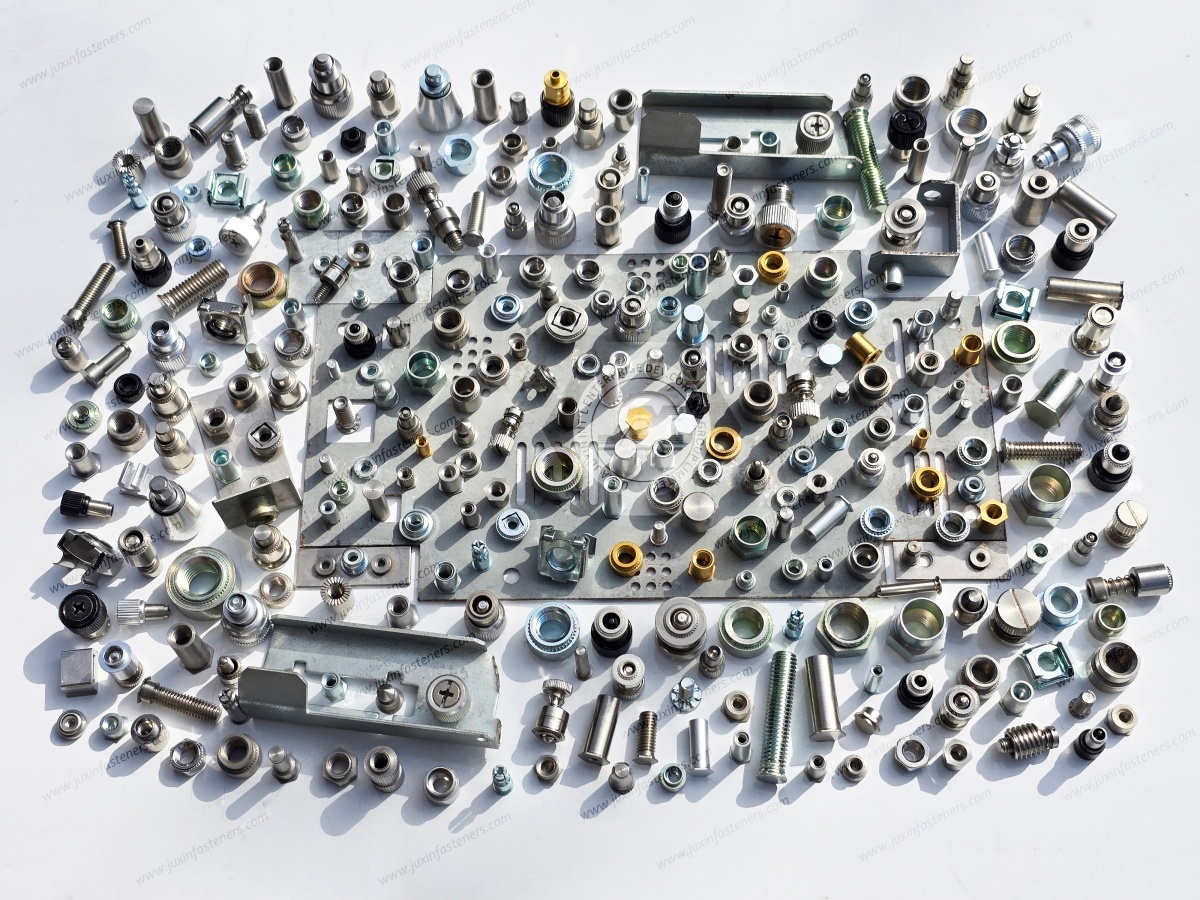
Vibration and Threaded Joint Loosening
The clinching mechanism retains the fastener in the panel.
It does not automatically lock the mating threaded joint.
Where necessary, the assembly should incorporate a suitable locking method.
Fatigue
Repeated loading can affect the fastener, panel, or surrounding assembly.
Fatigue-sensitive applications require evaluation of the actual service loads and joint geometry.
Static pushout or torque-out tests alone do not establish long-term fatigue performance.
Railway Vibration Testing and EN 61373
EN 61373 addresses shock and vibration testing for railway rolling stock equipment.
Its relevance depends on the equipment and project specification.
A self-clinching stud should not be described as EN 61373 certified simply because it is intended for rail use.
Where applicable, the complete equipment assembly or fastening arrangement must be evaluated according to the required test conditions.
Corrosion Resistance and Environmental Exposure
Rail equipment may operate in humid, coastal, cold, or contaminated environments.
Interior cabinets and underfloor equipment can experience very different exposure conditions.
Carbon Steel Fasteners
Carbon steel self-clinching fasteners may be supplied with suitable protective finishes.
The coating specification should be selected according to the operating environment and customer requirements.
Stainless Steel Fasteners
Stainless steel may be considered where improved corrosion resistance is required.
However, the actual grade must be confirmed.
Stainless steel is not immune to all forms of corrosion.
Dissimilar-Metal Contact
Steel or stainless steel fasteners installed in aluminum panels may create galvanic corrosion concerns where moisture is present.
The complete assembly should be evaluated, including surface coatings, contact conditions, and environmental exposure.
Coating Compatibility
The installation process may damage protective coatings around the prepared hole.
The manufacturing sequence should account for coating application, possible damage, and any required restoration.
Railway Fire Safety and Material Requirements
Railway vehicle interiors may be subject to specific fire safety requirements.
EN 45545-2 is a relevant European reference for fire behavior requirements of materials and components used in railway vehicles.
However, it is not a general mechanical qualification standard for self-clinching studs.
A metallic clinching stud should not be described as EN 45545-2 certified solely because it is used in rolling stock.
Where the complete fastening assembly includes polymer components, insulating parts, adhesives, or coatings, the applicable fire requirements should be evaluated for those materials and their intended use.
Railway Quality and Supplier Qualification Requirements
Rail OEM projects may require customer-specific quality management, inspection, and traceability arrangements.
ISO 22163 and Railway Supplier Quality
ISO 22163 addresses railway-sector quality management requirements.
Its applicability depends on the customer and supplier qualification program.
A product listing does not establish that a supplier holds ISO 22163 certification.
Any certification claim must be supported by current documentation covering the relevant scope.
EN 15085 and Welding Requirements
EN 15085 addresses welding of railway vehicles and components.
It may be relevant to the wider fabricated rail assembly where welding is involved.
However, conventional self-clinching installation is a mechanical pressing process, not a welding process.
Therefore, EN 15085 should not be presented as a direct qualification standard for an ordinary self-clinching stud.
Customer-Specific Product Approval
Rail OEMs may require drawings, material documentation, inspection reports, mechanical testing, first article inspection, or other project-specific records.
The exact requirements should be agreed before production.
Controlled Installation for Railway OEM Production
Self-clinching fasteners can support repeatable manufacturing when the installation process is properly controlled.
Panel Preparation
Verify the sheet material, thickness, hardness, and installation-hole dimensions.
Fastener Positioning
Place the fastener in the prepared hole with the correct orientation.
Press Tooling
Use suitable tooling to support the panel and apply controlled axial force.
Improper support may cause local distortion or incomplete seating.
Installation Force
The applied force must be sufficient to form the intended mechanical interlock without damaging the panel or fastener.
The required force depends on the product and substrate.
Installed Fastener Inspection
Verify seating, alignment, thread condition, and panel deformation.
Mechanical Validation
Where required, perform pushout, torque-out, or other specified tests using representative production components.
Avoid Uncontrolled Impact Installation
Self-clinching fasteners are designed for controlled pressing.
Hammer installation may produce inconsistent retention or damage.
Automated Installation and Production Efficiency
Rolling stock manufacturing involves multiple fabrication and assembly stages.
Self-clinching fasteners may be installed using manual, semi-automated, or automated equipment.
Automatic Feeding
Fastener geometry influences feeding and orientation.
The selected product should be reviewed for compatibility with the installation equipment.
Force-Displacement Monitoring
Suitable equipment may monitor installation force and displacement.
These measurements can help identify process variation.
However, process monitoring alone does not prove that every installed fastener meets its required mechanical performance.
Fixture Design
Fixtures should control panel position and provide appropriate support during pressing.
Assembly Tolerances
Stud position, perpendicularity, and projection length can affect downstream assembly.
Tolerance accumulation should be reviewed when multiple fasteners are installed on one panel.
Production Sequence
Fasteners may need to be installed before bending, coating, cabinet assembly, or equipment installation.
The sequence should be established according to tooling access, coating requirements, and component geometry.
Total Installed Cost
Production managers should evaluate the complete cost of the fastening operation, including:
Fastener unit price.
Hole preparation.
Press tooling.
Installation labor.
Automation.
Inspection.
Scrap and rework.
Coating operations.
Downstream assembly time.
A lower fastener purchase price does not necessarily produce a lower total manufacturing cost.
Common Self-Clinching Fastener Failure Modes in Rail Equipment
Stud Rotation During Assembly
The stud rotates when a mating nut is tightened.
Potential causes include incorrect hole size, unsuitable sheet hardness, incomplete installation, or inadequate retention geometry.
Fastener Pushout
The fastener is displaced from the panel under axial loading.
Potential causes include insufficient sheet thickness, poor material flow, or excessive service loading.
Panel Cracking or Distortion
Incorrect installation conditions or inadequate panel support damage the sheet.
Incomplete Seating
The fastener does not seat correctly against the panel.
Possible causes include unsuitable tooling, incorrect hole geometry, or insufficient pressing force.
Thread Damage
Handling or installation tooling damages the mating thread.
Vibration-Induced Loosening
The mating nut or screw loosens even though the clinched fastener remains retained.
Corrosion at the Interface
Moisture and dissimilar-metal contact contribute to corrosion.
Stud Misalignment
Incorrect positioning interferes with bracket installation or creates undesirable loading.
Unapproved Structural Application
A conventional self-clinching fastener is used in a connection requiring structural performance beyond its validated capability.
These risks should be addressed through appropriate design review, installation controls, inspection, and testing.
Self-Clinching Fasteners vs. Welded Studs and Rivet Nuts
Rail equipment designers may compare several fastening technologies.
| Fastening Method | Main Function | Key Engineering Consideration |
|---|---|---|
| Self-clinching stud | Permanent external thread in compatible sheet metal | Sheet hardness, thickness, pressing access and retention |
| Self-clinching nut | Permanent internal thread | Sheet compatibility, installation and thread engagement |
| Floating clinching nut | Internal thread with limited positional adjustment | Float range, loading and installation requirements |
| Welded stud | External thread attached by welding | Weldability, heat input and weld qualification |
| Rivet nut | Internal thread in thin-wall material | Grip range, hole preparation and setting process |
| Conventional bolt and nut | Removable mechanical connection | Assembly access, locking and serviceability |
A self-clinching stud may be suitable for a factory-fabricated electrical cabinet panel where controlled pressing access is available.
A rivet nut may be preferable where only one-sided installation access is available.
A welded stud may be considered where the substrate and welding process are compatible.
For structural rail vehicle connections, the fastening method must be selected according to the approved engineering design.
Rail Self-Clinching Fastener Procurement and Supplier Development
Railway procurement teams must consider product compatibility, manufacturing feasibility, quality documentation, cost, and long-term supply requirements.
Drawing-Based RFQ Review
A complete RFQ should include:
Fastener drawing.
Product type.
Thread specification.
Stud length or nut dimensions.
Retention geometry.
Sheet material and thickness.
Substrate hardness.
Installation-hole dimensions.
Mechanical performance requirements.
Surface finish.
Quality documentation.
Estimated purchasing quantity.
Delivery schedule.
Alternative Supplier Qualification
A replacement fastener should not be approved solely because its nominal thread size matches the original.
Differences in retention geometry, material hardness, head dimensions, and installation requirements may affect performance.
The proposed alternative should be validated using the actual production panel and approved installation process.
MOQ and Lead Time
MOQ and lead time depend on the selected product configuration, material, finish, tooling requirements, and order quantity.
For custom railway fasteners, procurement teams should communicate prototype quantities, initial production requirements, and expected annual demand.
Long-Term Supply Planning
Rolling stock programs may require repeated deliveries and spare parts support over extended periods.
Supplier evaluation should consider specification control, lot identification, packaging, quality consistency, and supply continuity.
Quality Documentation
Customers may require material records, dimensional inspection reports, mechanical test results, traceability, or other specified documentation.
The required scope should be confirmed before order placement.
Engineering and Procurement Checklist for Rail Clinching Fasteners
| Evaluation Area | Required Information |
|---|---|
| Application | Interior panel, electrical cabinet, HVAC housing or cable bracket |
| Safety significance | Secondary attachment or safety-critical connection |
| Fastener type | Stud, nut, flush-head, concealed-head or floating nut |
| Thread | Metric or Unified size, pitch and tolerance |
| Geometry | Head, retention features, stud length or nut dimensions |
| Substrate | Steel, stainless steel or aluminum grade |
| Sheet thickness | Actual thickness and tolerance |
| Sheet hardness | Compatibility with the selected clinching fastener |
| Installation hole | Diameter, tolerance, burr condition and edge distance |
| Pressing | Tooling, force, support and production sequence |
| Mechanical performance | Pushout, torque-out, tension, shear and vibration |
| Environment | Corrosion, temperature and moisture exposure |
| Quality | Inspection, testing, traceability and customer requirements |
| Procurement | MOQ, forecast quantity, lead time and packaging |
This checklist helps railway engineering, manufacturing, and procurement teams establish a consistent technical specification before approving a fastening solution.
Rail Transit Self-Clinching Fastener Supplier – JUXIN FASTENERS
JUXIN FASTENERS supplies self-clinching studs, nuts, and related sheet metal fastening products for suitable rolling stock equipment and industrial OEM applications.
Relevant product options include:
Carbon steel self-clinching studs.
Stainless steel self-clinching studs.
Flush-head self-clinching studs.
Concealed-head self-clinching studs.
Self-clinching nuts.
Floating self-clinching nuts.
Related sheet metal threaded fasteners.
Metric and Unified thread configurations.
Customer-defined dimensions and retention geometries.
Related JUXIN Products and Engineering Solutions
Flush-Head Self-Clinching Studs JX-FH
Stainless Steel Flush-Head Studs JX-FHS
Concealed-Head Self-Clinching Studs
Floating Self-Clinching Locking Thread Nuts
Self-Clinching Fasteners for Sheet Metal
These product and engineering pages help customers evaluate fastening configurations according to their sheet metal design and installation requirements.
JUXIN FASTENERS can review customer drawings, substrate specifications, installation requirements, and purchasing quantities to evaluate suitable product options.
Railway-specific certification, application qualification, testing, and customer approval requirements must be confirmed separately where applicable.
Request a Rail Self-Clinching Fastener Technical Review or OEM RFQ
Are you sourcing self-clinching studs, clinch nuts, or custom press-in fasteners for train interiors, railway electrical cabinets, HVAC equipment, cable supports, or rolling stock sheet metal assemblies?
JUXIN FASTENERS welcomes inquiries from rail vehicle manufacturers, railway equipment suppliers, engineering teams, sheet metal fabricators, production managers, purchasing departments, and international supplier development professionals.
For an accurate technical review and quotation, please provide:
Available 2D drawings or 3D CAD models.
Required fastener type and thread specification.
Stud length or nut dimensions.
Retention geometry.
Sheet material, thickness and hardness.
Installation-hole diameter and tolerance.
Required pushout and torque-out performance.
Mechanical loading and vibration requirements.
Material and surface finish specifications.
Corrosion and environmental requirements.
Customer-specific quality and documentation requirements.
Estimated order quantity and annual demand.
Target delivery schedule.
If you are evaluating an alternative to an existing railway self-clinching fastener, please include the original drawing and installation specification.
Our objective is to help customers identify technically appropriate fastening products that support reliable rolling stock equipment assembly, efficient manufacturing, and consistent OEM procurement.
JUXIN FASTENERS
Website: https://www.juxinfasteners.com
Email: info@juxinfasteners.com
Send your technical drawings and RFQ to discuss your rail transit self-clinching fastener requirements.
Contact Us
Tel.:
+86 020 8621 0320
+86 020 3121 6067
E-mail:
Technical Support:
Navigation
SEND INQUIREY