
Call Us
+86 136 6007 9809
Call Us
+86 136 6007 9809

Aug. 21, 2026
EV Self-Clinching Fasteners for Battery and Electrical Assemblies
Electric vehicle manufacturing combines lightweight metal structures, battery systems, power electronics, charging equipment, thermal management components, and increasingly complex electrical architectures.
These assemblies require fastening solutions that support reliable mechanical attachment, controlled manufacturing processes, and efficient OEM production.
EV self-clinching fasteners provide permanent threaded mounting points in compatible sheet metal components without requiring welding heat during installation.
Self-clinching studs create externally threaded attachment points for brackets, covers, cable supports, sensors, and auxiliary equipment.
Self-clinching nuts provide internally threaded mounting points for screws and bolts.
Both designs use engineered retention features that mechanically engage the surrounding sheet material during controlled press installation.
For electric vehicle applications, fastener selection involves more than thread size and installation speed.
Engineers must consider sheet material, hardness, thickness, joint loading, electrical isolation, corrosion, sealing requirements, thermal cycling, and production feasibility.
Battery enclosure and high-voltage equipment applications require particular attention.
A self-clinching fastener does not automatically provide a sealed, electrically insulated, or crash-qualified connection.
JUXIN FASTENERS supplies self-clinching studs, nuts, and related sheet metal fastening products for suitable EV and industrial OEM applications.
Customer drawings and technical specifications can be reviewed to evaluate compatible product configurations and sourcing requirements.
What Are EV Self-Clinching Fasteners?
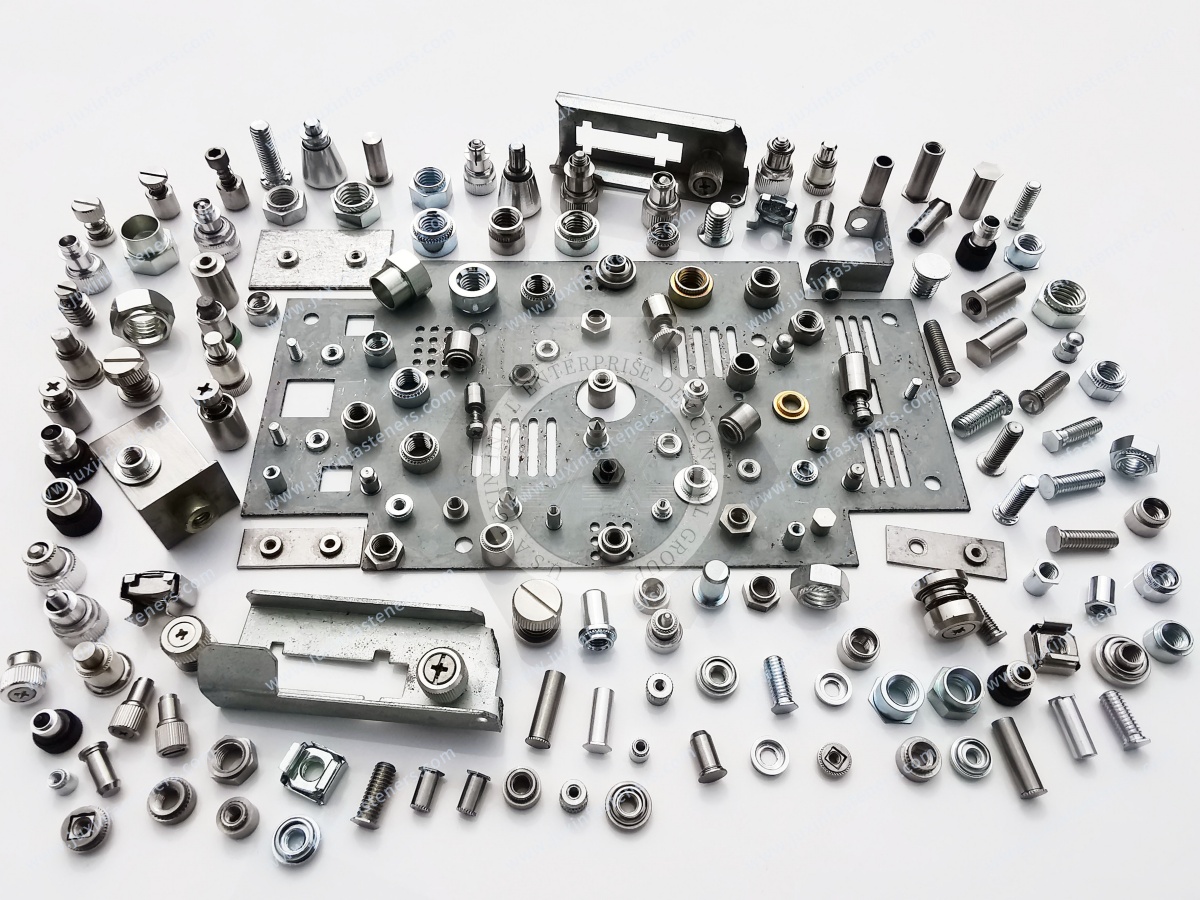
Self-clinching fasteners are mechanically installed components designed to become permanently retained in suitable sheet metal.
During installation, the fastener is positioned in a prepared hole and pressed into the sheet using controlled force.
The surrounding material plastically deforms into the fastener's engineered retention features, producing resistance to rotation and axial displacement.
Common configurations include:
Self-clinching threaded studs.
Self-clinching nuts.
Flush-head clinching studs.
Concealed-head clinching studs.
Floating self-clinching nuts.
Threaded self-clinching standoffs.
Customer-defined press-in fastening components.
Each configuration serves a different mechanical function.
A threaded stud provides an external thread, while a clinching nut provides an internal thread.
A standoff establishes spacing between components, and a floating nut can accommodate a limited amount of mating-hole misalignment.
The correct configuration should be selected according to the actual assembly requirements.
Why Use Self-Clinching Fasteners in EV Manufacturing?
Electric vehicle manufacturers seek fastening methods that support lightweight design, efficient assembly, and repeatable production quality.
Self-clinching technology can offer several advantages for compatible sheet metal components.
No Welding Heat During Installation
Self-clinching fasteners are installed mechanically rather than by welding.
This eliminates welding heat during the fastener installation operation.
For suitable thin metal panels, it can help avoid welding-related distortion, spatter, and localized thermal effects.
However, the process still requires a prepared installation hole and suitable pressing access.
Permanent Threaded Mounting Points
A properly installed self-clinching fastener becomes mechanically retained in the panel.
This can eliminate the need to position a separate loose nut during downstream assembly.
The mating screw or nut remains removable where the joint is designed for service.
Compatibility with Automated Production
Self-clinching fasteners can be installed using controlled pressing equipment.
Depending on the fastener geometry and production system, automatic feeding, positioning, pressing, and inspection may be possible.
The actual cycle-time benefit depends on the complete manufacturing process.
Reduced Assembly Complexity
Integrating threaded features into fabricated components can simplify certain assembly operations.
However, the total cost must include hole preparation, installation tooling, inspection, and possible rework.
The lowest fastener unit price does not necessarily produce the lowest installed cost.
EV Battery Pack and Battery Enclosure Applications
Battery pack assemblies contain structural, electrical, thermal, and protective components.
The fastening requirements differ significantly between primary load-bearing connections and secondary mounting features.
Self-clinching fasteners may be considered for compatible sheet metal accessories and non-primary attachments.
Potential applications include:
Battery management system mounting brackets.
Internal electrical equipment supports.
Cable management brackets.
Sensor mounting panels.
Auxiliary protective covers.
Non-primary sheet metal partitions.
Secondary equipment mounting plates.
Suitable battery enclosure accessories.
Battery Pack Structural vs. Auxiliary Fasteners
An important design distinction is whether the fastener supports a secondary accessory or contributes to the battery pack's structural integrity.
A stud used to secure a lightweight sensor bracket has different requirements from a fastener supporting a battery module, structural crossmember, or crash-load path.
For structural or safety-critical applications, the complete joint must be evaluated against the approved battery pack design.
A standard self-clinching stud should not be assumed suitable for structural battery retention or crash-critical connections.
Battery Enclosure Sealing
Battery enclosures may require protection against water, dust, and other environmental contaminants.
Conventional self-clinching fasteners generally require a prepared hole in the sheet.
This does not automatically create a watertight connection.
Where a fastener penetrates an enclosure boundary, engineers must consider:
Hole geometry.
Fastener retention features.
Gaskets and seals.
Coating continuity.
Water exposure.
Pressure differentials.
Corrosion at the interface.
Assembly tolerances.
If a specified ingress protection rating is required, the complete enclosure must be tested and validated according to the applicable requirements.
A fastener should not be marketed as IP-rated solely because it is mechanically retained in the panel.
Concealed-Head Fasteners for Enclosure Integrity
Some battery or electrical enclosure designs may benefit from a fastening feature that does not require a complete through-hole in the external panel surface.
A concealed-head self-clinching stud can be installed into a specially prepared blind recess in a compatible metal component.
JUXIN FASTENERS offers Concealed-Head Self-Clinching Studs.
This design can help preserve an uninterrupted exterior surface where the panel geometry permits it.
However, a concealed-head fastener is not automatically a sealing solution. The complete enclosure still requires appropriate environmental validation.
Self-Clinching Fasteners for EV Power Electronics
Electric vehicles contain power electronic systems that convert, control, and distribute electrical energy.
These may include inverters, onboard chargers, DC-DC converters, power distribution equipment, and associated control modules.
Such systems often use fabricated metal covers, brackets, internal mounting panels, and electrical enclosures.
Self-clinching fasteners may provide permanent mounting points in suitable components.
Inverter Housing Accessories
Potential applications include:
Internal mounting brackets.
Cable support panels.
Equipment covers.
Sensor brackets.
Auxiliary metal supports.
The fastener should not interfere with electrical clearance, insulation systems, thermal interfaces, or service access.
Onboard Charger and DC-DC Converter Housings
These assemblies may use aluminum or steel fabricated components.
Self-clinching studs and nuts can be considered for suitable secondary mounting points.
Important engineering considerations include:
Panel material and hardness.
Installation accessibility.
Mechanical loading.
Thermal cycling.
Electrical isolation.
Corrosion protection.
Assembly torque.
Vibration resistance.
A self-clinching fastener should not be assumed suitable for installation directly into a cast housing unless the material, geometry, and installation method have been specifically validated.
Electrical Cabinet and Control Module Assemblies
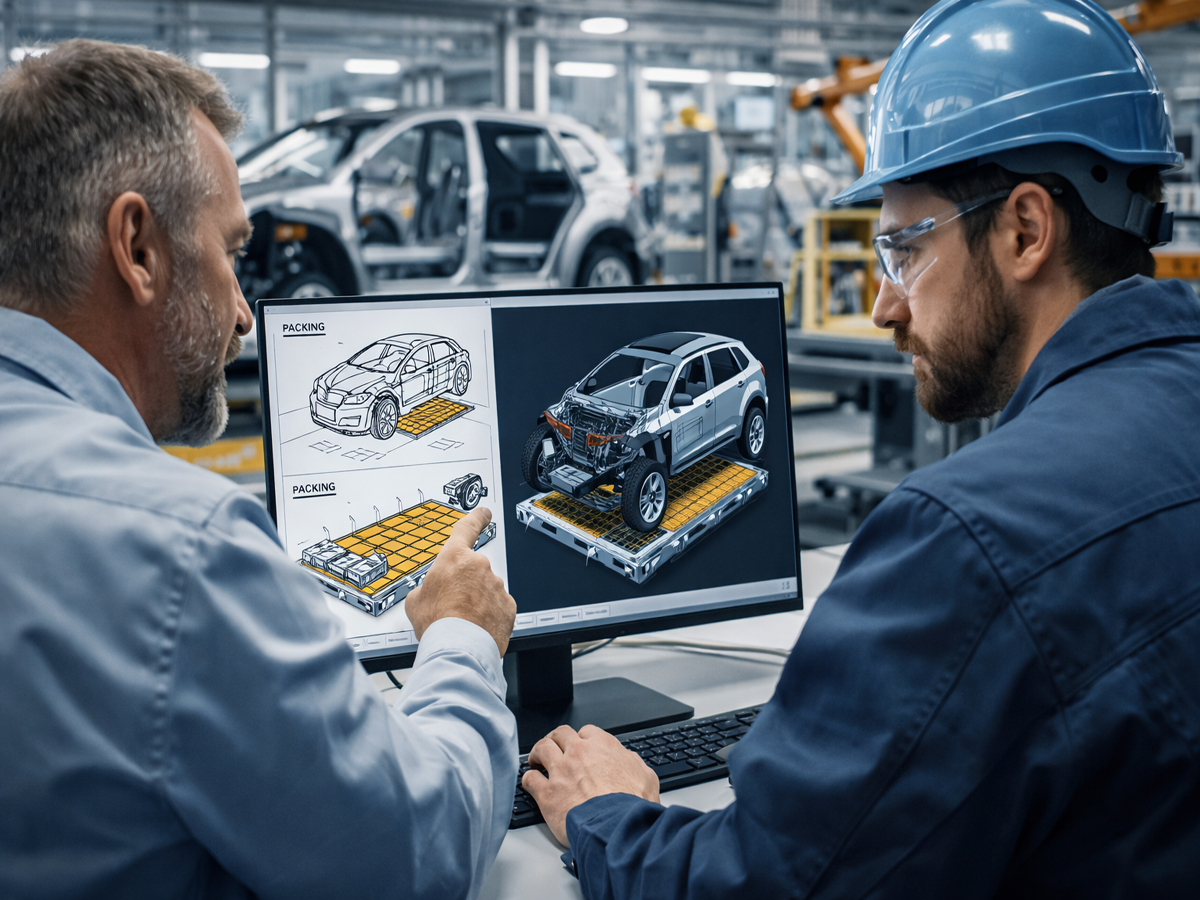
EV-related electrical cabinets and control equipment may contain thin sheet metal panels requiring retained threaded mounting points.
Self-clinching nuts may be used where an internal thread is needed, while self-clinching studs may be preferred where an external threaded projection simplifies assembly.
The choice should reflect the required assembly direction, tool access, and maintenance procedure.
Electrical Isolation and Grounding in EV Fastener Design
Electrical requirements are a major difference between EV fastening applications and general sheet metal assembly.
A metallic self-clinching fastener may create an electrically conductive path between components.
Whether this is desirable depends on the electrical design.
High-Voltage Isolation
High-voltage battery and power electronics systems require appropriate insulation and electrical clearance.
A self-clinching stud installed into a metal panel does not inherently provide electrical isolation.
Where isolation is required, engineers must evaluate the complete assembly, including:
Stud and nut materials.
Conductive substrates.
Insulating washers or bushings.
Coatings.
Component spacing.
Creepage and clearance.
Moisture and contamination.
Assembly tolerances.
The complete insulation design must satisfy the applicable vehicle and equipment requirements.
Protective Bonding and Grounding
Some electrical assemblies require intentional electrical continuity between metal components.
A metallic clinching fastener may form part of the mechanical connection, but electrical continuity cannot be assumed.
Coatings, oxidation, contact pressure, corrosion, and mating hardware can influence the electrical path.
Where protective bonding is required, the complete connection must be validated.
Avoiding Unintended Electrical Paths
A fastener may mechanically connect two components that are intended to remain electrically isolated.
The design should prevent unintended conductive paths.
Fastener placement should be reviewed together with the electrical architecture rather than treated as a separate mechanical detail.
Self-Clinching Fasteners for EV Thermal Management Systems
Battery systems and power electronics require controlled thermal management.
Related equipment may include cooling plates, pumps, heat exchangers, brackets, housings, and auxiliary supports.
Self-clinching fasteners may be suitable for compatible sheet metal accessories and non-pressure-containing mounting components.
Potential applications include:
Cooling-system support brackets.
Auxiliary pump mounting panels.
Sensor brackets.
Thermal management equipment covers.
Cable support brackets.
Fabricated sheet metal housings.
Thermal Cycling and Differential Expansion
EV components may experience repeated temperature changes.
Different materials expand and contract at different rates.
For example, aluminum panels and steel fasteners have different thermal expansion characteristics.
This can influence joint loading, clamping behavior, and long-term retention.
The complete assembly should be evaluated under its expected temperature range.
Cooling-System Leakage and Pressure Boundaries
A self-clinching stud or nut should not automatically be used as a pressure-sealing component.
Where the connection forms part of a coolant passage, pressure boundary, or fluid-containing housing, the design requires specific engineering validation.
Alternative threaded inserts or fastening methods may be more appropriate.
Vibration and Equipment Mounting
Pumps, compressors, and auxiliary equipment may introduce vibration.
The clinched fastener must resist the expected mechanical loads, while the mating threaded joint may require an appropriate locking method.
A permanently retained stud does not automatically prevent the mating nut from loosening.
Self-Clinching Studs vs. Self-Clinching Nuts for EV Assemblies
Both product types provide permanent threaded features in compatible sheet metal, but their functions differ.
| Evaluation | Self-Clinching Stud | Self-Clinching Nut |
|---|---|---|
| Thread type | External thread | Internal thread |
| Typical mating hardware | Nut | Screw or bolt |
| Main function | Permanent threaded projection | Permanent internal threaded point |
| Potential EV application | Brackets, covers, cable supports | Enclosure panels, equipment mounting plates |
| Installation | Controlled pressing | Controlled pressing |
| Main design factors | Stud length, pushout, torque-out, sheet compatibility | Thread engagement, pushout, torque-out, sheet compatibility |
Neither product type is universally superior.
A self-clinching stud may simplify an assembly where a bracket is positioned over fixed threaded projections.
A self-clinching nut may be more appropriate where a screw must be inserted from the accessible assembly side.
Flush-Head Studs for EV Sheet Metal
Flush-head self-clinching studs provide an externally threaded mounting point while allowing the head to sit flush with the specified sheet surface when correctly installed.
This can be useful where a protruding head would interfere with adjacent components.
JUXIN FASTENERS supplies:
The selected type must be compatible with the sheet material, hardness, thickness, and installation conditions.
Flush-head geometry does not automatically establish suitability for sealing-critical or structural battery pack applications.
Floating Self-Clinching Nuts for Assembly Tolerance
EV electrical enclosures and fabricated mounting structures may contain multiple fastening points.
Manufacturing tolerances can create small differences between the nominal and actual positions of mating holes.
Floating self-clinching nuts allow limited positional adjustment within their designed range.
JUXIN FASTENERS offers Floating Self-Clinching Locking Thread Nuts JX-LAC and JX-LAS.
These products may be considered where the mating assembly requires limited adjustment.
However, the available float does not replace proper tolerance design.
The actual adjustment range, load requirements, and locking characteristics must be confirmed for the selected configuration.
Material Selection for EV Self-Clinching Fasteners
EV manufacturers use a combination of carbon steel, aluminum alloys, stainless steel, and other engineered materials.
The selected fastener must be compatible with the actual substrate.
Carbon Steel Fasteners
Carbon steel self-clinching fasteners can provide a practical balance of mechanical properties, manufacturing efficiency, and cost.
Heat treatment may be specified where required by the fastener design.
However, fastener hardness must remain compatible with the intended clinching mechanism.
Stainless Steel Fasteners
Stainless steel may be considered for corrosion-resistant applications.
The appropriate grade depends on the service environment and mechanical requirements.
Stainless steel fasteners are not automatically suitable for installation into every stainless steel sheet.
Substrate hardness and fastener design remain critical.
Aluminum Sheet Metal Compatibility
Aluminum is commonly used in EV components to reduce weight.
Some self-clinching fasteners are designed for compatible aluminum sheet materials.
However, different aluminum alloys and tempers have different hardness and deformation characteristics.
The selected fastener must be evaluated against the actual sheet specification.
Advanced High-Strength Steel
Advanced high-strength steel may be used in EV structures.
Its hardness can limit conventional self-clinching installation.
A standard press-in fastener should not be assumed suitable for high-strength steel without validated compatibility.
Galvanic Corrosion in Steel-Aluminum Assemblies
When steel fasteners contact aluminum panels in the presence of moisture, galvanic corrosion may occur.
The risk depends on material selection, coatings, environmental exposure, and joint design.
Engineers should evaluate the complete assembly rather than relying only on the corrosion resistance of the individual fastener.
Surface Finishes and EV Environmental Exposure
EV components may be exposed to humidity, road contaminants, cleaning chemicals, temperature variation, and other environmental conditions.
Material and surface treatment selection should reflect the actual operating environment.
Potential considerations include:
Zinc-plated carbon steel.
Stainless steel.
Customer-defined protective coatings.
Galvanic compatibility.
Coating thickness.
Thread fit.
Installation performance.
Environmental testing requirements.
A coating that improves corrosion resistance may also affect installation behavior or thread fit.
The finished fastener should be evaluated in the actual assembly.
Sheet Thickness, Hardness and Installation-Hole Design
Self-clinching performance depends on the relationship between fastener geometry and substrate characteristics.
There is no universal minimum sheet thickness for all EV self-clinching studs or nuts.
Minimum Sheet Thickness
The required minimum sheet thickness depends on the fastener design and material.
A stud suitable for one panel thickness may not provide adequate retention in a thinner sheet.
The selected product specification should define the permitted range.
Sheet Hardness
Self-clinching installation requires sufficient material flow into the retention features.
If the sheet is too hard, the fastener may not seat correctly or develop adequate retention.
The actual substrate grade and hardness should be reviewed.
Hole Diameter and Tolerance
An oversized hole may reduce retention.
An undersized hole may cause excessive installation force or panel damage.
The installation hole should follow the selected fastener's technical specification.
Hole Edge Condition
Burrs, chamfers, and local deformation can affect installation.
The hole preparation method should be controlled.
Unapproved countersinking or excessive deburring may remove material required for clinching.
Edge Distance
Installation near a panel edge, bend, or adjacent feature may cause distortion.
The minimum edge distance should be determined from the fastener design and substrate.
Tool Access
Conventional self-clinching installation generally requires controlled pressing force and suitable support access.
A fastener that works in an open sheet metal panel may be difficult to install after the enclosure has been assembled.
The installation sequence should be considered early in product development.
Mechanical Performance: Pushout, Torque-Out and Service Loads
EV self-clinching fasteners must be evaluated against the loads experienced by the completed assembly.
Pushout Resistance
Pushout resistance describes the axial force required to displace the installed fastener from the sheet under a defined test condition.
Performance depends on the fastener geometry, sheet material, thickness, hole preparation, and installation process.
Torque-Out Resistance
Torque-out resistance describes resistance to rotation within the sheet.
This is important when tightening or removing mating hardware.
The required assembly torque should be compatible with the installed fastener's retention performance.
Tensile and Shear Loading
The completed joint may experience tension, shear, or combined loading.
The limiting failure mode may involve the stud, nut, sheet material, or surrounding assembly.
The connection should be evaluated as a complete system.
Vibration and Fatigue
EV components experience road vibration, acceleration, braking, and repeated mechanical loading.
A self-clinching fastener may remain mechanically retained while the mating threaded joint loosens.
Where necessary, an appropriate locking method should be used.
Thermal Cycling
Temperature variation can influence joint behavior, particularly in mixed-material assemblies.
The fastener and mating components should be evaluated for the intended operating conditions.
Battery Pack Safety and Application Limits
Self-clinching fasteners may be suitable for selected battery-related accessories.
However, they should not automatically be used for:
Primary battery module retention.
Crash-critical battery structures.
Pressure-containing coolant passages.
High-voltage insulation barriers.
Sealing-critical enclosure penetrations.
Fire-critical structural attachments.
These applications require specific engineering design and qualification.
EV Self-Clinching Fastener Installation Process
A controlled installation process is essential for reliable production.
Prepare the Sheet Metal
Verify the sheet material, thickness, hardness, and installation-hole dimensions.
Position the Fastener
Place the stud or nut in the prepared hole using the correct orientation.
Apply Controlled Pressing Force
Use suitable equipment to apply the required installation force.
The force should allow the surrounding sheet material to engage with the fastener's retention geometry.
Inspect the Installed Fastener
Verify seating, alignment, thread condition, and panel deformation.
Validate Mechanical Retention
Where required, perform pushout, torque-out, or other specified tests using representative production components.
Uncontrolled hammer installation should not be used as a substitute for the approved pressing process.
Automated EV Fastener Installation and Production Efficiency
High-volume EV production requires repeatable fastening operations.
Self-clinching fasteners may be integrated into automated or semi-automated production lines.
Automatic Feeding
Fastener feeding equipment must be compatible with the selected geometry.
Head shape, thread length, and retention features can influence feeding reliability.
Pressing Force Monitoring
Suitable equipment may monitor force and displacement.
These measurements can help identify process variation.
However, process monitoring alone does not establish mechanical performance without appropriate validation.
Fixture Design
The panel should be properly supported during installation.
Poor support can cause distortion or misalignment.
Installation Sequence
Fasteners may need to be installed before painting, coating, enclosure assembly, or electrical equipment installation.
The sequence should be selected according to the product design and process requirements.
Cycle Time and Total Cost
The complete installation cycle includes feeding, positioning, pressing, inspection, and part transfer.
Production managers should evaluate equipment utilization, tooling maintenance, reject rates, and downstream assembly effects.
Common EV Self-Clinching Fastener Failure Risks
Stud or Nut Rotation
Insufficient retention can allow the fastener to rotate during tightening.
Possible causes include incorrect hole size, unsuitable sheet hardness, or incomplete installation.
Fastener Pushout
The fastener may be displaced from the sheet under axial loading.
Possible causes include insufficient sheet thickness, incorrect installation, or excessive service loads.
Panel Cracking or Distortion
Excessive pressing force or unsuitable substrate conditions may damage the panel.
Thread Damage
Improper tooling or handling can damage the mating thread.
Corrosion at the Interface
Dissimilar metals and coating damage may contribute to corrosion.
Electrical Clearance Problems
A protruding metallic fastener may interfere with electrical components or insulation requirements.
Sealing Failure
A through-hole fastener may create a potential leakage path if the enclosure design does not provide suitable sealing.
Thermal Cycling Damage
Differential expansion and repeated temperature changes may affect the joint.
Unapproved Structural Application
Using a standard clinching fastener in a safety-critical battery structure without validation may compromise the intended design.
Each failure mode should be addressed through appropriate engineering review, installation controls, and application-specific testing.
EV Fastener Quality Control and OEM Validation
EV manufacturers and Tier suppliers may require documented quality controls and customer-specific approvals.
Incoming Fastener Inspection
Typical checks may include:
Thread dimensions.
Head and retention geometry.
Material identification.
Surface finish.
Dimensional tolerances.
Lot identification.
Installed Fastener Inspection
Checks may include:
Correct seating.
Stud alignment.
Thread condition.
Panel deformation.
Installation position.
Required mechanical retention.
Mechanical Testing
Depending on the application, testing may include pushout, torque-out, tensile, or other specified evaluations.
The test method and acceptance criteria should be established by the approved engineering specification.
There is no universal pushout or torque-out requirement applicable to every EV self-clinching fastener.
Environmental Validation
EV components may require testing for temperature cycling, corrosion, vibration, or other environmental conditions.
The applicable requirements depend on the component and customer specification.
PPAP and Customer Documentation
Automotive OEMs and Tier suppliers may require Production Part Approval Process documentation, inspection reports, material records, or other customer-specific approval documents.
The required scope should be agreed before production.
Any claimed certification or approval must be supported by applicable documentation.
Traceability
Customers may require traceability between delivered fastener lots, material records, inspection results, and shipment documentation.
Packaging and labeling should support correct identification and efficient line-side handling.
EV Self-Clinching Fasteners vs. Alternative Fastening Methods
Different fastening methods offer different advantages.
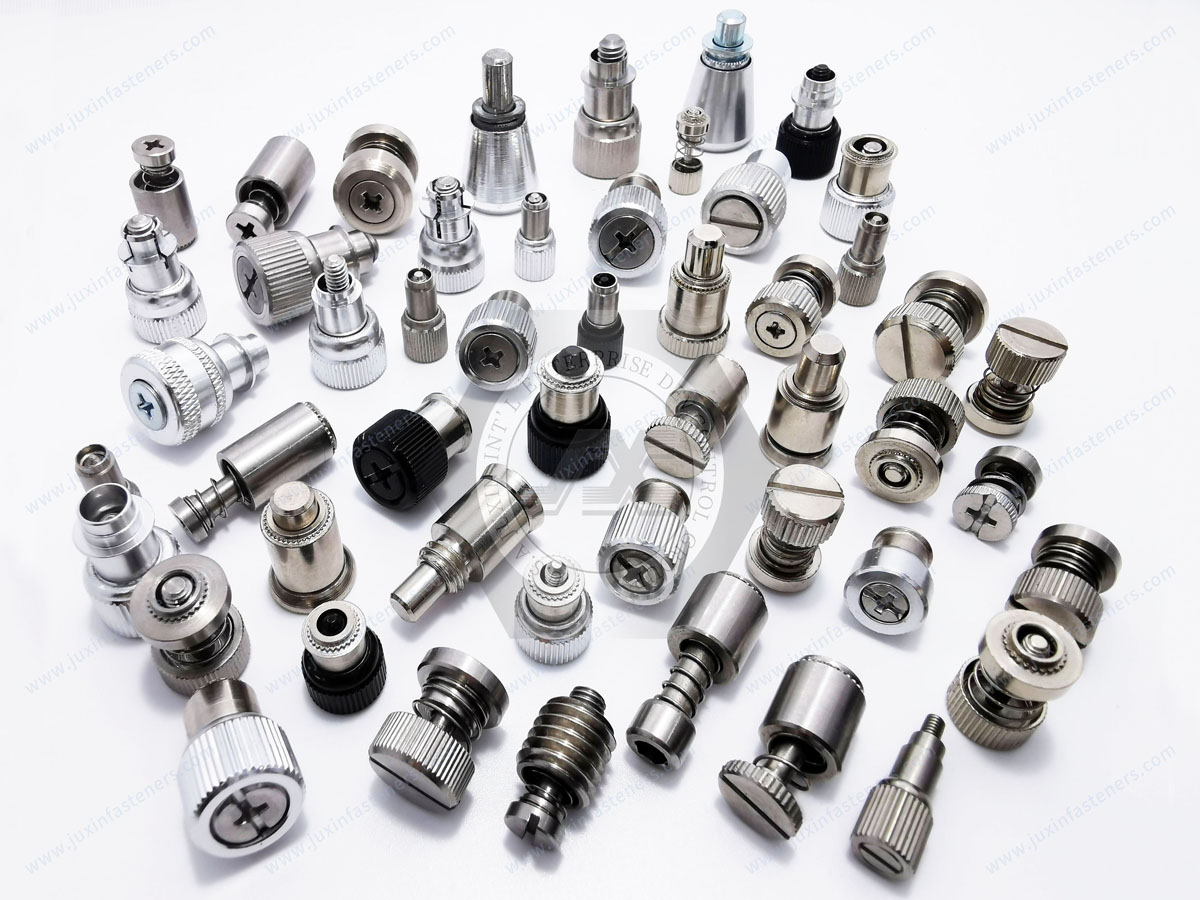
| Fastening Method | Main Function | Key Engineering Consideration |
|---|---|---|
| Self-clinching stud | Permanent external thread | Sheet hardness, thickness and retention |
| Self-clinching nut | Permanent internal thread | Sheet compatibility and installation access |
| Concealed-head stud | External thread with concealed attachment feature | Blind-hole geometry and panel thickness |
| Rivet nut | Internal thread in thin-wall material | Grip range, hole geometry and setting process |
| Weld stud | Permanent welded attachment | Weldability, heat input and process qualification |
| Threaded insert | Reinforced internal thread in compatible material | Installation method and substrate suitability |
| Conventional bolt and nut | Removable mechanical joint | Access, locking method and assembly time |
The correct solution depends on the component geometry, load requirements, production process, service environment, and maintenance needs.
For example, a self-clinching nut may be suitable for a factory-pressed electrical enclosure panel, while a rivet nut may be preferable where only one-sided installation access is available.
For a sealing-critical enclosure wall, a blind-hole fastening concept or another engineered attachment method may be more appropriate.
EV OEM Fastener Procurement and Supplier Development
EV fastening projects require coordination between design engineering, manufacturing, purchasing, quality, and supply chain teams.
A complete technical specification is essential for supplier comparison.
Drawing-Based RFQ Review
A suitable EV fastener RFQ should include:
Product drawing.
Fastener type.
Thread specification.
Material and surface finish.
Sheet material and thickness.
Substrate hardness.
Installation-hole dimensions.
Required mechanical performance.
Electrical and environmental requirements.
Quality documentation.
Estimated annual demand.
Delivery schedule.
Alternative Fastener Qualification
A replacement fastener should not be approved solely because its nominal thread size matches the original.
Differences in retention geometry, material hardness, head dimensions, and installation requirements may affect performance.
The alternative should be validated using representative production panels and the approved installation process.
MOQ and Lead Time
MOQ and lead time depend on the selected product geometry, material, finish, tooling requirements, and purchasing quantity.
For EV production programs, procurement teams should communicate prototype quantities, initial production requirements, annual forecasts, and delivery milestones.
Long-Term Supply Planning
EV programs may require repeated deliveries over an extended production period.
Supplier evaluation should consider specification control, lot traceability, quality consistency, packaging, and supply continuity.
Total Installed Cost
The total cost of an EV fastening solution may include:
Fastener unit price.
Hole preparation.
Press tooling.
Installation labor.
Automation.
Inspection and testing.
Scrap and rework.
Surface treatment.
Packaging and logistics.
Downstream assembly operations.
The lowest fastener purchase price does not necessarily produce the lowest total manufacturing cost.
Engineering and Procurement Checklist for EV Clinching Fasteners
| Evaluation Area | Required Information |
|---|---|
| EV application | Battery accessory, inverter enclosure, charging equipment or thermal management |
| Structural significance | Secondary mounting or safety-critical connection |
| Fastener type | Stud, nut, flush-head, concealed-head or floating nut |
| Thread | Metric or Unified size, pitch and tolerance |
| Geometry | Head, retention features, stud length or nut dimensions |
| Substrate | Steel or aluminum grade, thickness and hardness |
| Installation hole | Diameter, tolerance and edge distance |
| Pressing | Tooling, force, access and production sequence |
| Mechanical performance | Pushout, torque-out, tension, shear and vibration |
| Electrical requirements | Isolation, grounding, clearance and creepage |
| Environmental requirements | Corrosion, temperature, sealing and chemical exposure |
| Quality | Inspection, validation, documentation and traceability |
| Procurement | MOQ, forecast demand, lead time and packaging |
This checklist helps EV engineering and purchasing teams establish consistent requirements before selecting or qualifying a fastener supplier.
EV Self-Clinching Fastener Supply – JUXIN FASTENERS
JUXIN FASTENERS supplies self-clinching studs, nuts, and related sheet metal fastening products for suitable electric vehicle and industrial OEM applications.
Relevant product options include:
Carbon steel self-clinching studs.
Stainless steel self-clinching studs.
Flush-head clinching studs.
Concealed-head clinching studs.
Self-clinching nuts.
Floating self-clinching nuts.
Threaded self-clinching standoffs.
Metric and Unified thread configurations.
Customer-defined dimensions and retention geometries.
Related rivet nuts and threaded fastening products.
Related JUXIN Products and Engineering Solutions
Flush-Head Self-Clinching Studs JX-FH
Stainless Steel Flush-Head Studs JX-FHS
Concealed-Head Self-Clinching Studs
Floating Self-Clinching Locking Thread Nuts
Self-Clinching Fasteners for Sheet Metal
Fasteners for EV Battery Systems and Thermal Management
These related pages provide product and application information for customers evaluating fastening solutions.
For EV projects, JUXIN FASTENERS can review customer drawings, substrate specifications, installation requirements, and purchasing quantities to evaluate suitable product configurations.
Application-specific testing, PPAP documentation, electrical validation, battery safety requirements, and customer approvals must be confirmed separately where applicable.
Request an EV Self-Clinching Fastener Technical Review or OEM RFQ
Are you sourcing self-clinching studs, clinch nuts, or custom press-in fasteners for EV battery accessories, power electronics enclosures, charging equipment, cable management, or thermal management assemblies?
JUXIN FASTENERS welcomes inquiries from electric vehicle manufacturers, battery system suppliers, power electronics manufacturers, automotive Tier suppliers, engineering teams, purchasing departments, and international supplier development professionals.
For an accurate technical review and quotation, please provide:
Available 2D drawings or 3D CAD models.
Required fastener type and thread specification.
Fastener dimensions and retention geometry.
Sheet material, thickness and hardness.
Installation-hole dimensions and tolerances.
Required pushout and torque-out performance.
Mechanical loading and vibration requirements.
Electrical isolation or grounding requirements.
Sealing and corrosion requirements.
Temperature and environmental conditions.
Material and surface finish specifications.
Customer-specific quality and documentation requirements.
Estimated order quantity and annual demand.
Target delivery schedule.
If you are evaluating an alternative to an existing EV fastener, please include the original drawing and installation specification.
Our objective is to help customers select technically appropriate fastening products that support reliable EV assembly, efficient production, and consistent OEM procurement.
JUXIN FASTENERS
Website: https://www.juxinfasteners.com
Email: info@juxinfasteners.com
Send your technical drawings and RFQ to discuss your EV battery, electrical enclosure, or industrial self-clinching fastener requirements.
Contact Us
Tel.:
+86 020 8621 0320
+86 020 3121 6067
E-mail:
Technical Support:
Navigation
SEND INQUIREY



